















Because you said I sell what I make
.
レジ
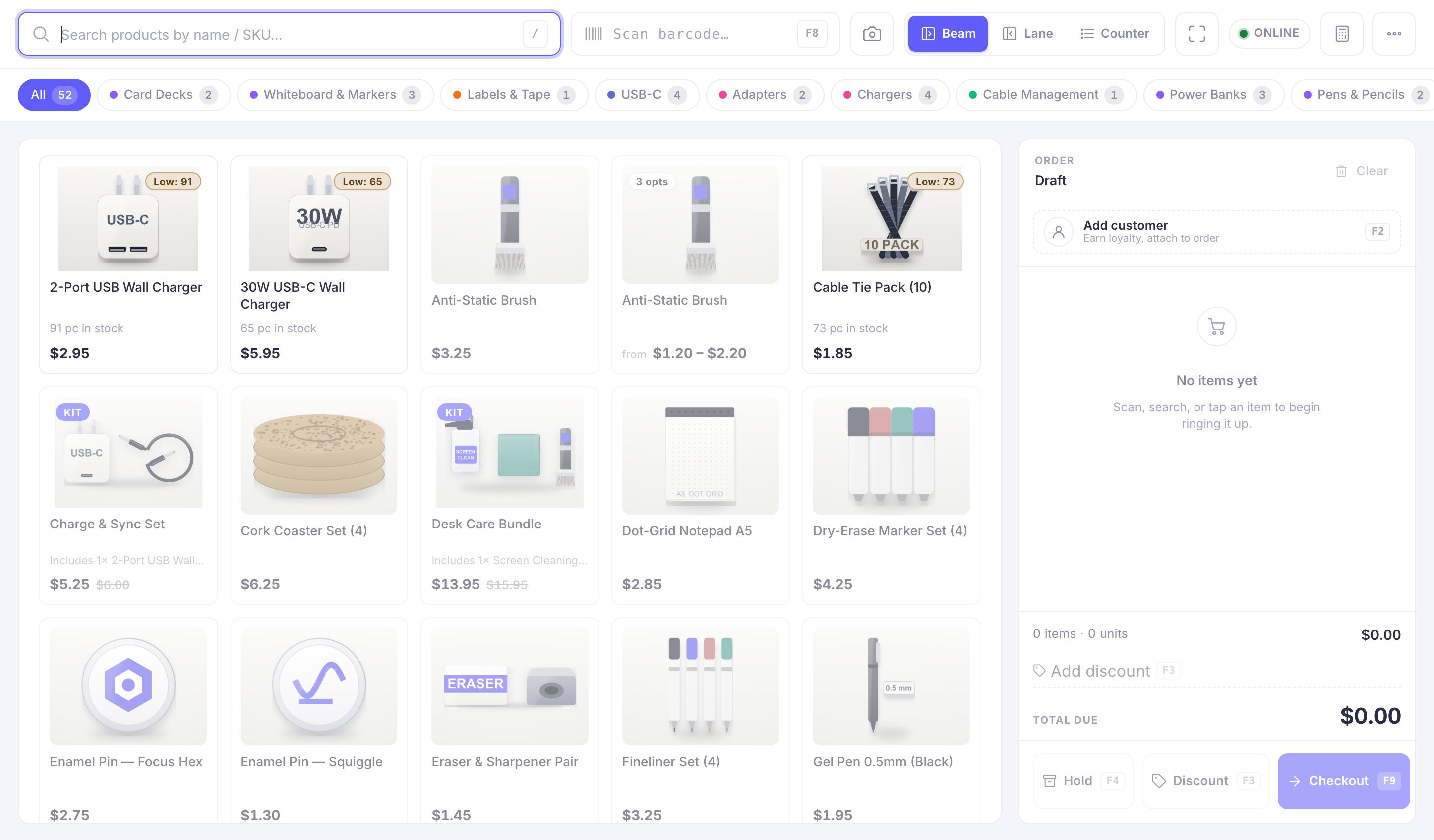
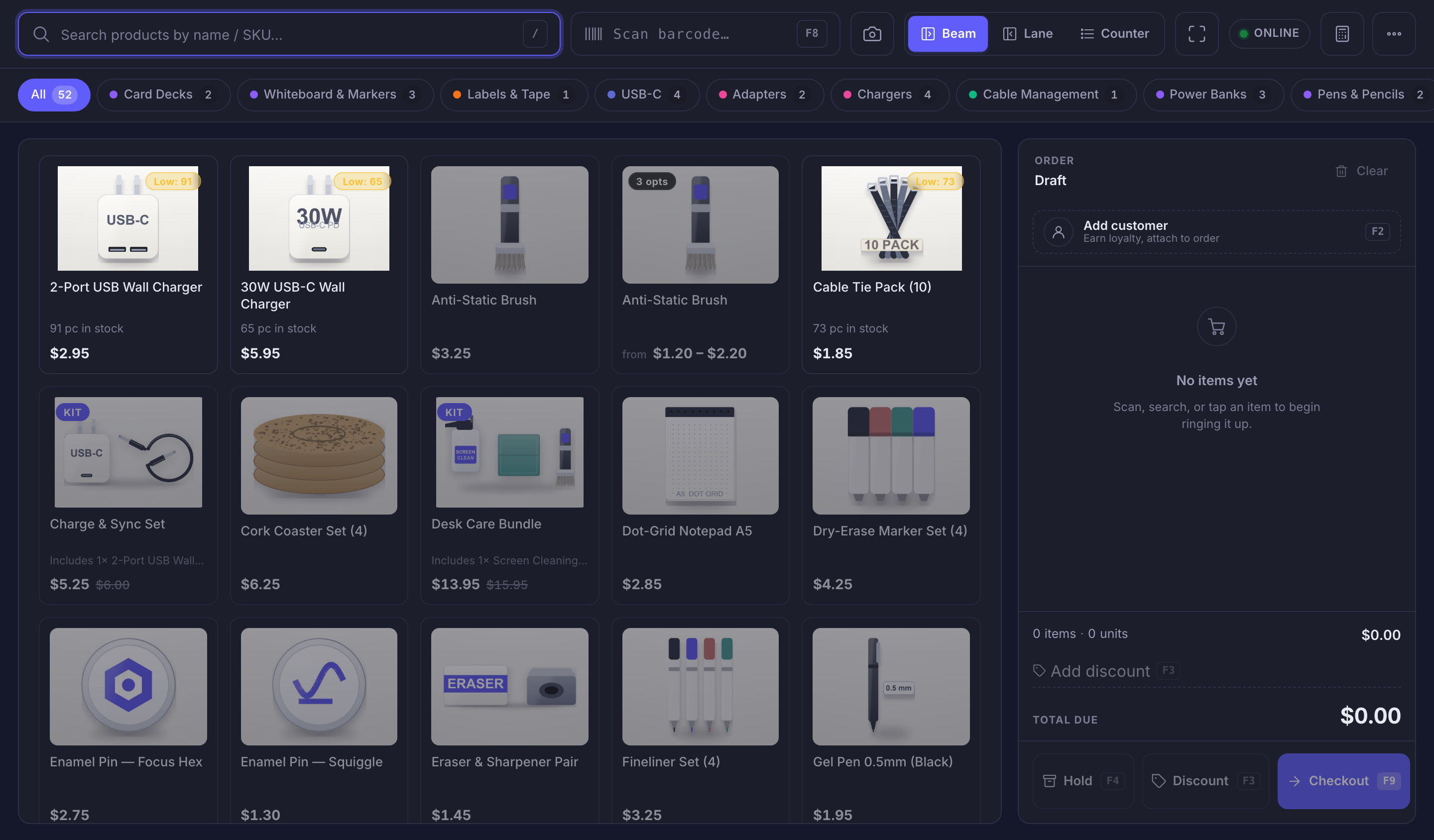
The counter, the receipt and the shelf behind it — one register, one record.
Read more about Point of Sale
The counter and the catalogue are the same thing, so a sale in the room is a sale in the books.
A register is only useful if it knows what you sell. This one opens on the catalogue you already keep — the same rows, the same prices, the same names — so the shelf on the wall and the shelf on your website never drift apart. Change a price once and the counter has it.
What happened at the till is recorded as it happens: the sale, the receipt, the return. Sales and Returns holds the whole transaction history, searchable by receipt, by the person who served it or by the amount, so a refund three weeks later is a lookup rather than an argument.
The register does not live on its own. The count on the shelf moves with the sale, the customer who bought is the same person your letters read from, and the day’s takings sit in the same month as everything else you earn. One counter, one business.
It runs on what you have. A tablet becomes the register; the printer, the scanner and the cash drawer connect through Connect Hardware when you own them. Each of your Stores and Locations can carry its own registers, and the people serving get the working access their role needs through Staff and Roles.
What it actually does
- A register that opens on the shelf you already keep
- Every sale, receipt and return held as one searchable history
- One counter or a chain — each location with its own registers
What that changes for you
- A price only ever has to be changed once
- The counter and the website stop disagreeing about what is in stock
- Closing the day is reading a screen, not rebuilding one
You come away with a day at the counter that is already counted.
Works seamlessly with