














Messages

This is the product's own frame. Your conversations appear here once you have an account.

Get started now
Notifications

This is the product's own frame. Alerts about your business appear here once you have an account.

English
Three people said “sounds great, follow up next week”

Nobody slips through. Ever again.

Every person who ever said “maybe” to your business, in one pipeline that remembers them better than you can — and tells you exactly who to talk to today.

The idea, drawn

Every maybe you ever heard, still remembered.

Almost nobody loses customers to a competitor. They lose them to a follow–up that never happened. The Lead Hub is the part of the platform whose only job is that nobody falls out of the bottom.

A pipeline of lanes, with the maybe that got remembered

Drawn: lanes with nothing dropping out of them, and the maybe that got remembered with a date attached.

Everyone is in one pipeline

Not a notebook, a thread and a memory. One board where a person has a stage and a next action.

The follow–up is a thing, not a plan

A sequence keeps going after you have stopped thinking about it, and stops the moment the person replies.

Clients keep their own section

The people who already bought are not treated as leads — they have their own place on this page.

The shift

From “I should follow up” to “I just did.”

The lead you lost last quarter didn't say no. They said later — and later lived on a sticky note that didn't survive the week. That's not a sales problem. That's a memory problem.

Here, “later” has a place to live. Every lead lands in the hub with a source, a stage and a next step — and the ones going cold raise their own hand before they're gone.

See it work

From first click to closed — on one screen.

Every lead lands here.

Your website forms, your booking links, your imports — they all feed the same inbox. New names arrive already sorted by where they came from and how warm they are.

They book you while you sleep.

Your booking link fills your calendar without the seventeen-message scheduling dance. The call lands on your week; the lead moves itself forward.

Because you said losing leads.

Lead Board

Your pipeline as columns you move a card between — and the stages are the ones you set.
Stages that are yours, not a template’sName them after how you actually sell — enquiry, call, scoping, proposal, won — and edit them the day the way you sell changes.
Move a card and the story updatesTake a lead from one column to the next and everything downstream re-ticks: the lane it lands in, the record behind the card, and anything you set to happen at that stage.
One board per way you sellRun more than one pipeline, each fed by the channel that belongs to it, and anything unmatched falls into the one you nominate rather than into nothing.
Read more about Lead Board

The pipeline is not a spreadsheet of hope; it is the list of what is genuinely waiting on you.

A board is a shape you can read across the room. Each lane is a stage you named, each card is a person, and the width of the board is the shape of your month. Nothing is hidden behind a filter you forgot you set.

The stages are the point. A pipeline that came out of a box describes somebody else’s business; these are the steps you actually take, in the order you actually take them, editable the day that order changes. Name a pipeline after a channel and its leads file themselves into it.

Moving a card is not just a gesture. The lane it lands in re-ticks, the record behind it updates, and a stage change can start the next thing without you — the note, the task, the time in the diary.

And the card is not a title. Behind it is the whole person: the form they filled, the page they came from, the letter they answered, the call that is booked. When you open it before you dial, you already know why they wrote.

What it actually does

  • A pipeline with real stages you set
  • Columns you move a lead between, with the lane re-ticking as it lands
  • More than one pipeline, each fed by the channel it belongs to

What that changes for you

  • Nothing sits in “I will get to it” unseen
  • You can see the shape of the month without opening anything
  • Handing a customer to someone else takes a minute

You come away with a pipeline whose next move is obvious.

A look inside Lead Board

Lead Board — platform screenshots

Real screens from the product. Open any one full size, or switch the set to light or dark.

Close
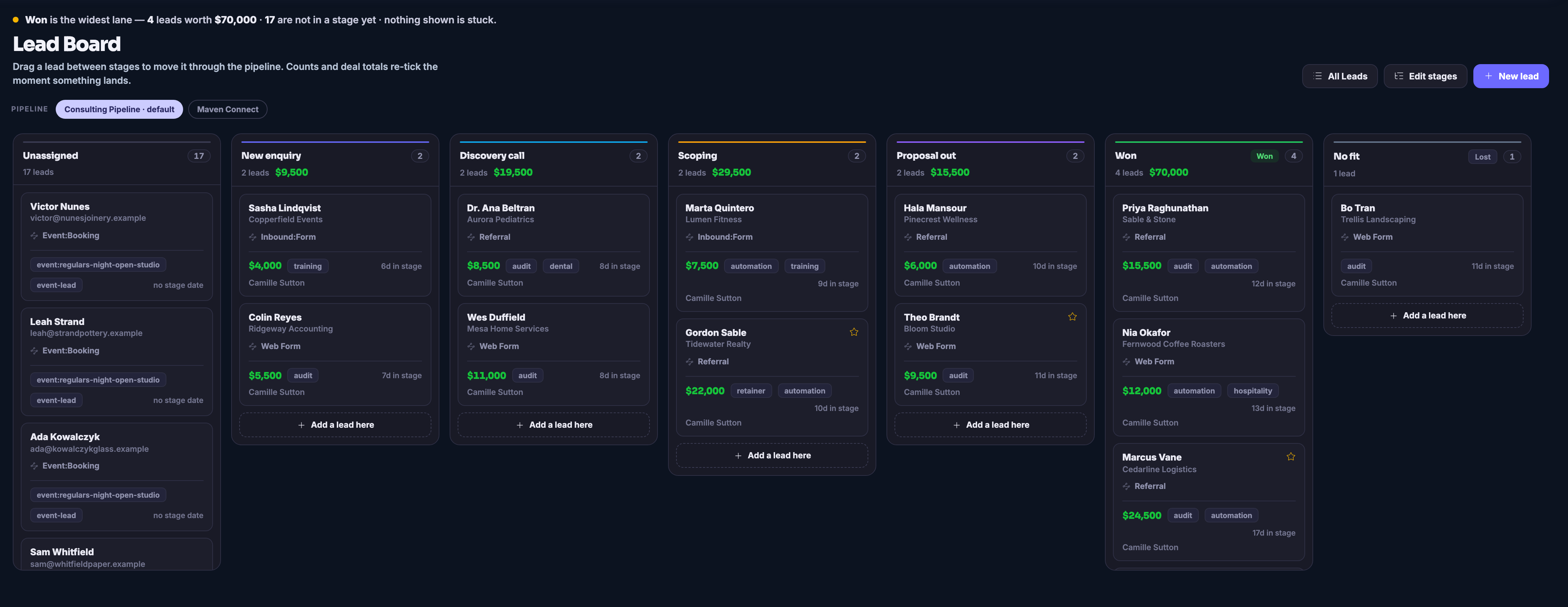
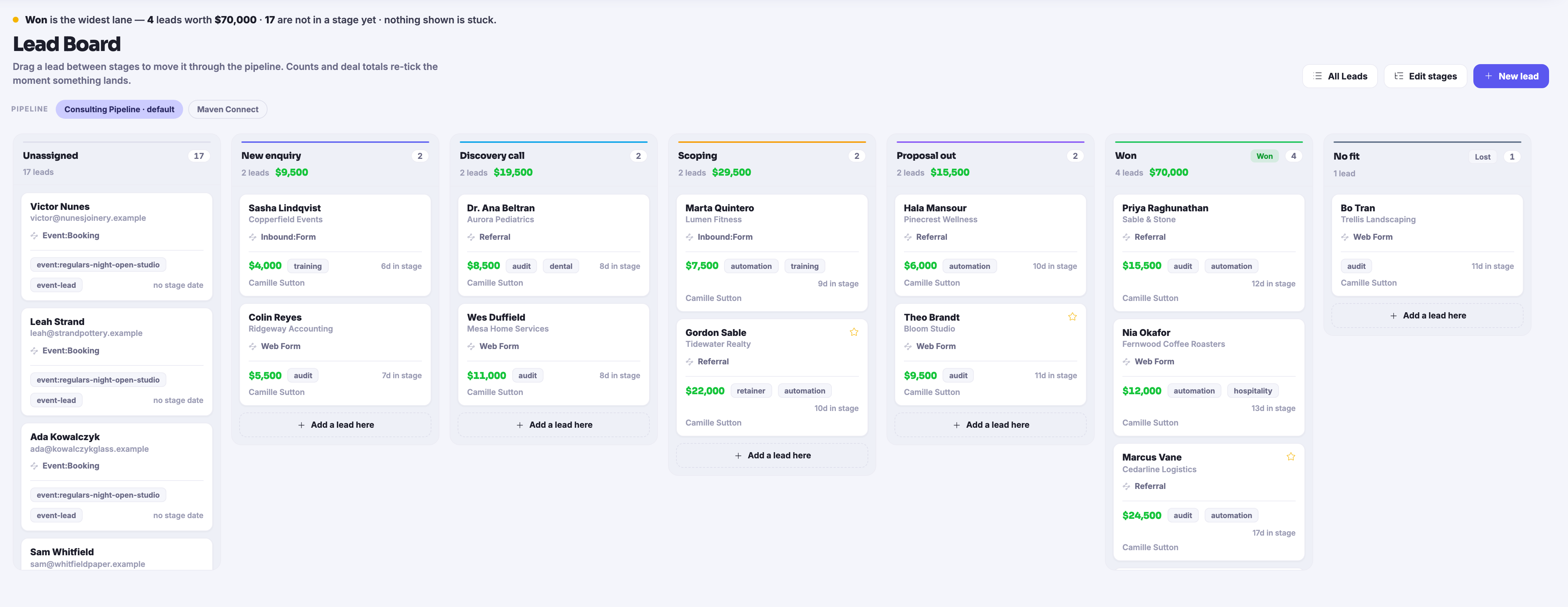
The Lead Board with every lane in frame: your pipeline as columns you move a lead between, with a lane for each stage you named — unassigned, new enquiry, discovery call, scoping, proposal out, won, and no fit at the end of the row — each lane headed by how many leads are standing in it and what they add up to, each card carrying the person, their company — or, in the unassigned lane, their email address standing in its place — where they came from, the tags on them, how long they have sat in the stage and, on every lane but that one, who is looking after them; above the lanes, a line naming the widest lane, the switcher that changes which pipeline the board is showing, and the control that edits the stages.The Lead Board with every lane in frame: your pipeline as columns you move a lead between, with a lane for each stage you named — unassigned, new enquiry, discovery call, scoping, proposal out, won, and no fit at the end of the row — each lane headed by how many leads are standing in it and what they add up to, each card carrying the person, their company — or, in the unassigned lane, their email address standing in its place — where they came from, the tags on them, how long they have sat in the stage and, on every lane but that one, who is looking after them; above the lanes, a line naming the widest lane, the switcher that changes which pipeline the board is showing, and the control that edits the stages.
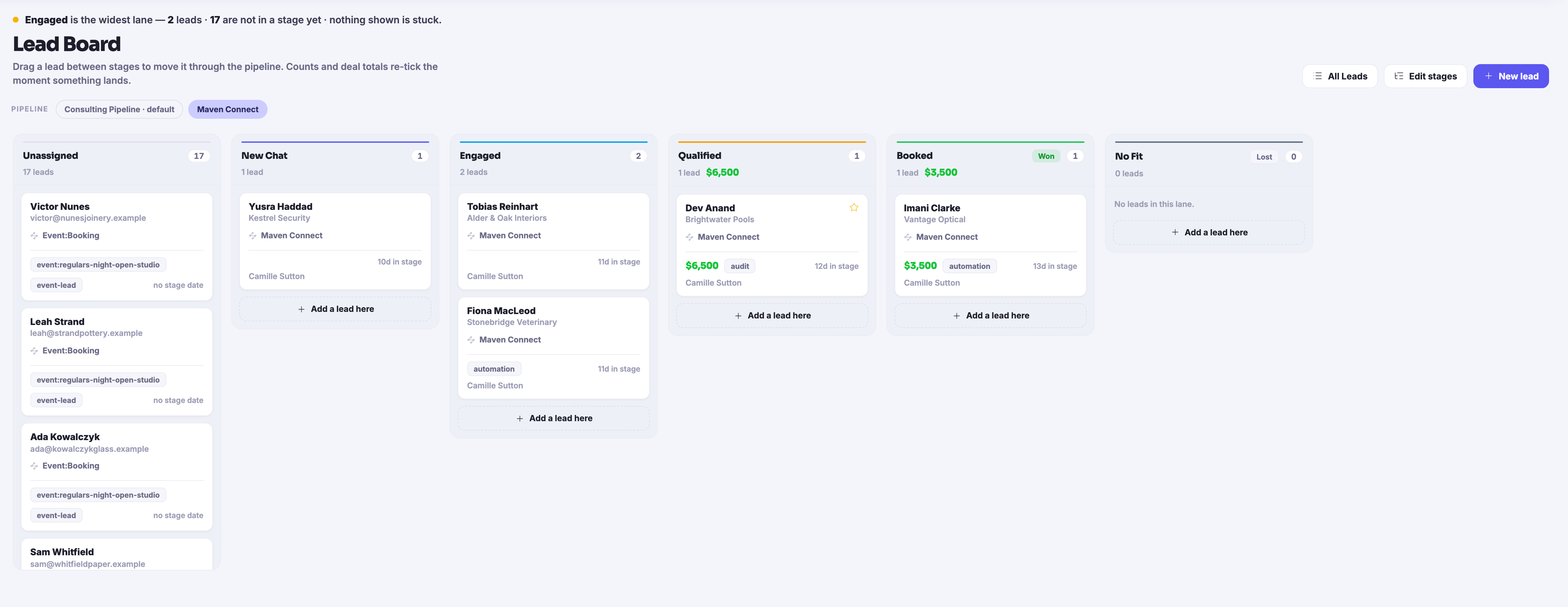
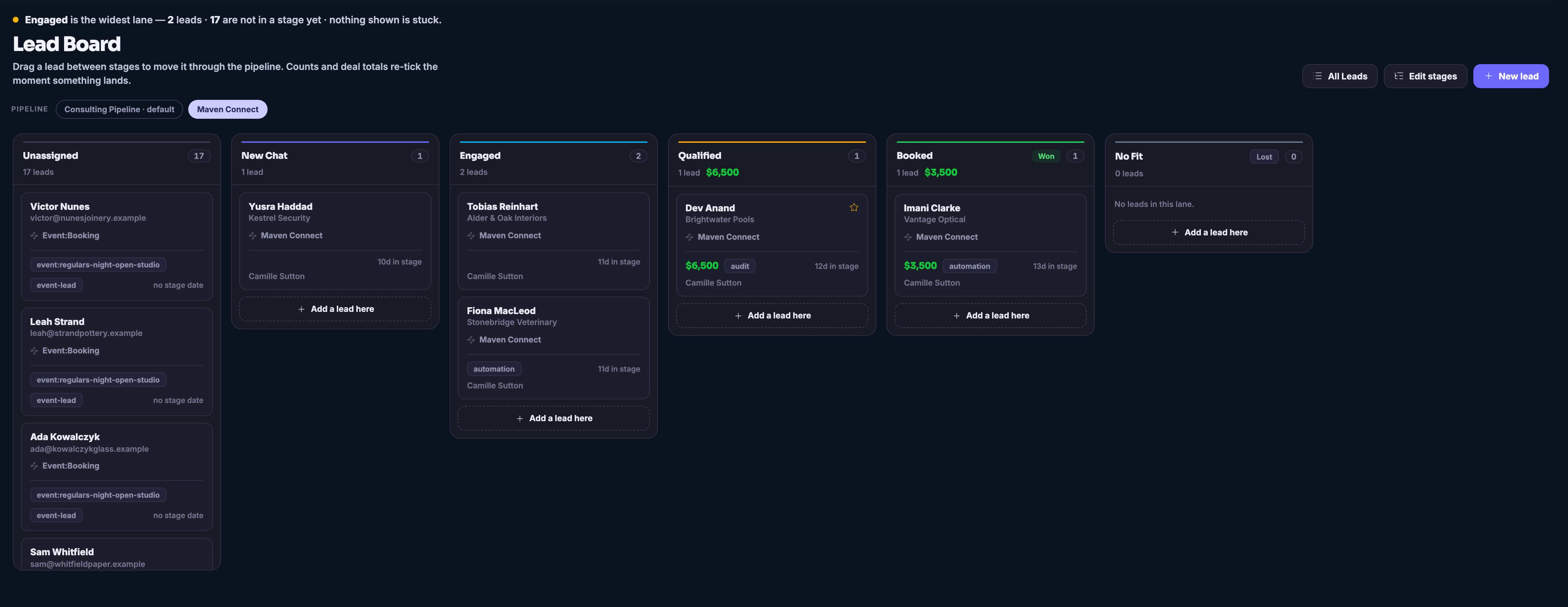
The same board showing a different pipeline: the switcher has been moved to the one fed by the platform’s own chat, and every lane has changed with it — new chat, engaged, qualified, booked, and no fit — because the stages belong to the pipeline rather than to the board. The cards standing in the lanes came in through that channel, the lane headings and the line above them have re-reckoned for this pipeline, and the last lane holds nothing at all and says so in place of a card.The same board showing a different pipeline: the switcher has been moved to the one fed by the platform’s own chat, and every lane has changed with it — new chat, engaged, qualified, booked, and no fit — because the stages belong to the pipeline rather than to the board. The cards standing in the lanes came in through that channel, the lane headings and the line above them have re-reckoned for this pipeline, and the last lane holds nothing at all and says so in place of a card.
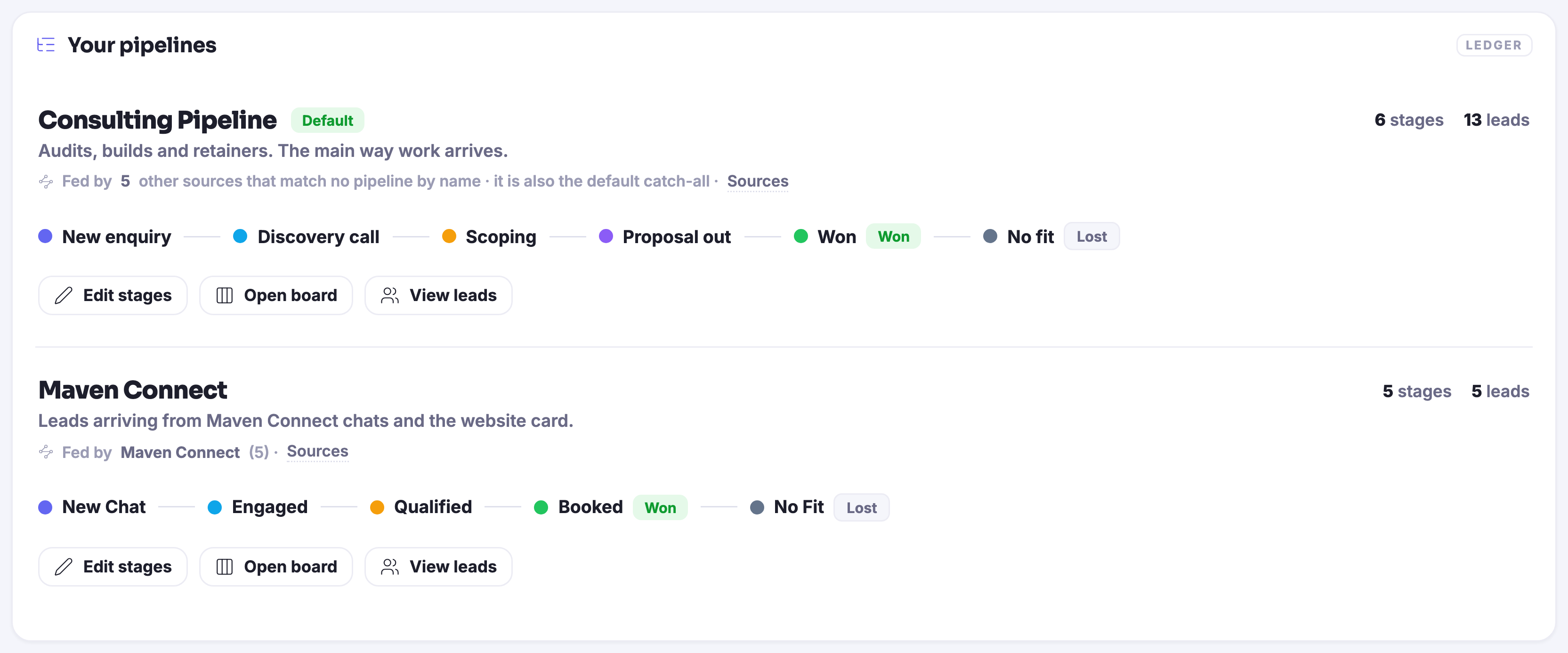
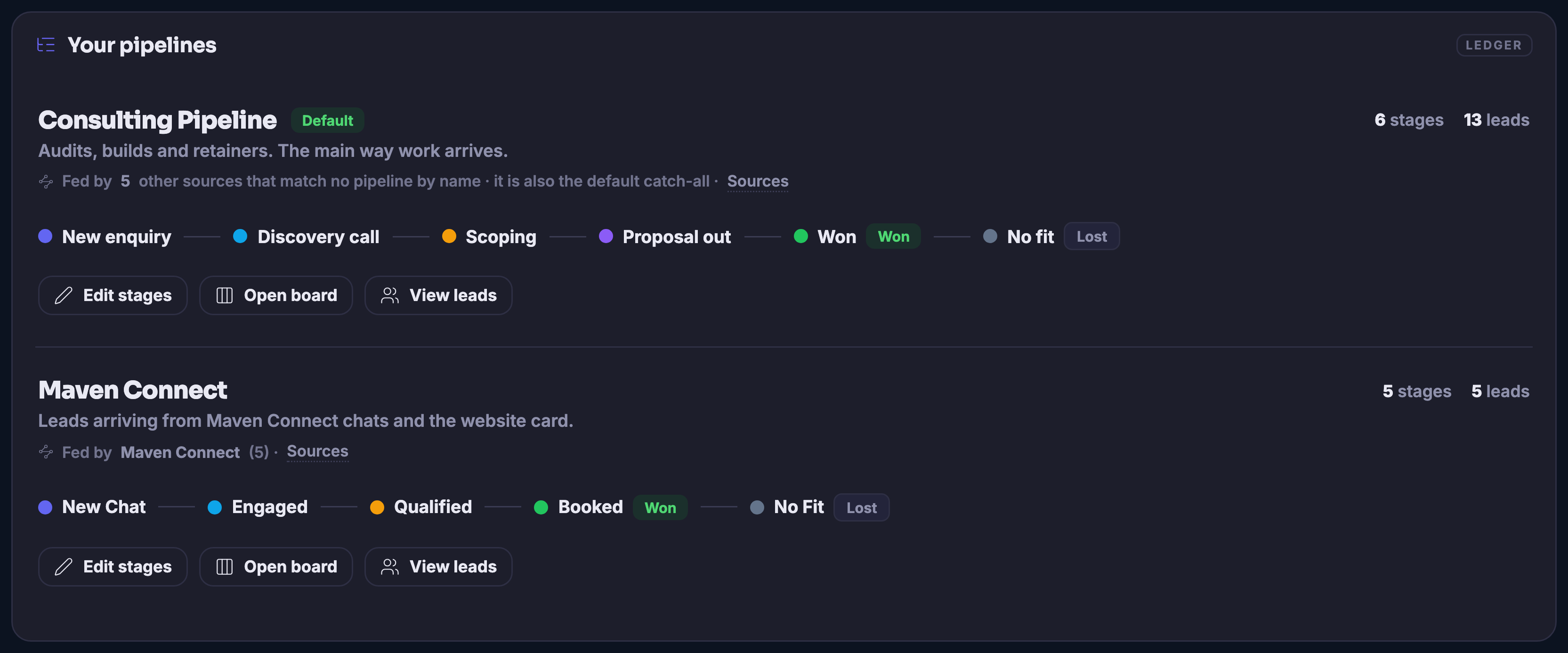
Your pipelines: both pipelines listed one under the other, each with its full chain of named stages in the order they run — new enquiry, discovery call, scoping, proposal out, won and no fit on the default one; new chat, engaged, qualified, booked and no fit on the one named after the channel that feeds it — each noting how many stages it has and how many leads are in it, which sources file into it, and which of the two catches anything that matches no pipeline by name, and each carrying its own controls to edit its stages, open its board and view its leads.Your pipelines: both pipelines listed one under the other, each with its full chain of named stages in the order they run — new enquiry, discovery call, scoping, proposal out, won and no fit on the default one; new chat, engaged, qualified, booked and no fit on the one named after the channel that feeds it — each noting how many stages it has and how many leads are in it, which sources file into it, and which of the two catches anything that matches no pipeline by name, and each carrying its own controls to edit its stages, open its board and view its leads.

Lead Board

Close
The Lead Board with every lane in frame: your pipeline as columns you move a lead between, with a lane for each stage you named — unassigned, new enquiry, discovery call, scoping, proposal out, won, and no fit at the end of the row — each lane headed by how many leads are standing in it and what they add up to, each card carrying the person, their company — or, in the unassigned lane, their email address standing in its place — where they came from, the tags on them, how long they have sat in the stage and, on every lane but that one, who is looking after them; above the lanes, a line naming the widest lane, the switcher that changes which pipeline the board is showing, and the control that edits the stages.The Lead Board with every lane in frame: your pipeline as columns you move a lead between, with a lane for each stage you named — unassigned, new enquiry, discovery call, scoping, proposal out, won, and no fit at the end of the row — each lane headed by how many leads are standing in it and what they add up to, each card carrying the person, their company — or, in the unassigned lane, their email address standing in its place — where they came from, the tags on them, how long they have sat in the stage and, on every lane but that one, who is looking after them; above the lanes, a line naming the widest lane, the switcher that changes which pipeline the board is showing, and the control that edits the stages.

Lead Board

Close
The same board showing a different pipeline: the switcher has been moved to the one fed by the platform’s own chat, and every lane has changed with it — new chat, engaged, qualified, booked, and no fit — because the stages belong to the pipeline rather than to the board. The cards standing in the lanes came in through that channel, the lane headings and the line above them have re-reckoned for this pipeline, and the last lane holds nothing at all and says so in place of a card.The same board showing a different pipeline: the switcher has been moved to the one fed by the platform’s own chat, and every lane has changed with it — new chat, engaged, qualified, booked, and no fit — because the stages belong to the pipeline rather than to the board. The cards standing in the lanes came in through that channel, the lane headings and the line above them have re-reckoned for this pipeline, and the last lane holds nothing at all and says so in place of a card.

Lead Board

Close
Your pipelines: both pipelines listed one under the other, each with its full chain of named stages in the order they run — new enquiry, discovery call, scoping, proposal out, won and no fit on the default one; new chat, engaged, qualified, booked and no fit on the one named after the channel that feeds it — each noting how many stages it has and how many leads are in it, which sources file into it, and which of the two catches anything that matches no pipeline by name, and each carrying its own controls to edit its stages, open its board and view its leads.Your pipelines: both pipelines listed one under the other, each with its full chain of named stages in the order they run — new enquiry, discovery call, scoping, proposal out, won and no fit on the default one; new chat, engaged, qualified, booked and no fit on the one named after the channel that feeds it — each noting how many stages it has and how many leads are in it, which sources file into it, and which of the two catches anything that matches no pipeline by name, and each carrying its own controls to edit its stages, open its board and view its leads.

A look inside Lead Board

Stills from the product, one after the next.

The Lead Board with every lane in frame: your pipeline as columns you move a lead between, with a lane for each stage you named — unassigned, new enquiry, discovery call, scoping, proposal out, won, and no fit at the end of the row — each lane headed by how many leads are standing in it and what they add up to, each card carrying the person, their company — or, in the unassigned lane, their email address standing in its place — where they came from, the tags on them, how long they have sat in the stage and, on every lane but that one, who is looking after them; above the lanes, a line naming the widest lane, the switcher that changes which pipeline the board is showing, and the control that edits the stages.The Lead Board with every lane in frame: your pipeline as columns you move a lead between, with a lane for each stage you named — unassigned, new enquiry, discovery call, scoping, proposal out, won, and no fit at the end of the row — each lane headed by how many leads are standing in it and what they add up to, each card carrying the person, their company — or, in the unassigned lane, their email address standing in its place — where they came from, the tags on them, how long they have sat in the stage and, on every lane but that one, who is looking after them; above the lanes, a line naming the widest lane, the switcher that changes which pipeline the board is showing, and the control that edits the stages.
The same board showing a different pipeline: the switcher has been moved to the one fed by the platform’s own chat, and every lane has changed with it — new chat, engaged, qualified, booked, and no fit — because the stages belong to the pipeline rather than to the board. The cards standing in the lanes came in through that channel, the lane headings and the line above them have re-reckoned for this pipeline, and the last lane holds nothing at all and says so in place of a card.The same board showing a different pipeline: the switcher has been moved to the one fed by the platform’s own chat, and every lane has changed with it — new chat, engaged, qualified, booked, and no fit — because the stages belong to the pipeline rather than to the board. The cards standing in the lanes came in through that channel, the lane headings and the line above them have re-reckoned for this pipeline, and the last lane holds nothing at all and says so in place of a card.
Your pipelines: both pipelines listed one under the other, each with its full chain of named stages in the order they run — new enquiry, discovery call, scoping, proposal out, won and no fit on the default one; new chat, engaged, qualified, booked and no fit on the one named after the channel that feeds it — each noting how many stages it has and how many leads are in it, which sources file into it, and which of the two catches anything that matches no pipeline by name, and each carrying its own controls to edit its stages, open its board and view its leads.Your pipelines: both pipelines listed one under the other, each with its full chain of named stages in the order they run — new enquiry, discovery call, scoping, proposal out, won and no fit on the default one; new chat, engaged, qualified, booked and no fit on the one named after the channel that feeds it — each noting how many stages it has and how many leads are in it, which sources file into it, and which of the two catches anything that matches no pipeline by name, and each carrying its own controls to edit its stages, open its board and view its leads.

The deeper win

A closed deal doesn't stop at the handshake.

Because your pipeline lives beside your money and your projects, “won” is a beginning: the invoice is a click away, the project board is a click away, and this month's number already knows. No re-typing a name five times into five tools.

Your client book

Every client, one clean roster.

Every client relationship — active work, history, money and notes — in one place your whole team can serve from. A lead that closes does not leave the hub; it becomes a client with the whole story still attached.

The book, organizedActive, past and potential clients, with the full story on each.
Handoffs without dropped ballsAnyone on the team can pick up a client and see everything that has happened.
Lifetime value, visibleKnow which relationships built the business, and which are quietly going cold.
Part of one platform — works hand-in-hand withContacts·Client Work·Money Flow

Your next customer is already in your inbox.

Give every “maybe” a place to live — free, today.

Get started now

The real screens

The Lead Hub, signed in.

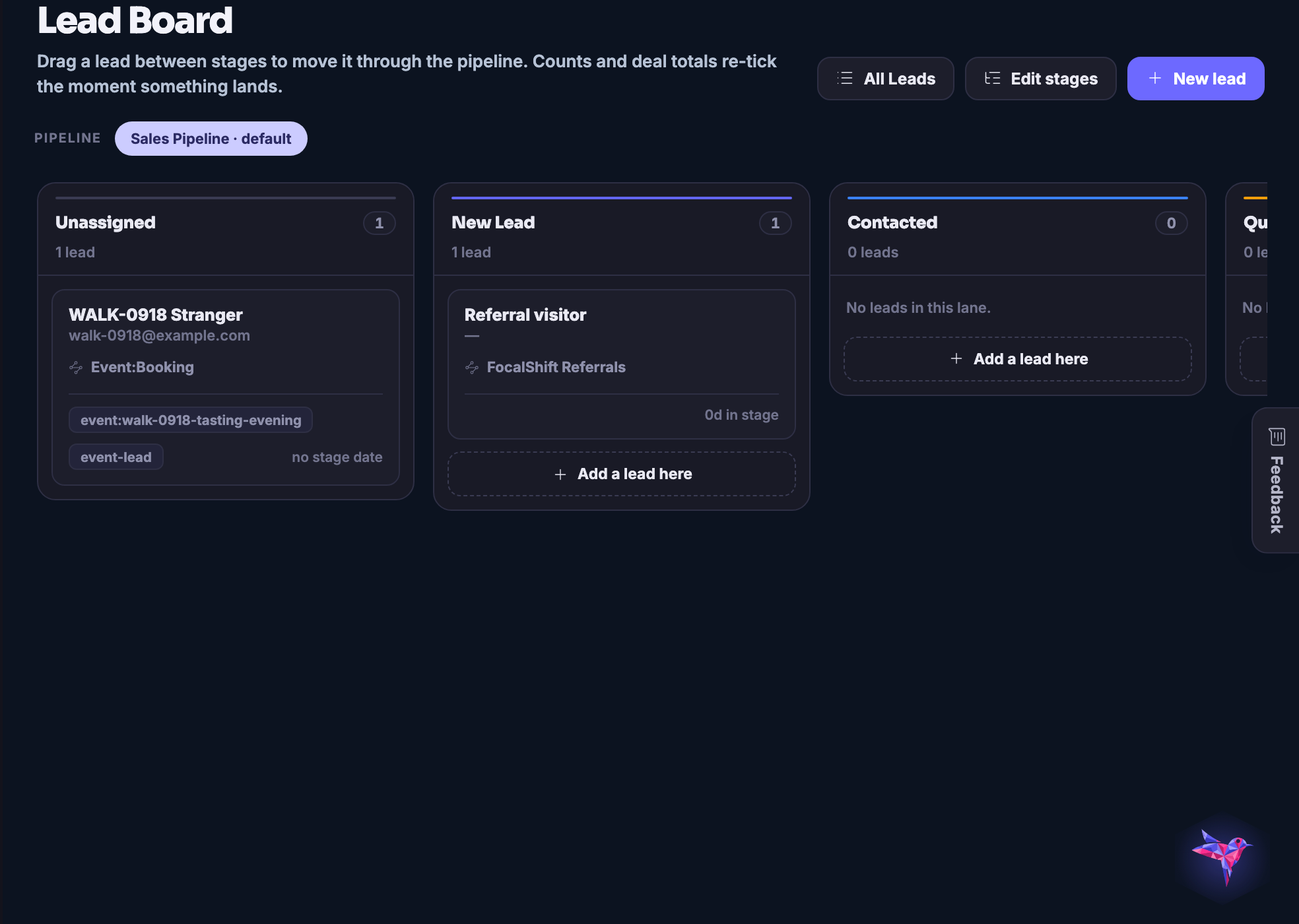
Two screens from a real account: every lead in one list, and the same leads as a board you move by hand.

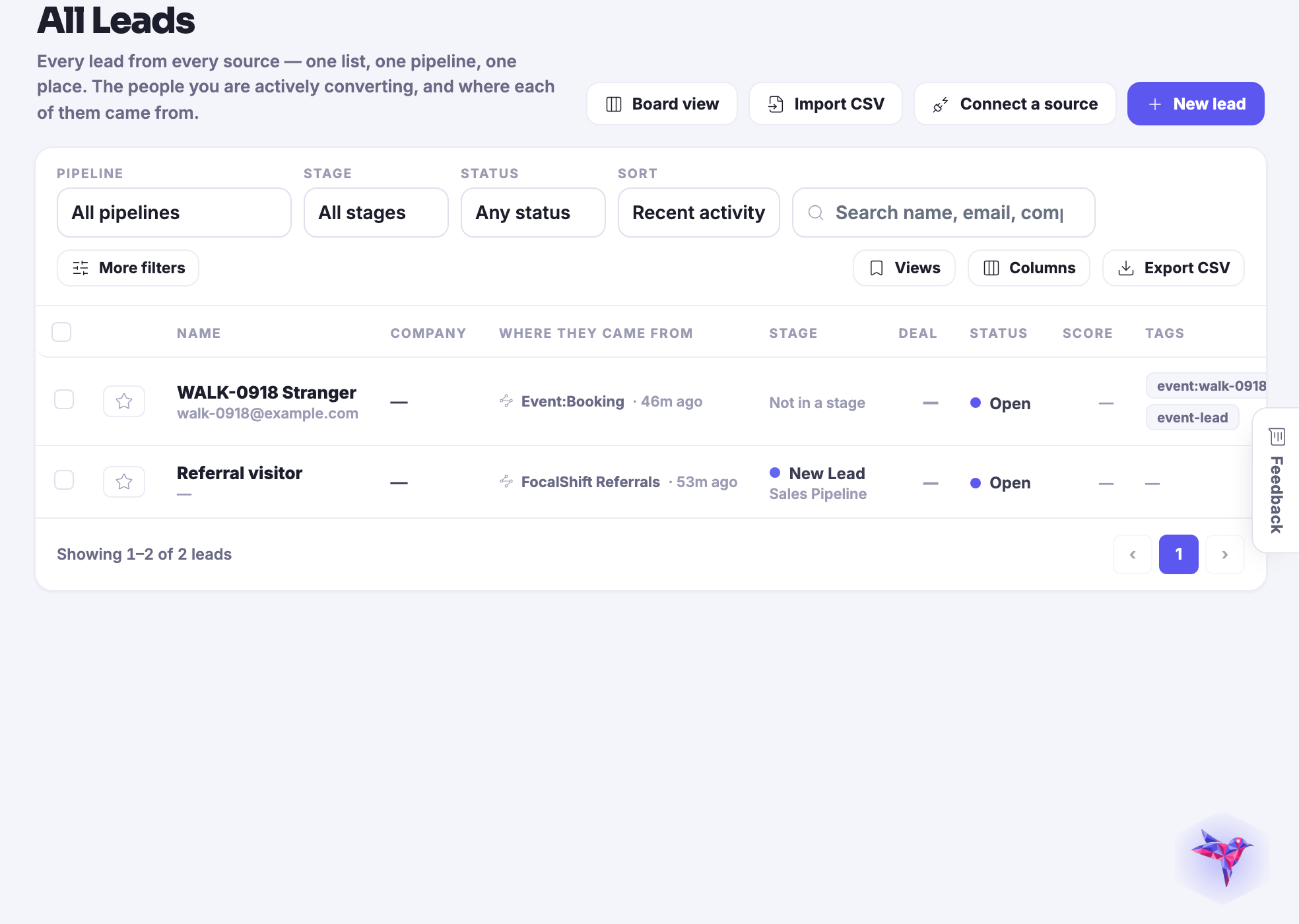
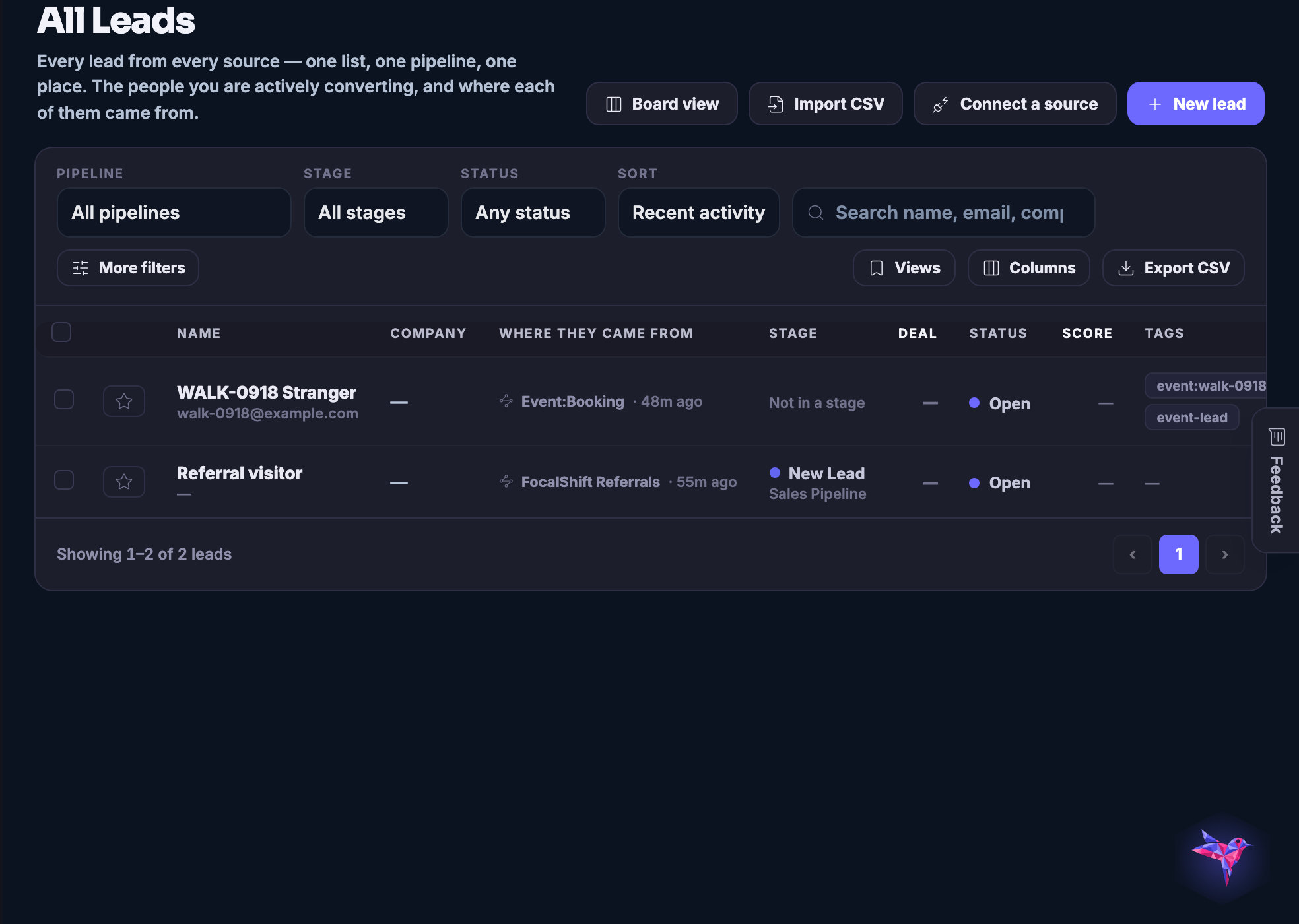
All leads — Everyone who ever raised a hand, with where they came from and what state they are in.
All leads

Everyone who ever raised a hand, with where they came from and what state they are in.

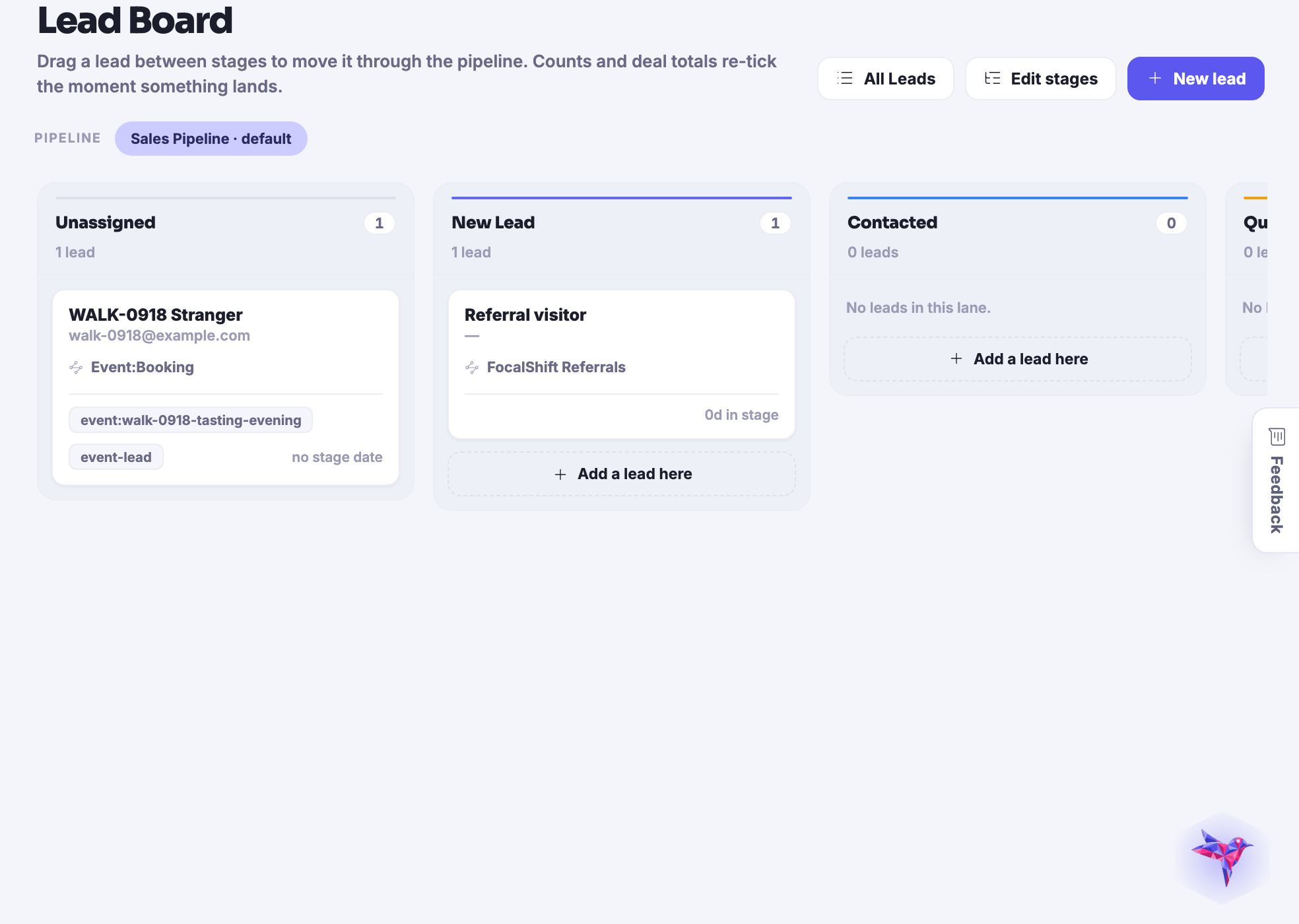
Lead board — The same people as lanes, so moving somebody forward is one motion and the totals keep themselves.
Lead board

The same people as lanes, so moving somebody forward is one motion and the totals keep themselves.

Captured from a demo business on a live account, so the board is nearly empty. A page that showed a full pipeline would be showing you a pipeline that is not yours.

Nobody slips through. Ever again.

Join the beta program
One connected destination

Go deeper without losing the thread.

Each title beginning with a hashtag is a direct destination. The navigation can bring you to the exact part of the story without creating another disconnected page.

Know where the relationship began.

Know where buyers come from.

Tag every lead with its source and let the data settle the argument — double down where customers actually start.

Find the next right customer on purpose.

Find your next customers on purpose.

Stop waiting for leads to wander in. Finder helps you build prospect lists that match the customers you already win.

Bring the relationship history with you.

Bring your list with you.

One CSV upload turns years of scattered contacts into a working pipeline — mapped, deduplicated and ready to work by lunch.

Next Up: Conversations

Bring every customer channel into one connected inbox.

Ask Maven