














Because you said losing leads
.
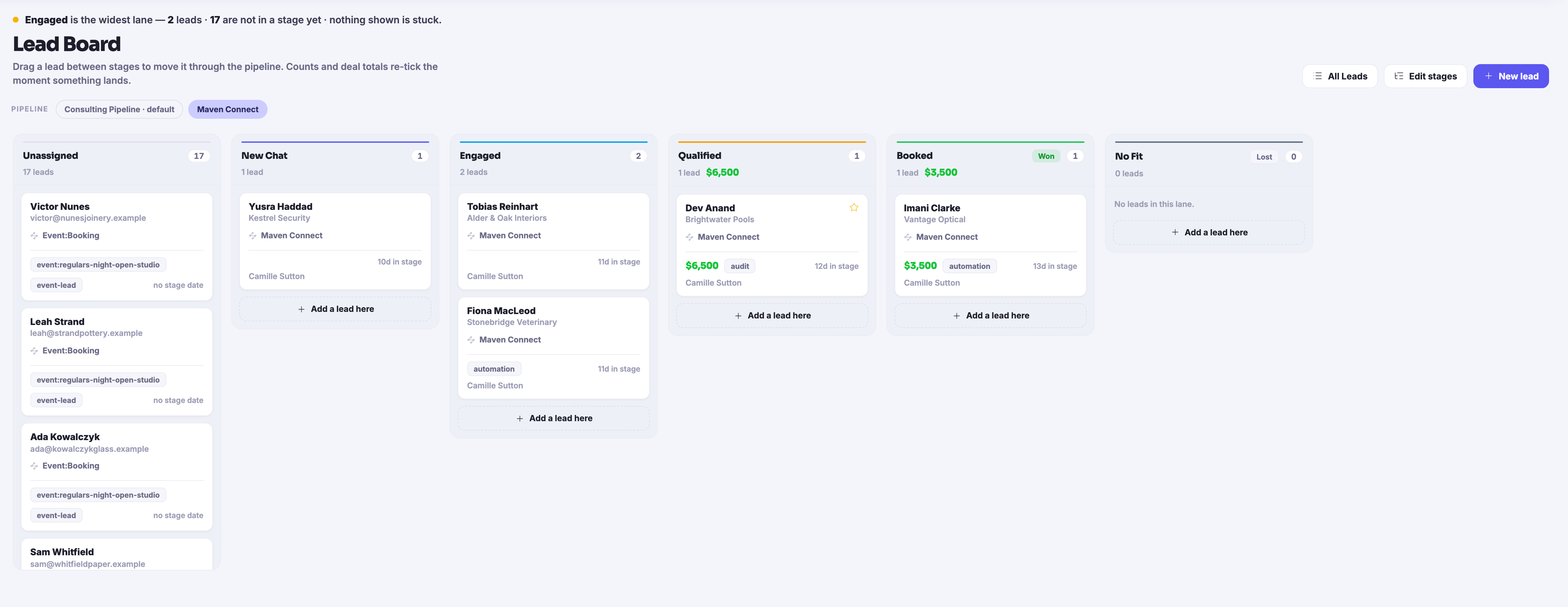
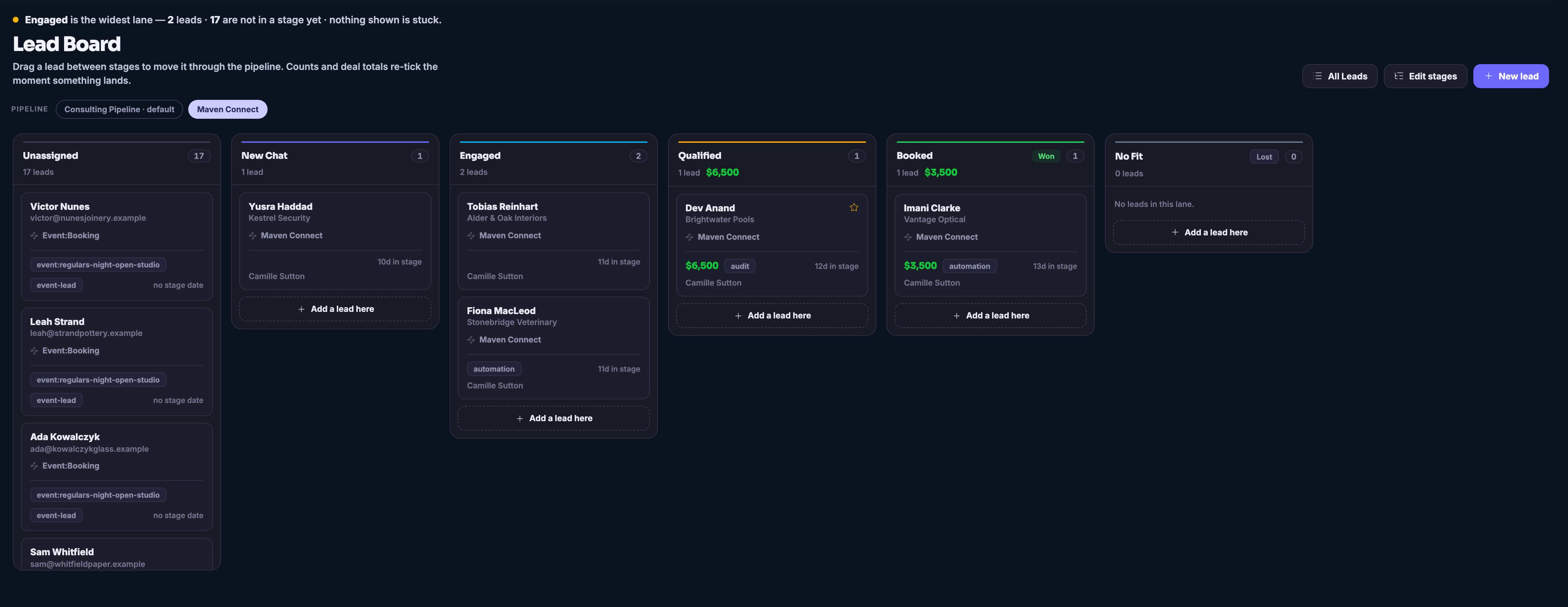
Lead Board
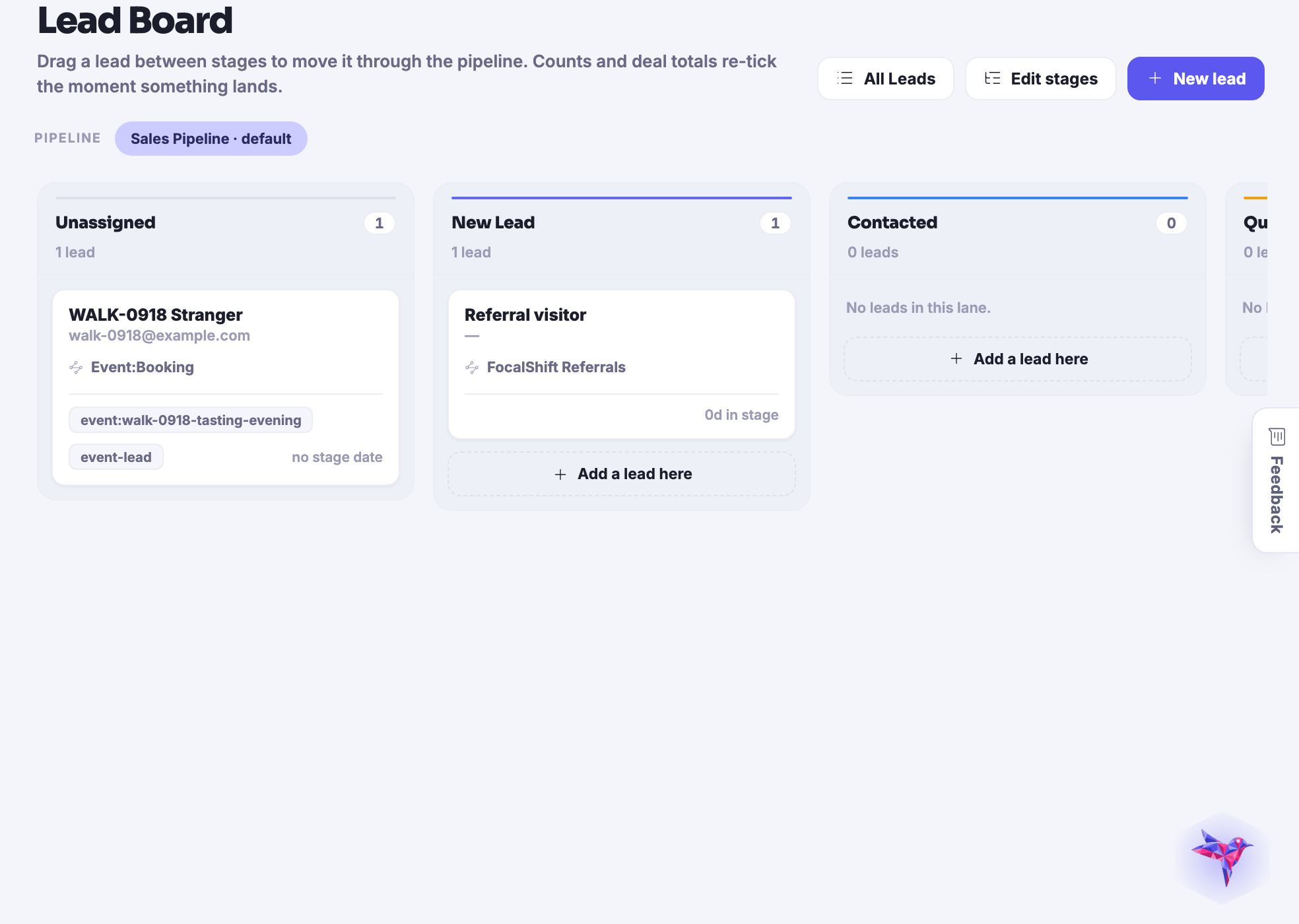
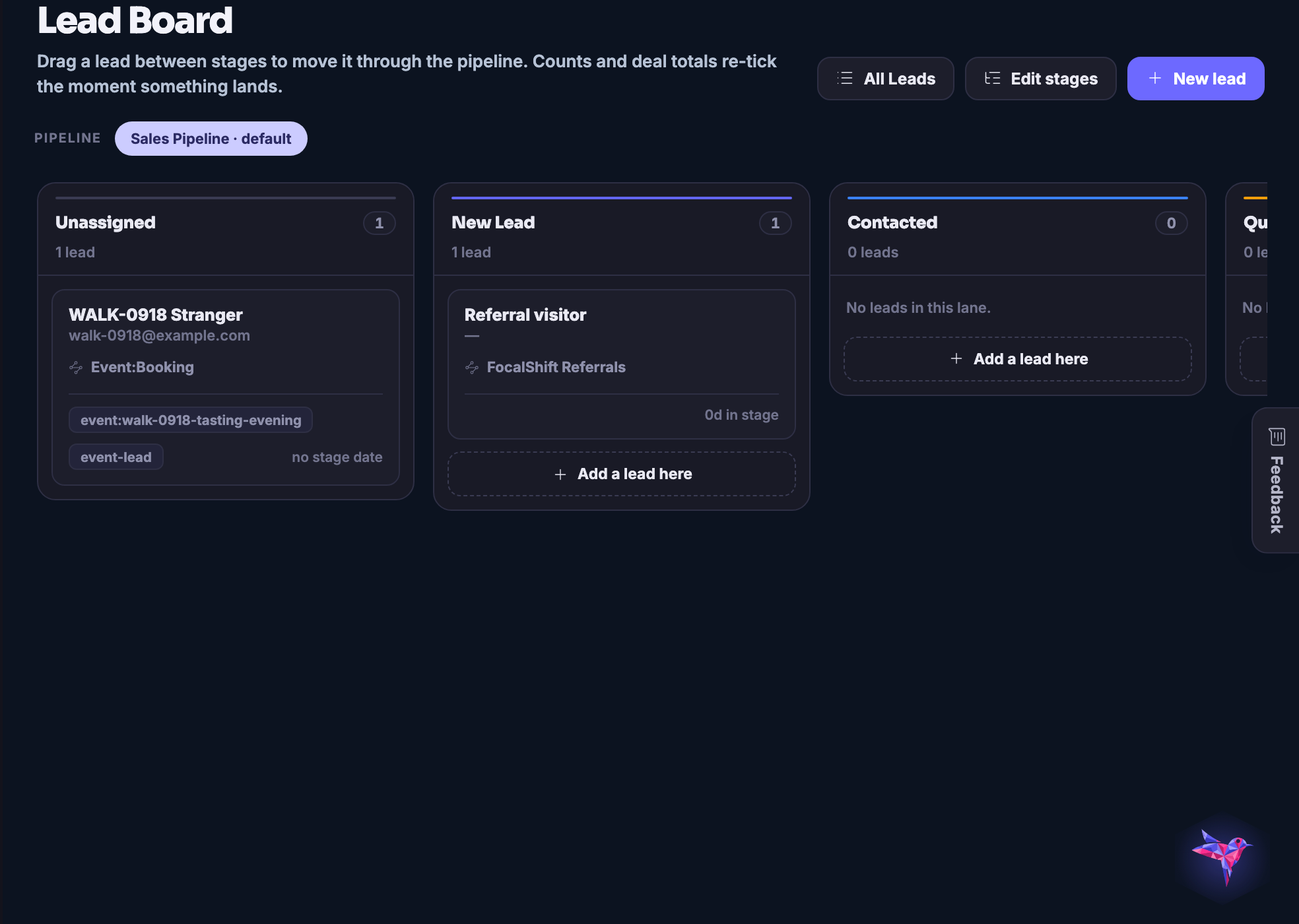
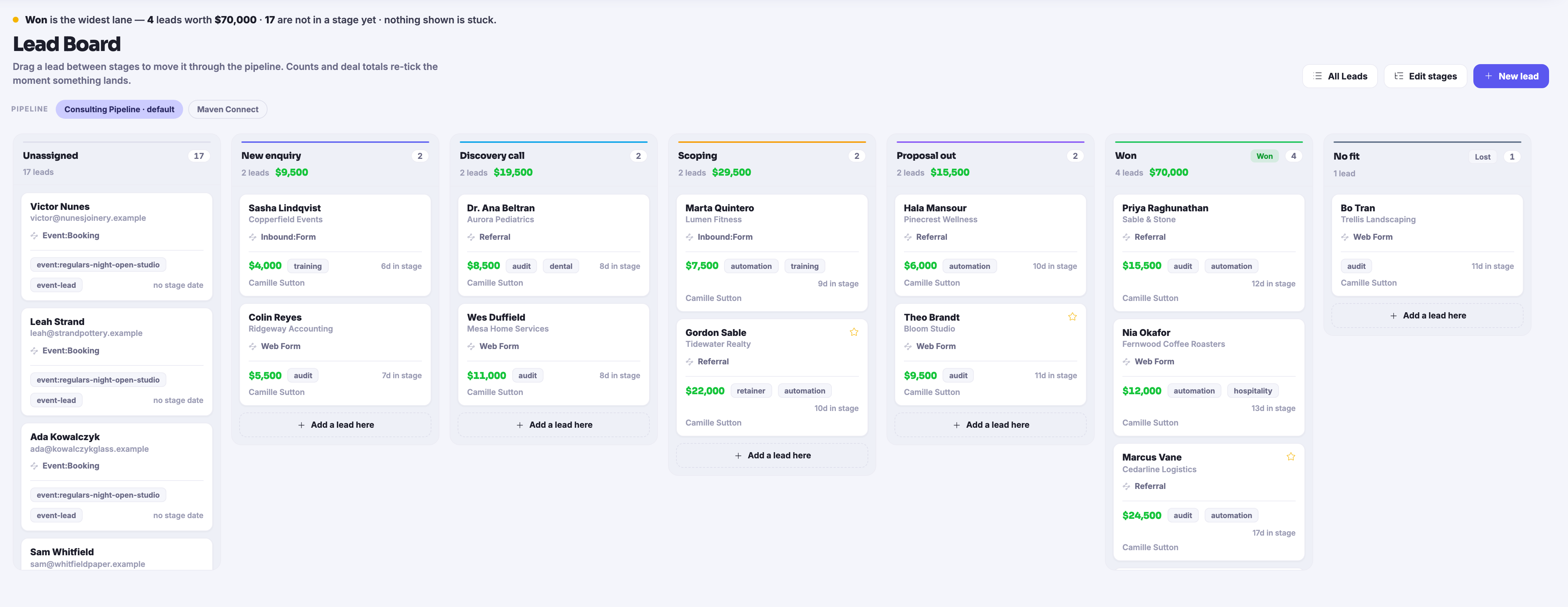
Your pipeline as columns you move a card between — and the stages are the ones you set.
Read more about Lead Board
The pipeline is not a spreadsheet of hope; it is the list of what is genuinely waiting on you.
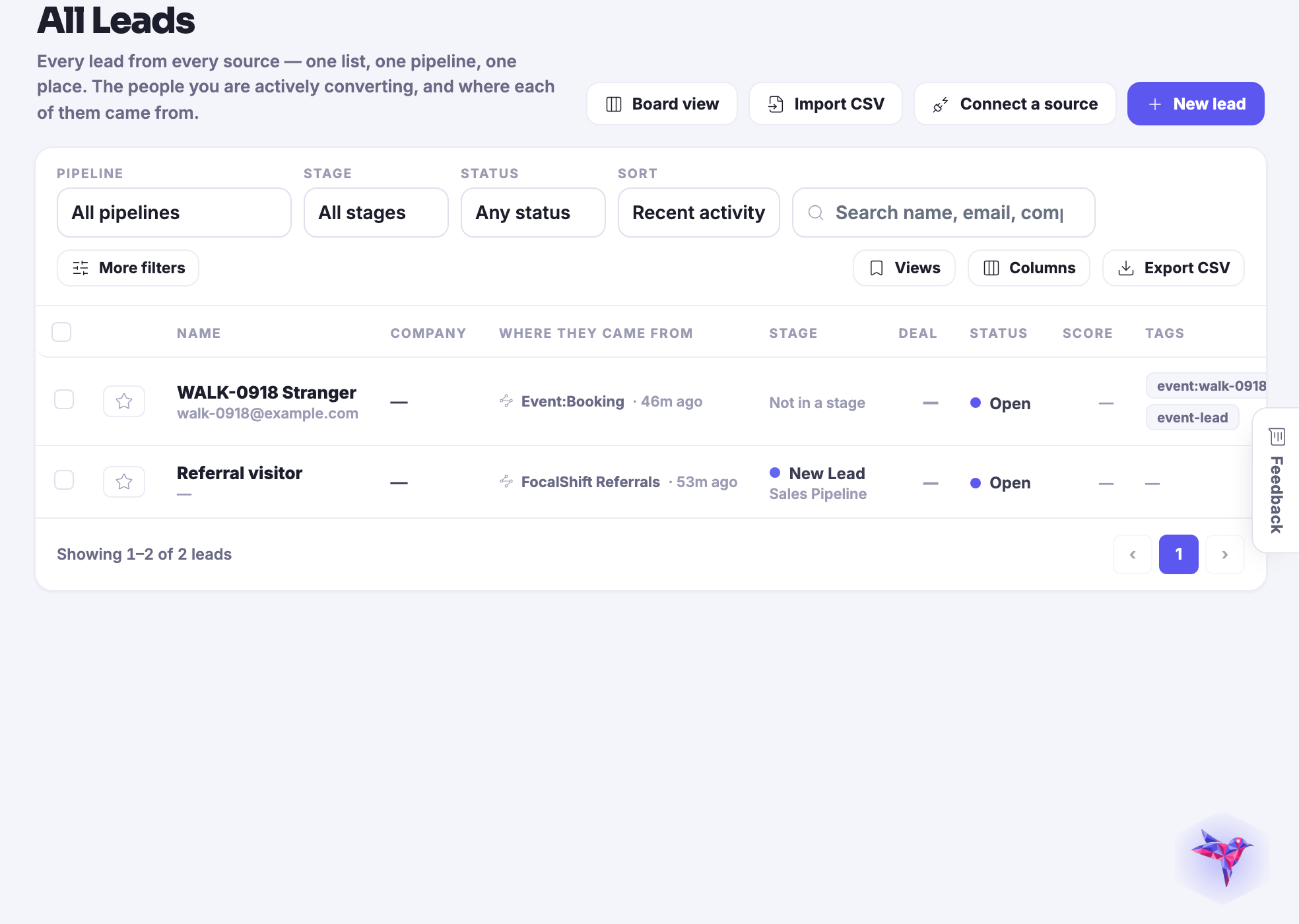
A board is a shape you can read across the room. Each lane is a stage you named, each card is a person, and the width of the board is the shape of your month. Nothing is hidden behind a filter you forgot you set.
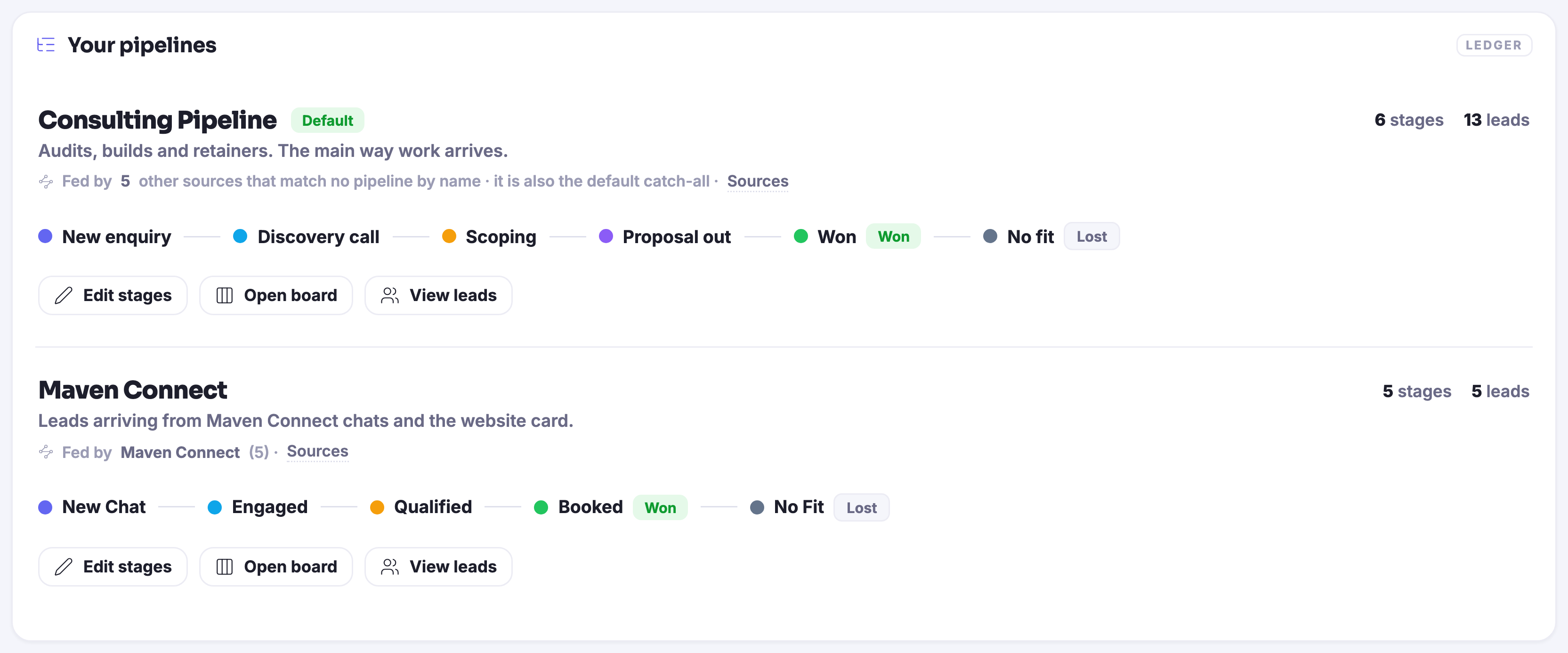
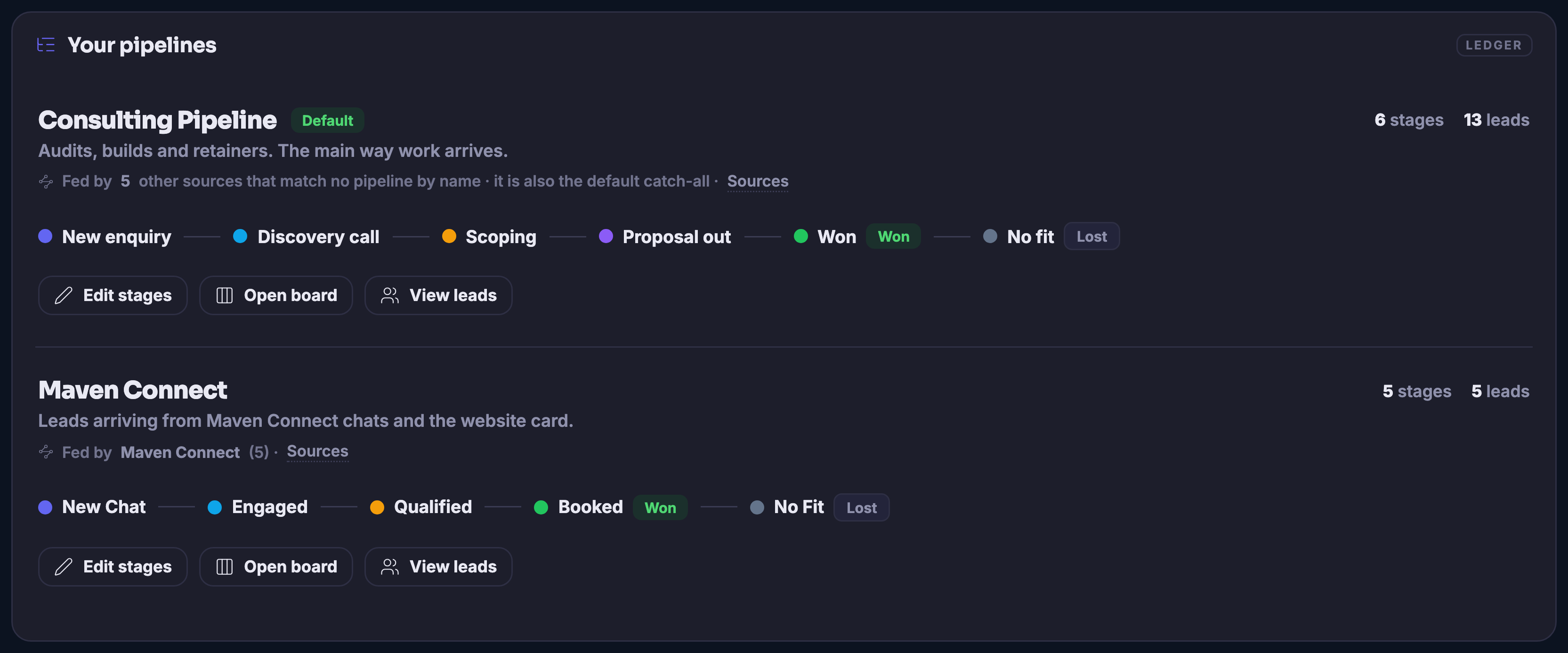
The stages are the point. A pipeline that came out of a box describes somebody else’s business; these are the steps you actually take, in the order you actually take them, editable the day that order changes. Name a pipeline after a channel and its leads file themselves into it.
Moving a card is not just a gesture. The lane it lands in re-ticks, the record behind it updates, and a stage change can start the next thing without you — the note, the task, the time in the diary.
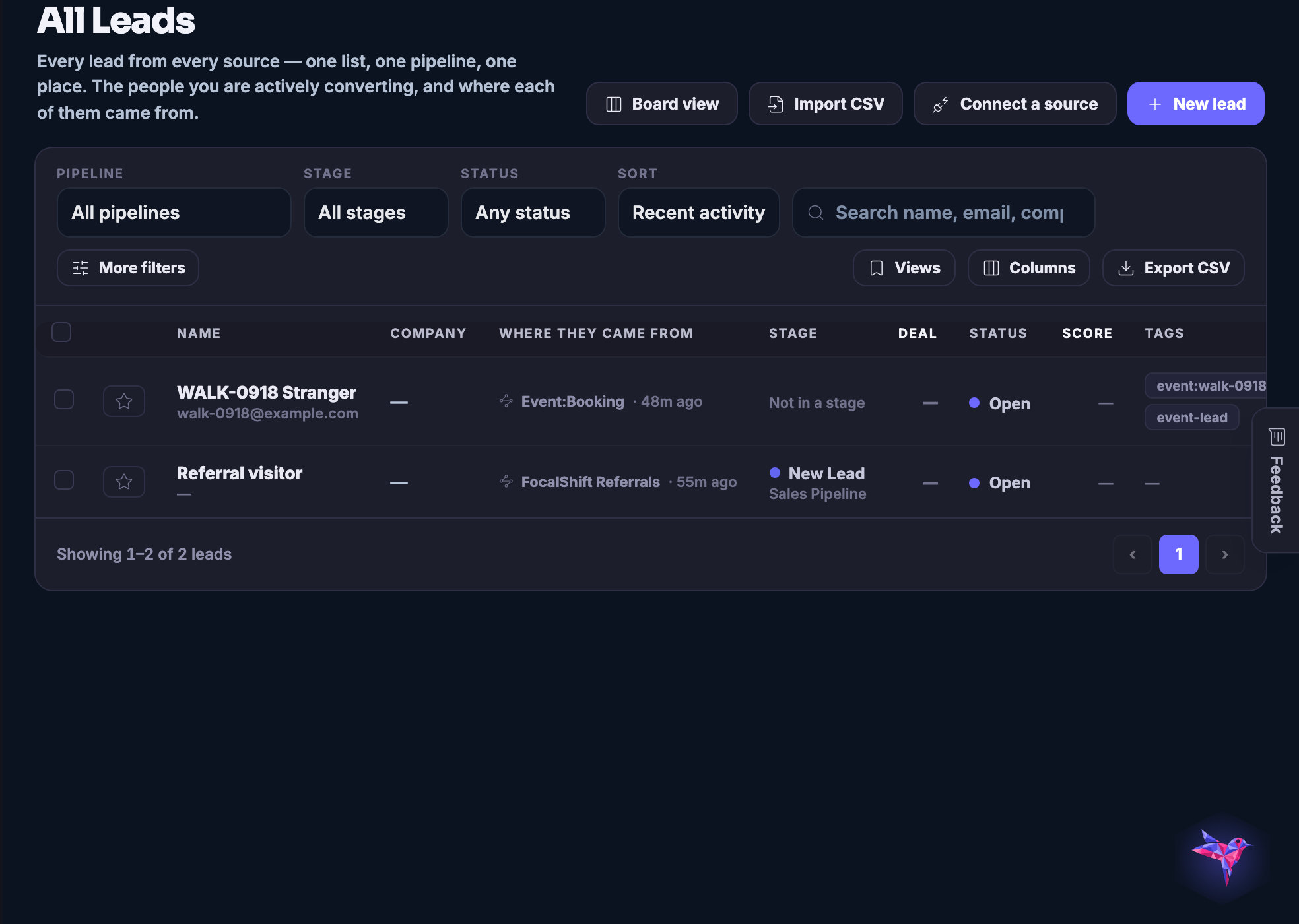
And the card is not a title. Behind it is the whole person: the form they filled, the page they came from, the letter they answered, the call that is booked. When you open it before you dial, you already know why they wrote.
What it actually does
- A pipeline with real stages you set
- Columns you move a lead between, with the lane re-ticking as it lands
- More than one pipeline, each fed by the channel it belongs to
What that changes for you
- Nothing sits in “I will get to it” unseen
- You can see the shape of the month without opening anything
- Handing a customer to someone else takes a minute
You come away with a pipeline whose next move is obvious.
Works seamlessly with