















Maven adds this one: nobody oversells on purpose — it happens because two places were each sure they still had one.
Inventory
One count per thing you sell, and it moves wherever the sale happened.
Read more about Inventory
A count is only true if it moves the moment something leaves the shelf.
Stock lives with the product, not in a second document. Every location holds its own on-hand count, and every sale, return and delivery moves it as it happens. That is the whole trick: the number you look at is the number that is true, so you can order from it.
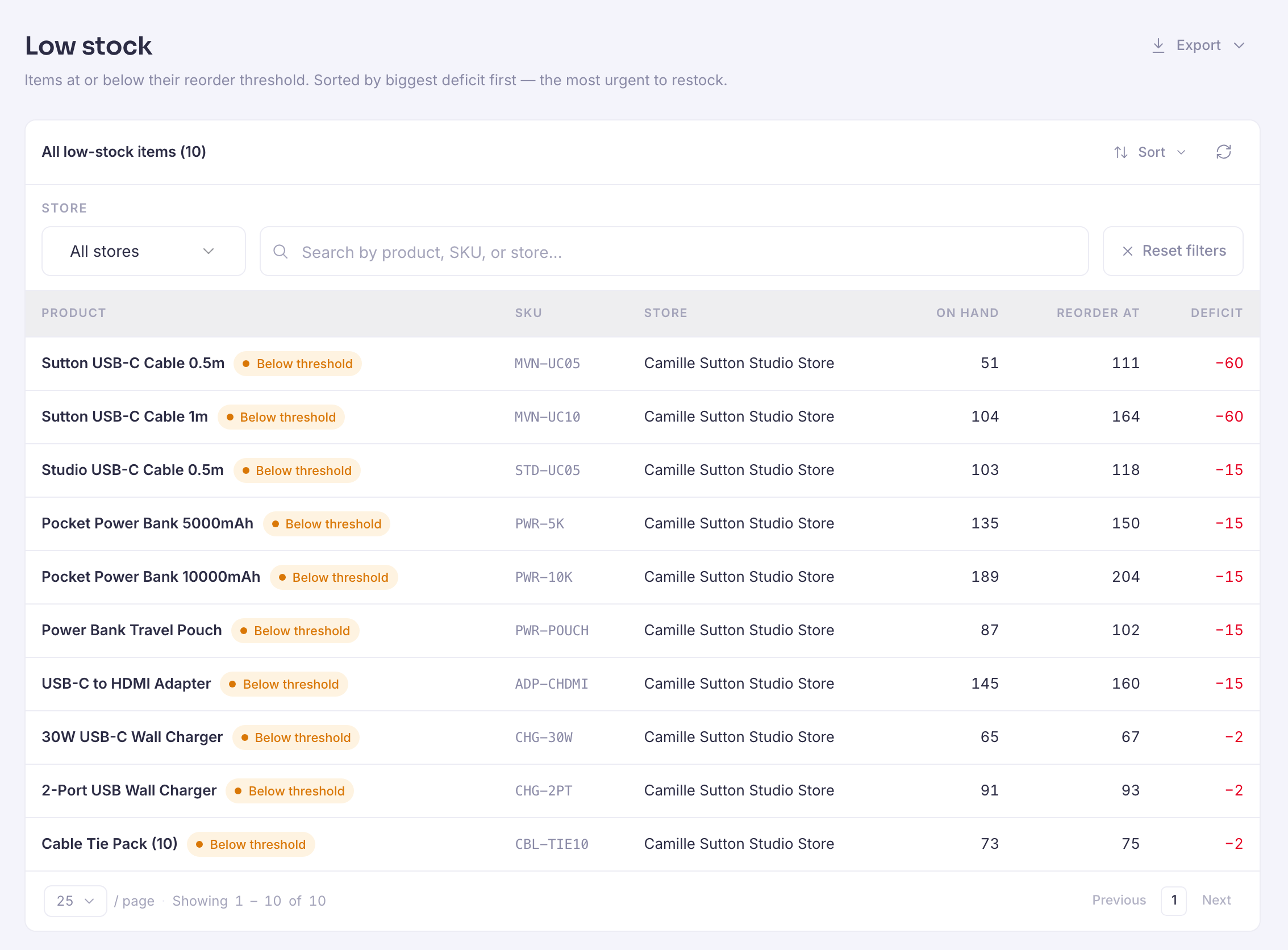
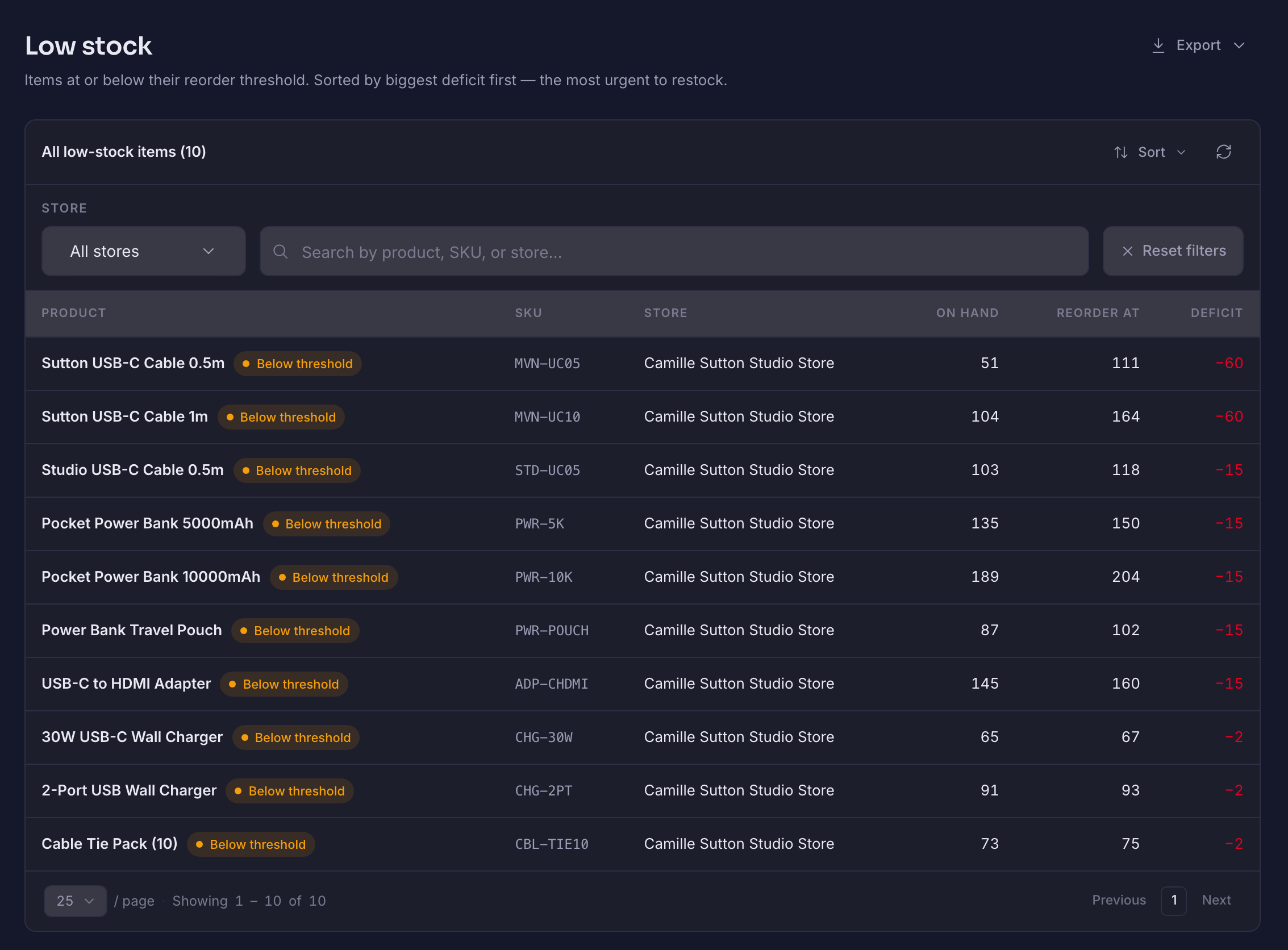
Reorder points turn the count into a warning. Set the level a line should never drop below and it raises its own hand while there is still a week to do something about it. Suppliers and Purchasing holds the other half — raise a purchase order, receive the goods against it, and see what is owed for what arrived.
Stock takes and transfers keep the count honest across a chain. Count a shelf and record what you actually found; move stock from the store that has it to the store that needs it. The gap between what should be there and what is gets flagged rather than discovered at the end of a quarter.
Because the count sits inside the same business as everything else, a low shelf can start something. A rule can raise a card on a Focus Board, tell you in your bell, or send a note to whoever does the ordering — set once, in plain words, and then left alone.
What it actually does
- Stock counts that follow a sale everywhere
- Reorder points, stock takes and transfers between locations
- Purchase orders, receiving, and what is owed to your suppliers
What that changes for you
- You stop finding out you sold what you ran out of
- Ordering runs on a count, not on a hunch
- The gap between what should be there and what is gets flagged, not discovered
You come away with a shelf that agrees with the till.
Works seamlessly with