Because you said my online shop
.
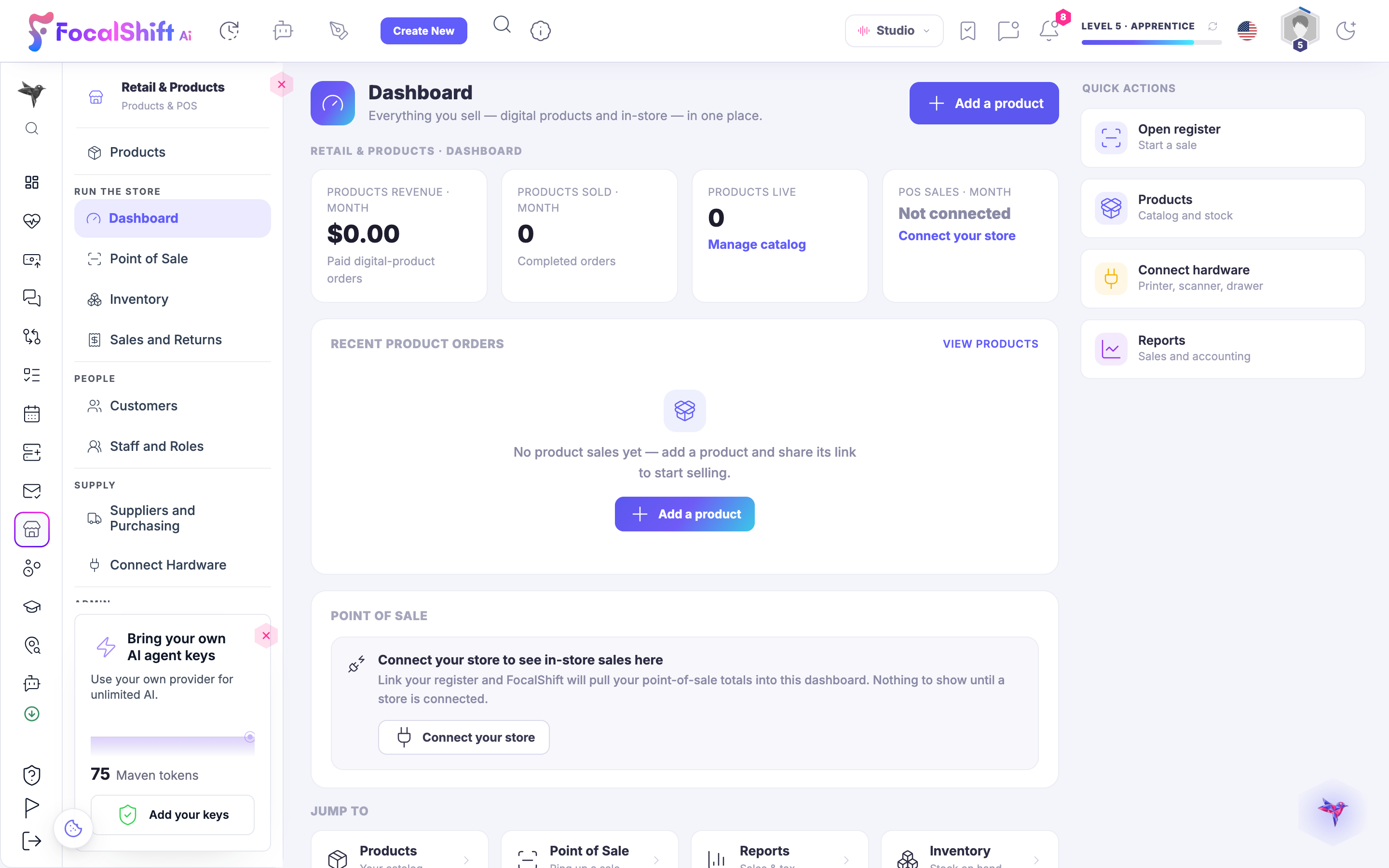
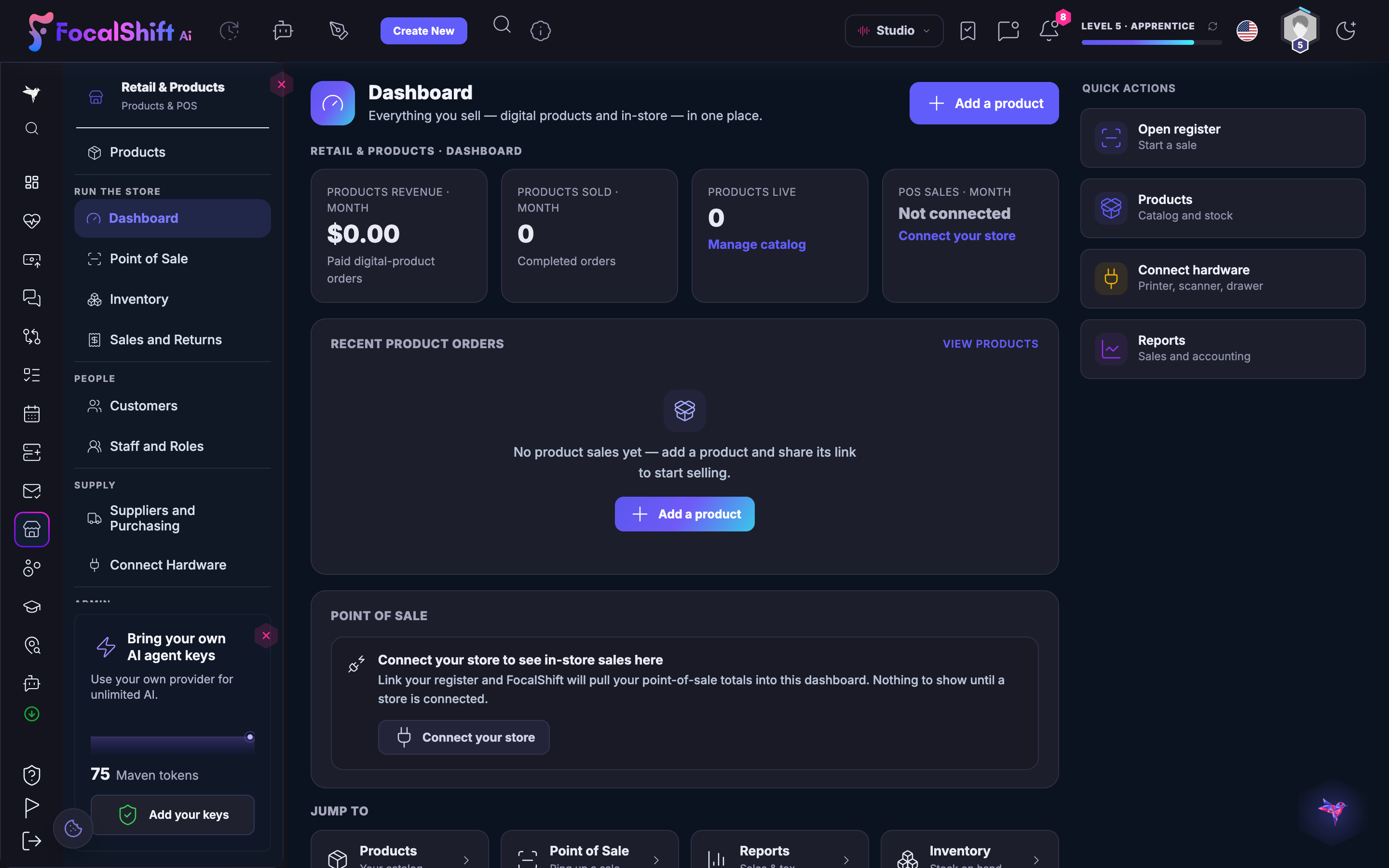
Sua loja
The register, the shelf and the door — one place, and the place is yours.
A register that lives in your storeRing up a sale, hold an order, close the day — live where you stand.
A digital shelf beside the tillDownloads, files and templates, sold from the same counter.
Your own address on the doorThe shop sits on your corner of the web, not on someone else's.
Read more about Your storefront
Everything you sell, in one catalogue, on a page that belongs to you.
Things you ship, things you send and hours you sell all sit in the same catalogue, so a price change happens once. The checkout is yours, and what it takes in lands in Money Flow without you moving it.
Stock, suppliers and staff live behind the same door: the thing you sell, the person who sold it and the shelf it came from are one record, not three.
Customers who buy from the shop walk straight into your book — the same book your letters read from and your leads warm in. A sale is never a stranger.
If you already sell somewhere else, the storefront meets you there and keeps your catalogue in step, so opening this door never means closing another.
What it actually does
- One catalogue for physical, digital and time
- Your own checkout, on your own address
- Stock counts that follow a sale everywhere
What that changes for you
- A price only ever has to be changed once
- Nobody is renting you your own shopfront
- You stop finding out you sold what you ran out of
You come away with a first-time buyer, and an address to reach them at.
▶A look inside Your storefront
A door is only as busy as the people who find it. Next — the ones who almost did.
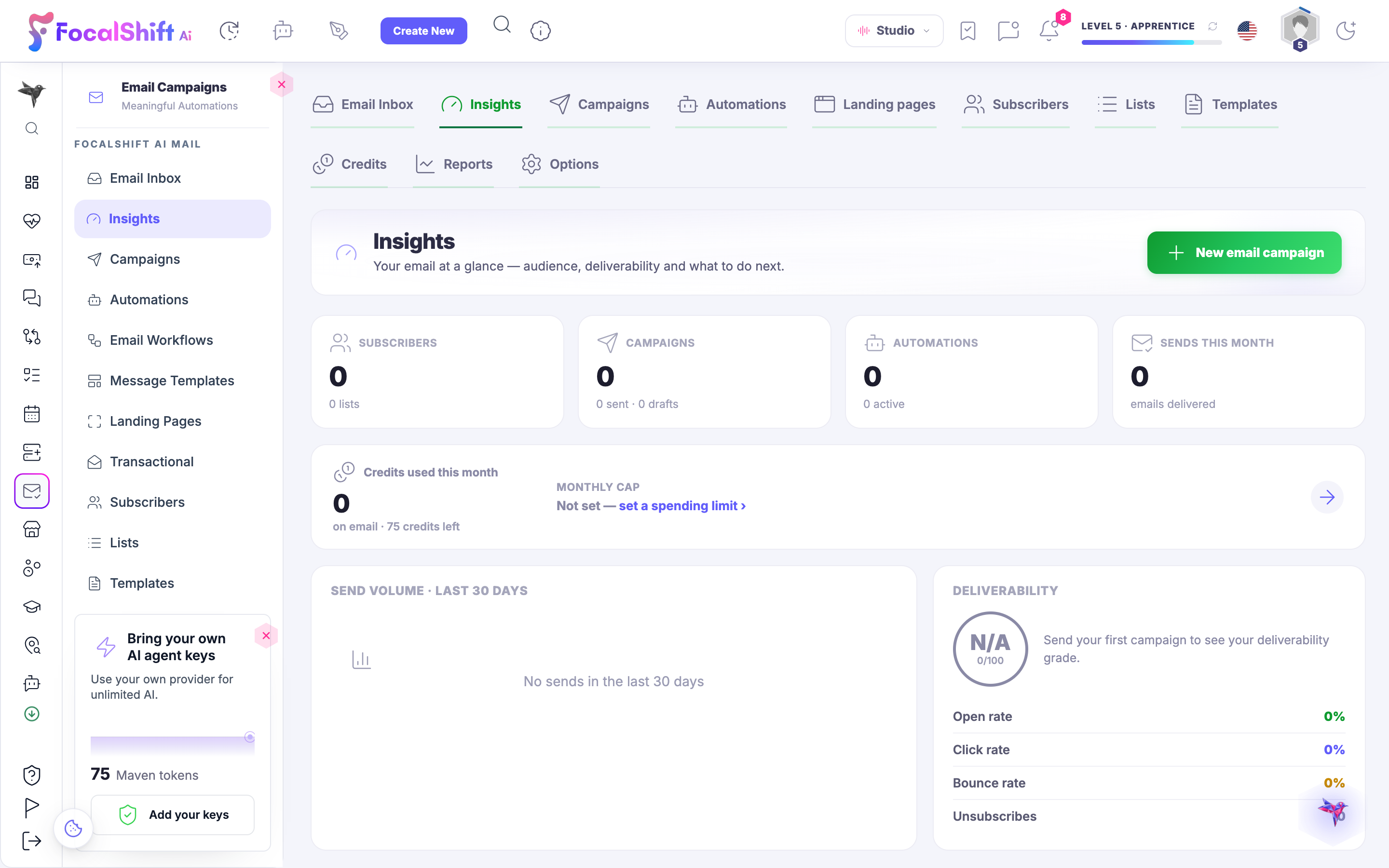
Because you said more leads
.
Lead Hub
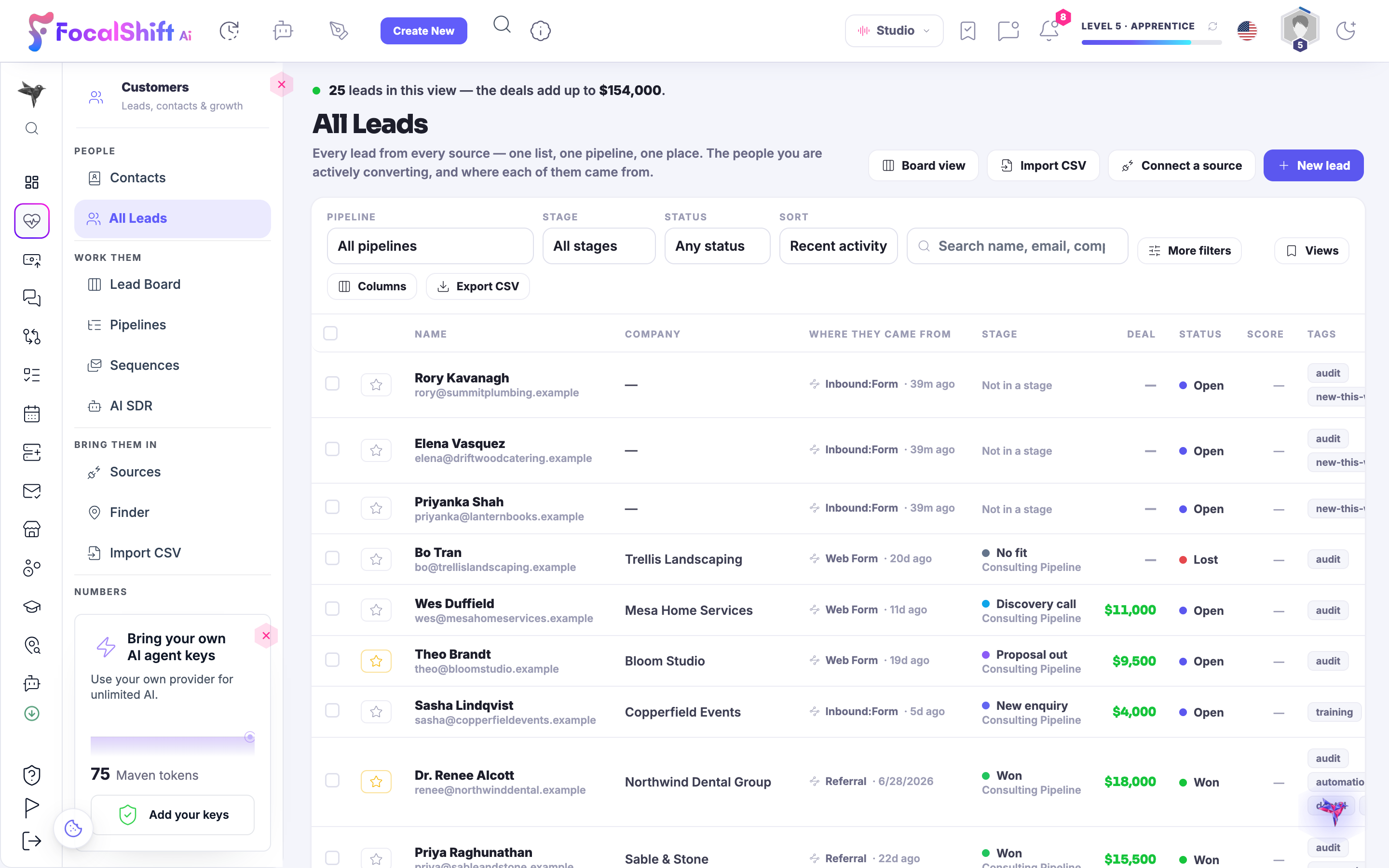
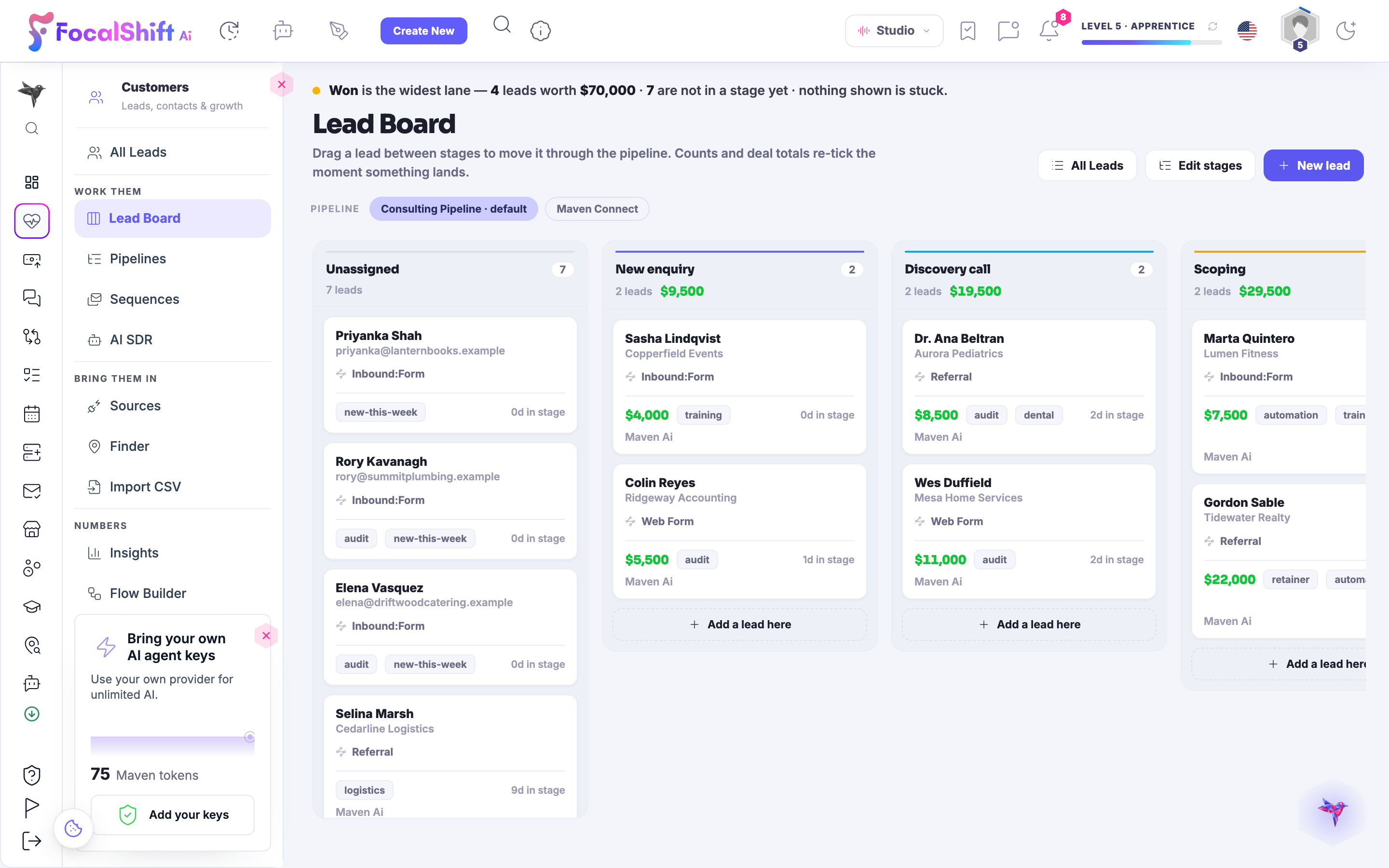
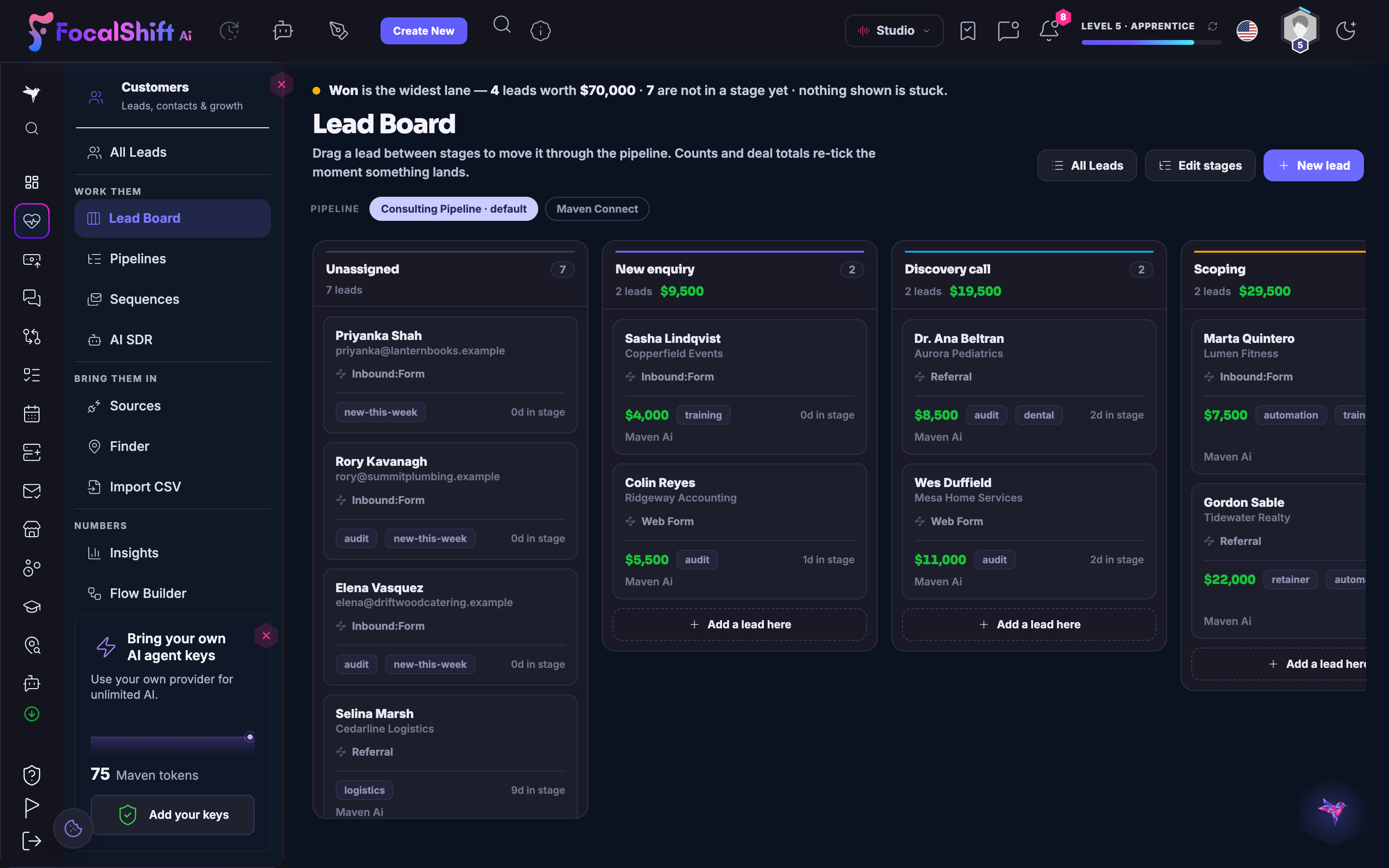
Every almost-customer gets a card, and every card knows what should happen next.
Every channel feeds one bookSite chat, forms, mail — each lead files itself where you will look.
A conversation becomes a lead the moment it warmsYou never retype a name that already spoke to you.
Pipelines that read like sentencesMove a card and the story updates; nothing shown is stuck.
Read more about Lead Hub
One card per person, and the next thing you owe them written on it.
Everything anyone has ever done with you sits on one card — what they bought, what they asked, what you said. The pipeline is not a spreadsheet of hope; it is the list of what is genuinely waiting on you.
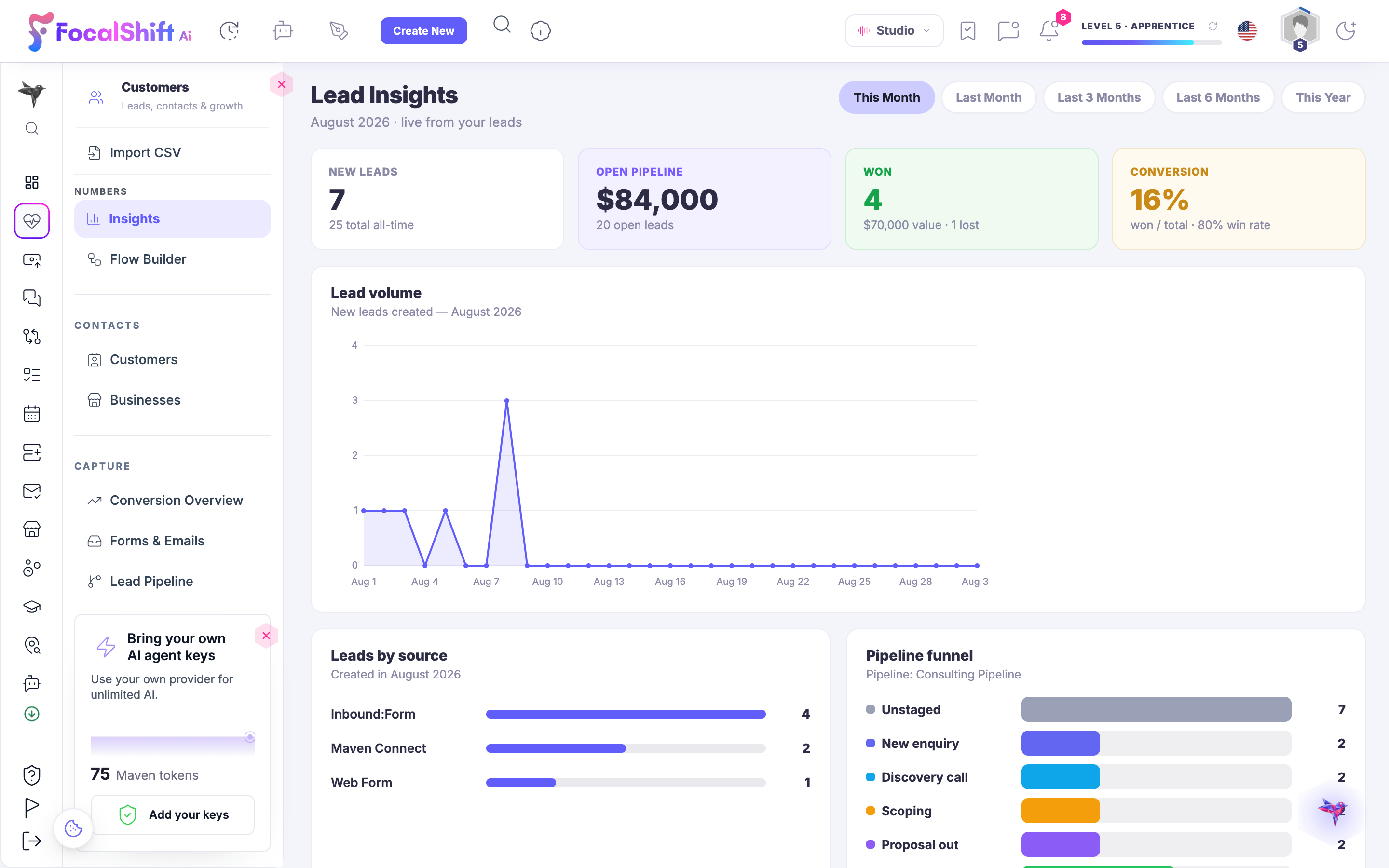
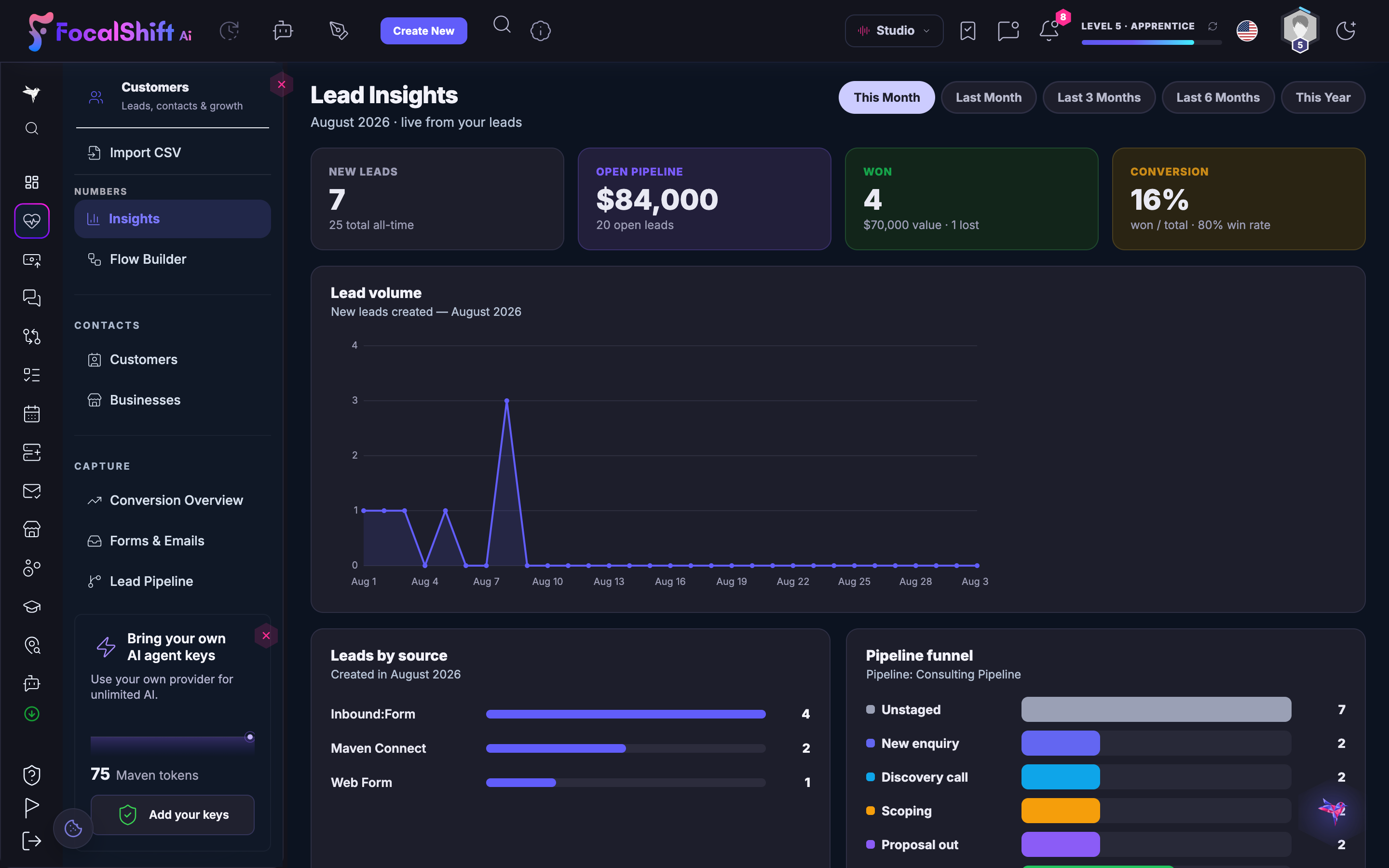
Sources is the honest half of lead generation: not just how many came, but where each one actually arrived from and which pipeline caught it. Rename a pipeline after a channel and its leads file themselves.
The finder works the other way round — when you know who you want, it goes looking. And the import door stands open for the book you already keep somewhere else.
Every card carries its own trail: the form they filled, the page they came from, the letter they answered. When you call, you already know why they wrote.
What it actually does
- One card per person, not one row per event
- A pipeline with real stages you set
- Everything they have ever done, on the same screen
What that changes for you
- You never open a conversation cold again
- Nothing sits in “I will get to it” unseen
- Handing a customer to someone else takes a minute
You come away with a customer with a history, and a next step already written.
▶A look inside Lead Hub
Leads multiply when the letter and the door keep working after you stop. Next — the part that runs itself.
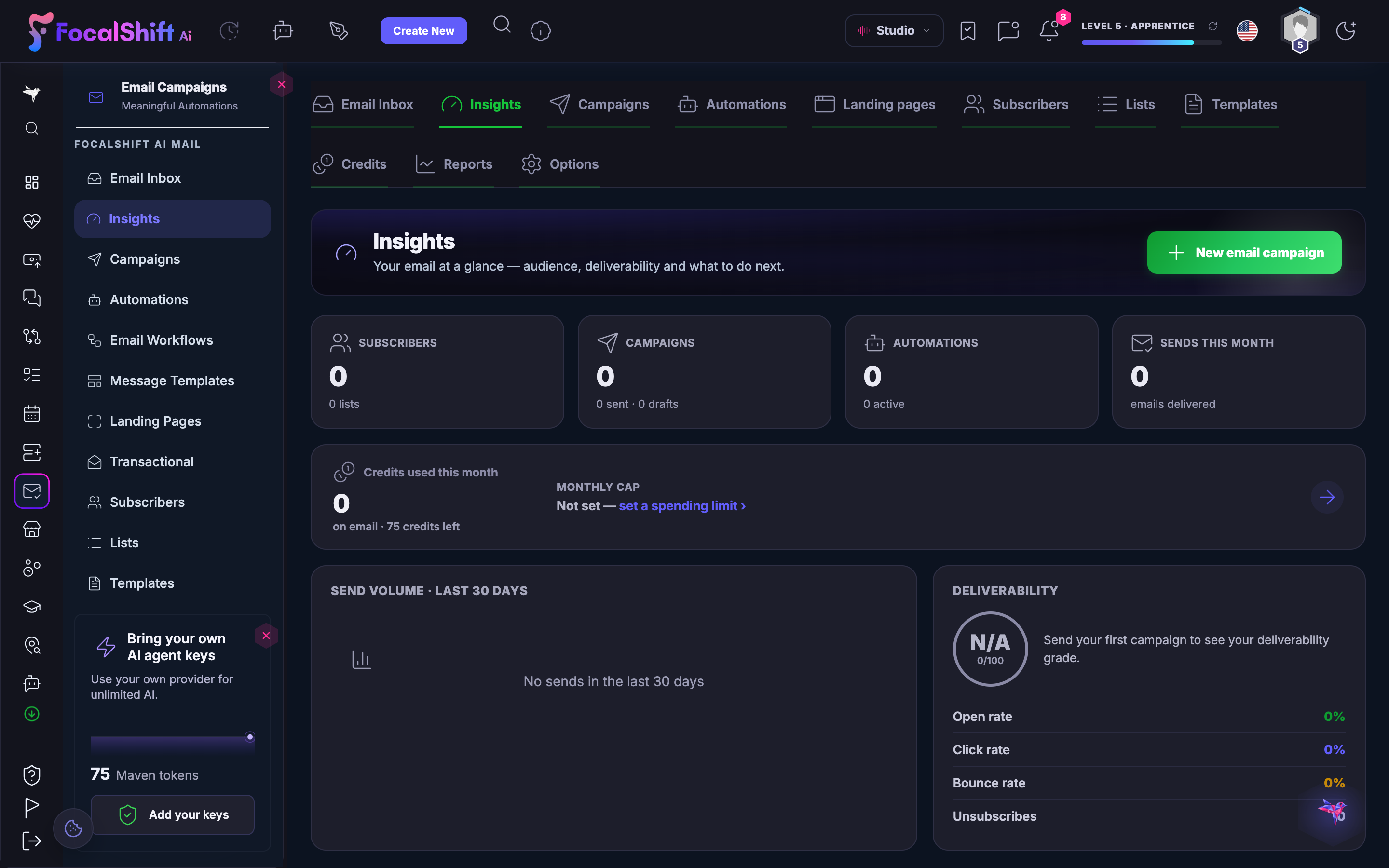
Maven adds this one: letters, doors and leads make busywork.
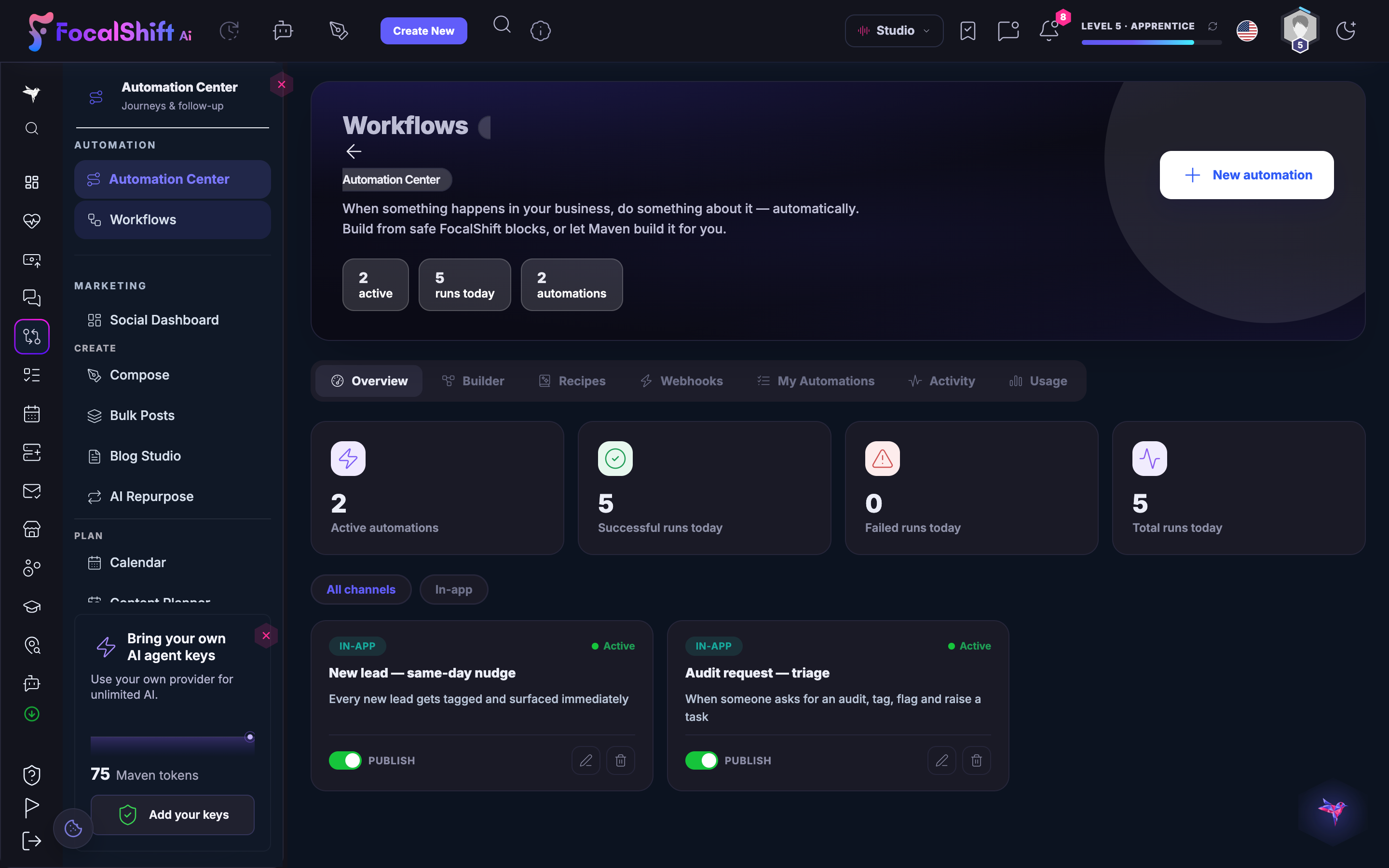
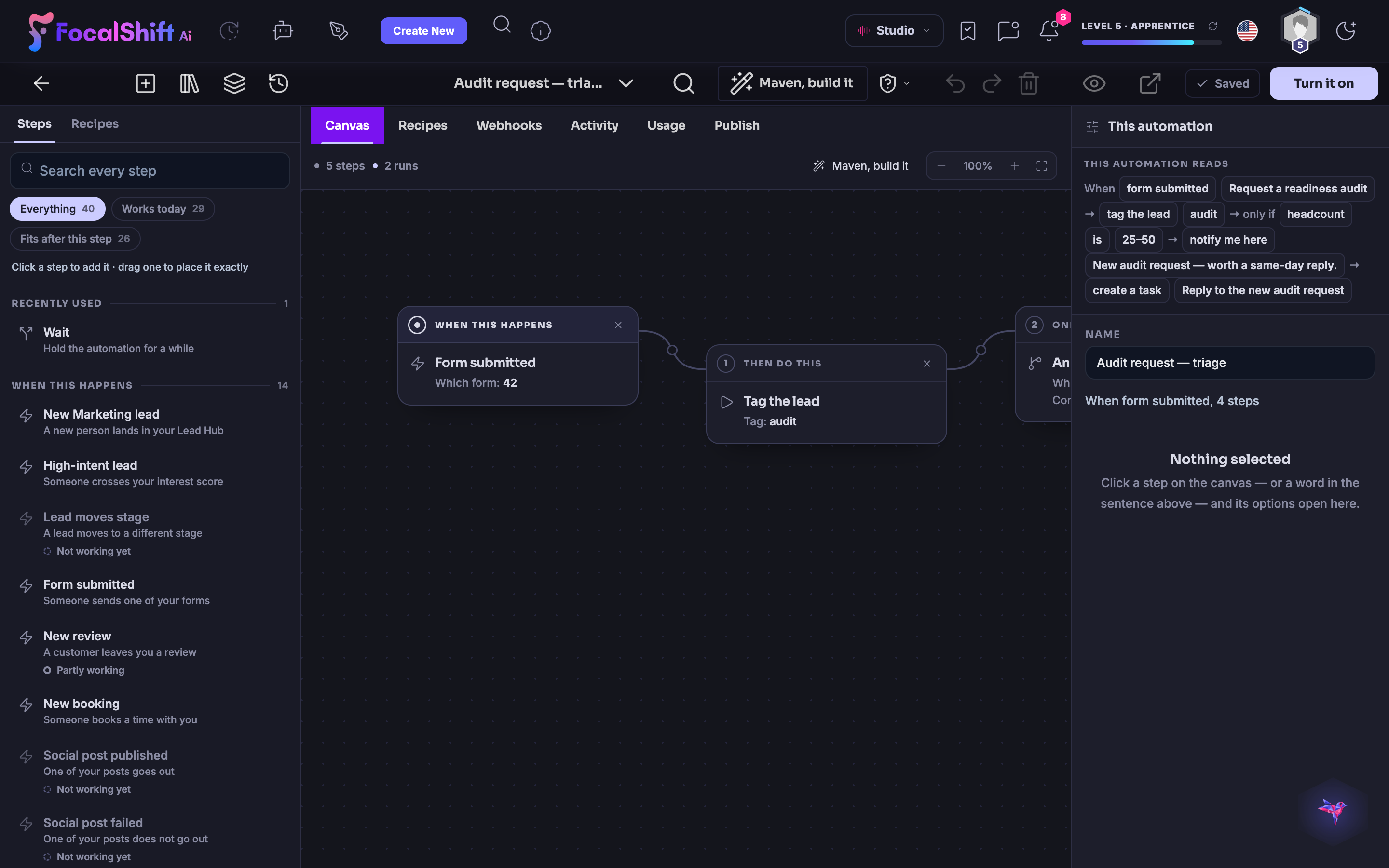
Central de Automação
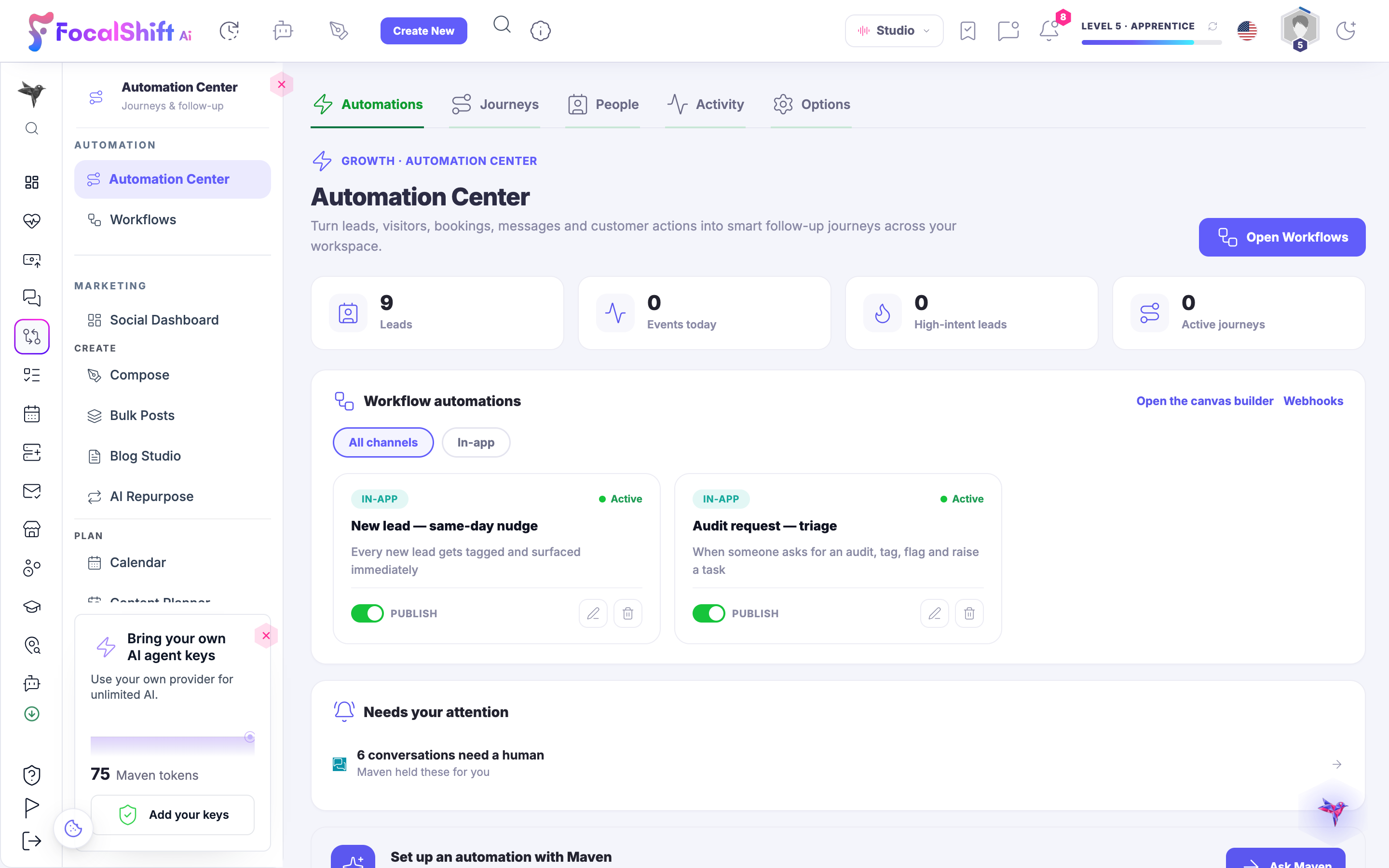
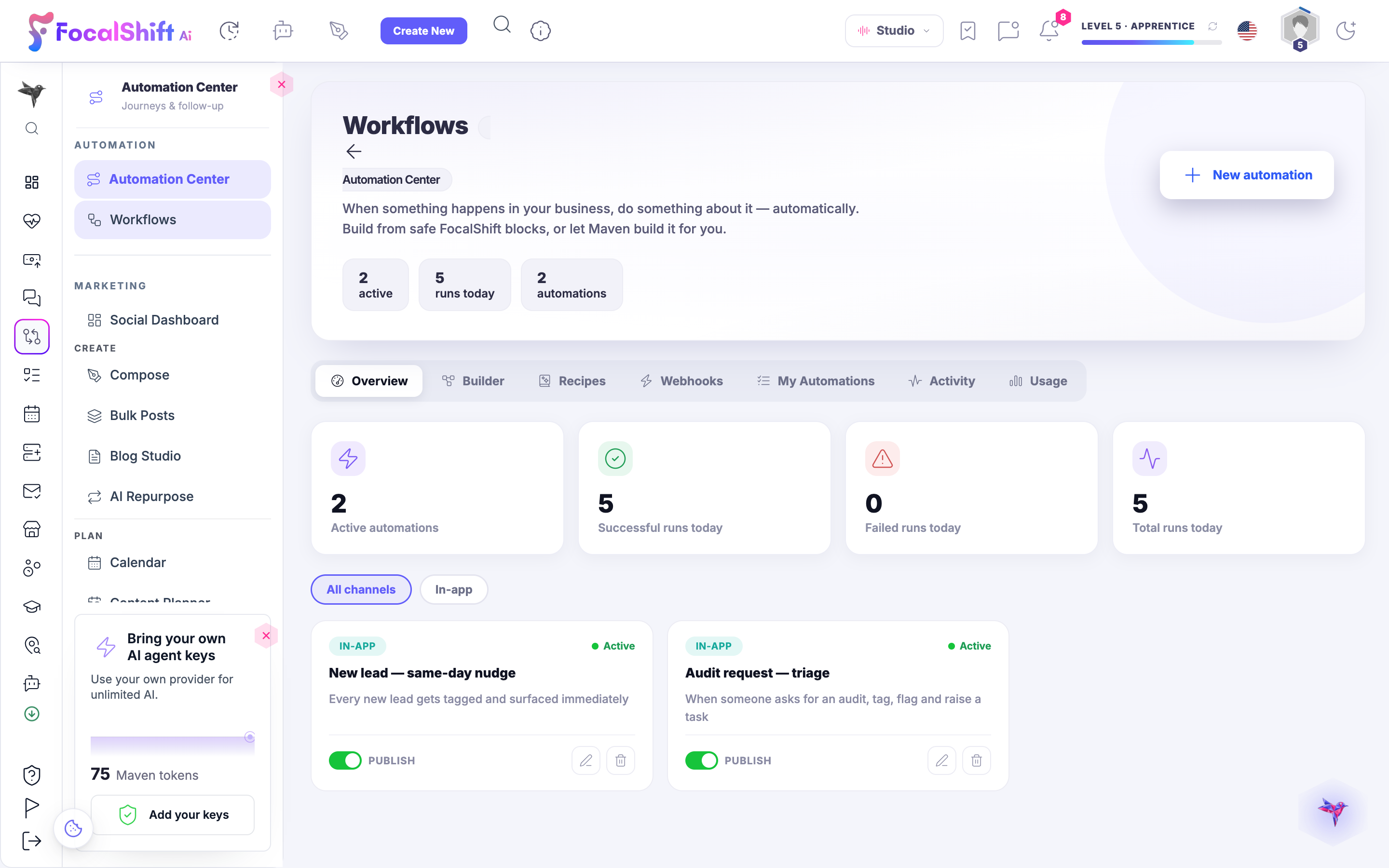
Everything that runs by itself, written as sentences you can read.
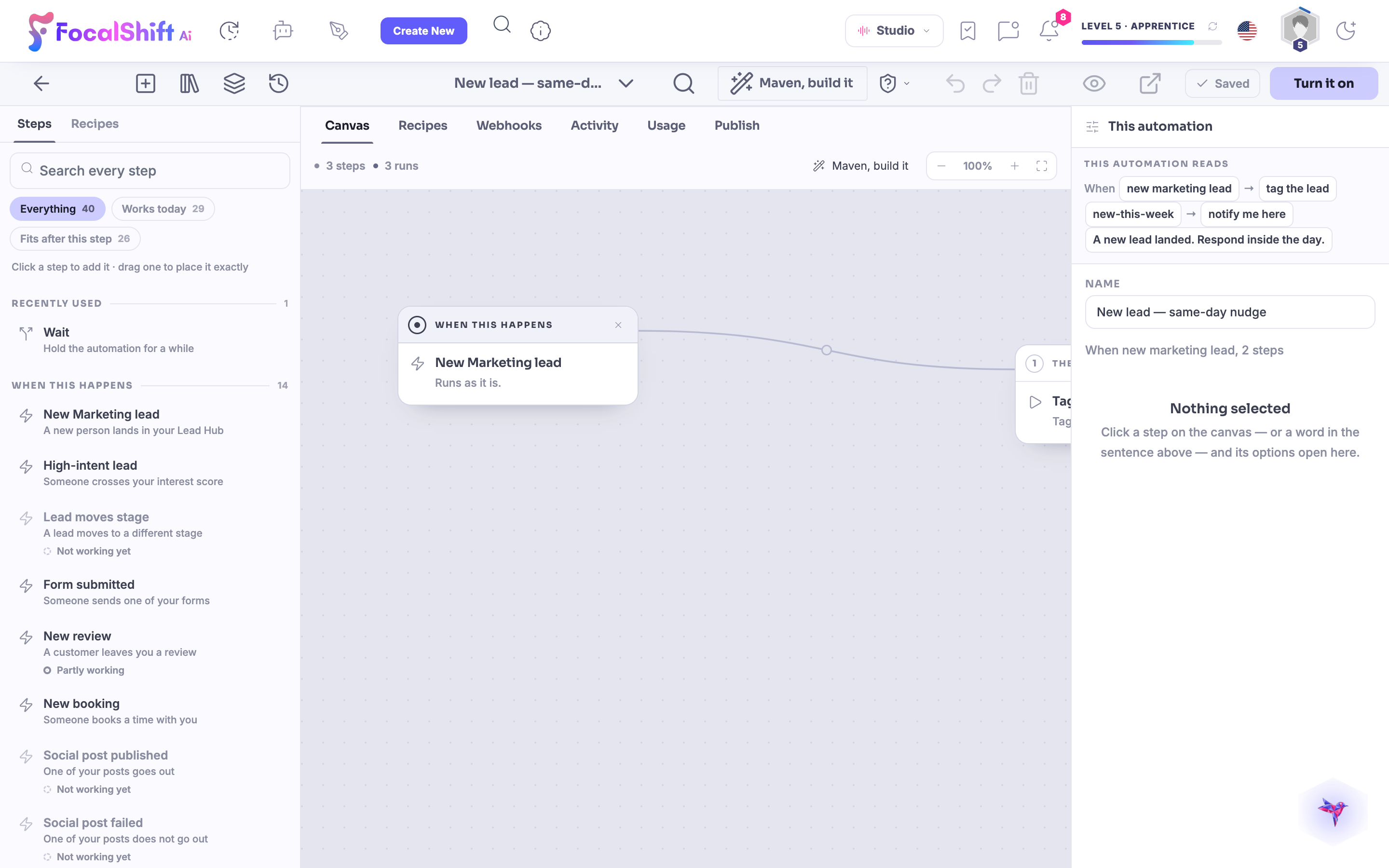
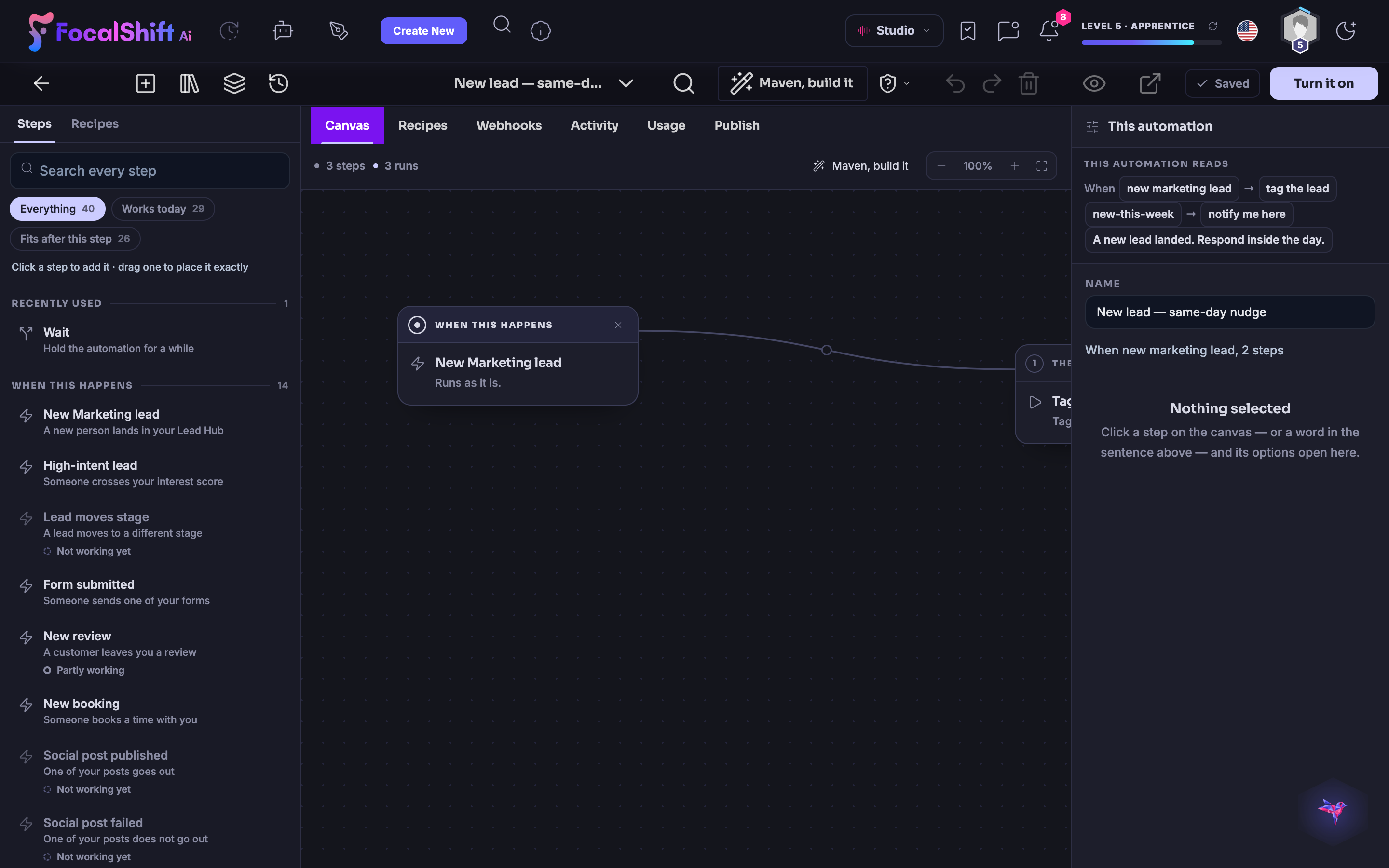
Rules you can say out loudWhen a new lead arrives, tag it, ring your bell. That is the rule.
Every run on the recordWhat fired, what finished, what stopped — newest first, plain words.
The odd one out waits for youWhen a conversation needs a human, Maven holds it rather than guessing.
Read more about Automation Center
The follow-up you never have to remember, written down once.
When this happens, do that — set in plain words and then left alone. It is the difference between a business that runs and a business that runs because you are stood over it.
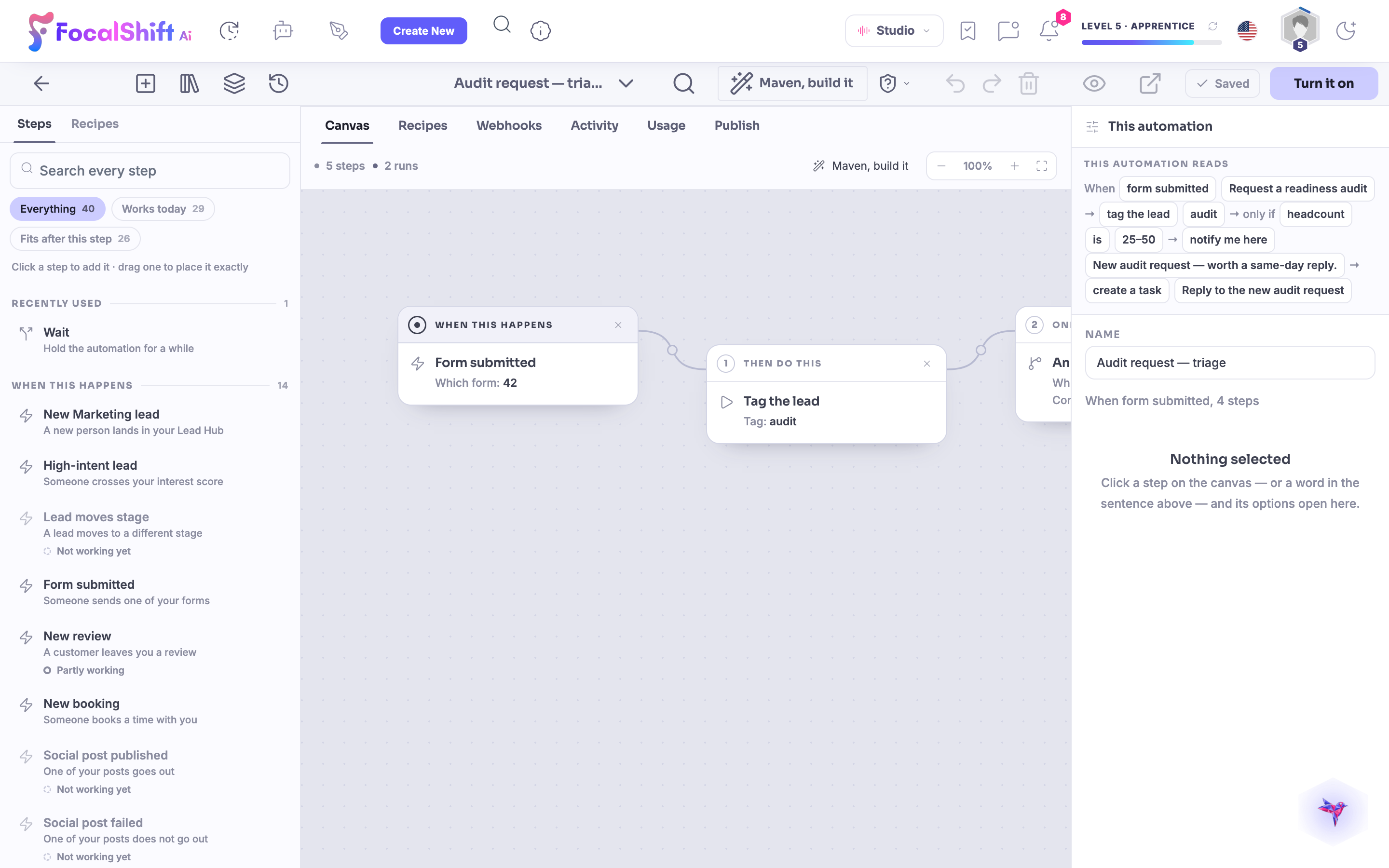
The canvas is where rules are laid; the monitor is where they answer for themselves. A rule that quietly does nothing cannot hide here, because the stream only prints what actually ran.
Automations reach across the deck: a form on your landing page can tag a lead, a sale in your shop can start a letter, a stalled card can raise its hand on a Focus Board.
You are never the machine's assistant. Anything ambiguous stops and waits in a queue marked for you — the machine does the lifting, you keep the judgement.
What it actually does
- Rules written in plain words, not in a diagram
- Everything on the platform can start one
- A record of what fired, and what it did
What that changes for you
- The work still happens on the day you are away
- You stop being the integration between your own tools
- Nothing quietly stops without telling you
You come away with a job that now happens without anyone doing it.
▶A look inside Automation Center
What runs by itself still needs a page to point people at. Next — the page that asks for one thing.
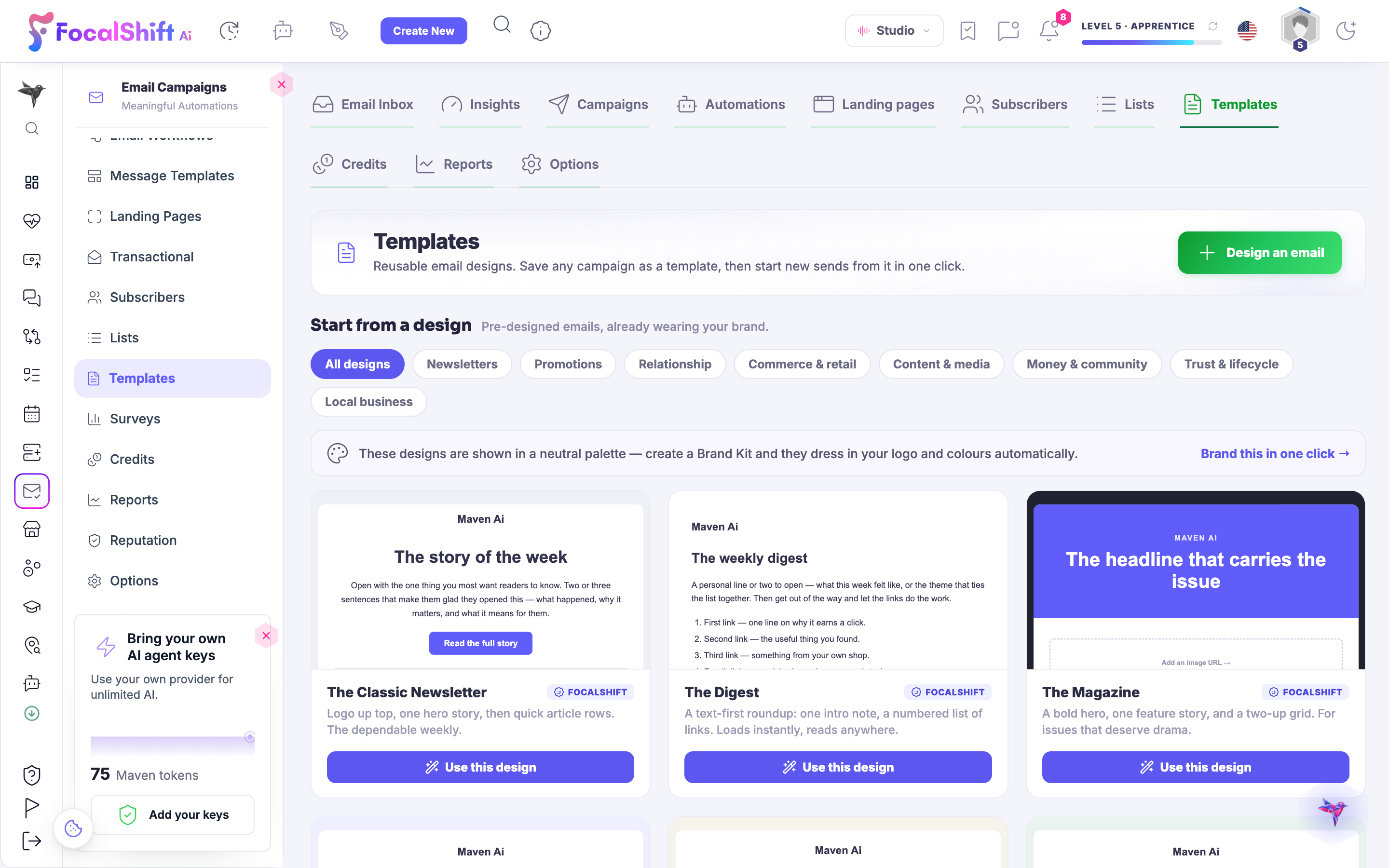
Because every letter deserves a landing.
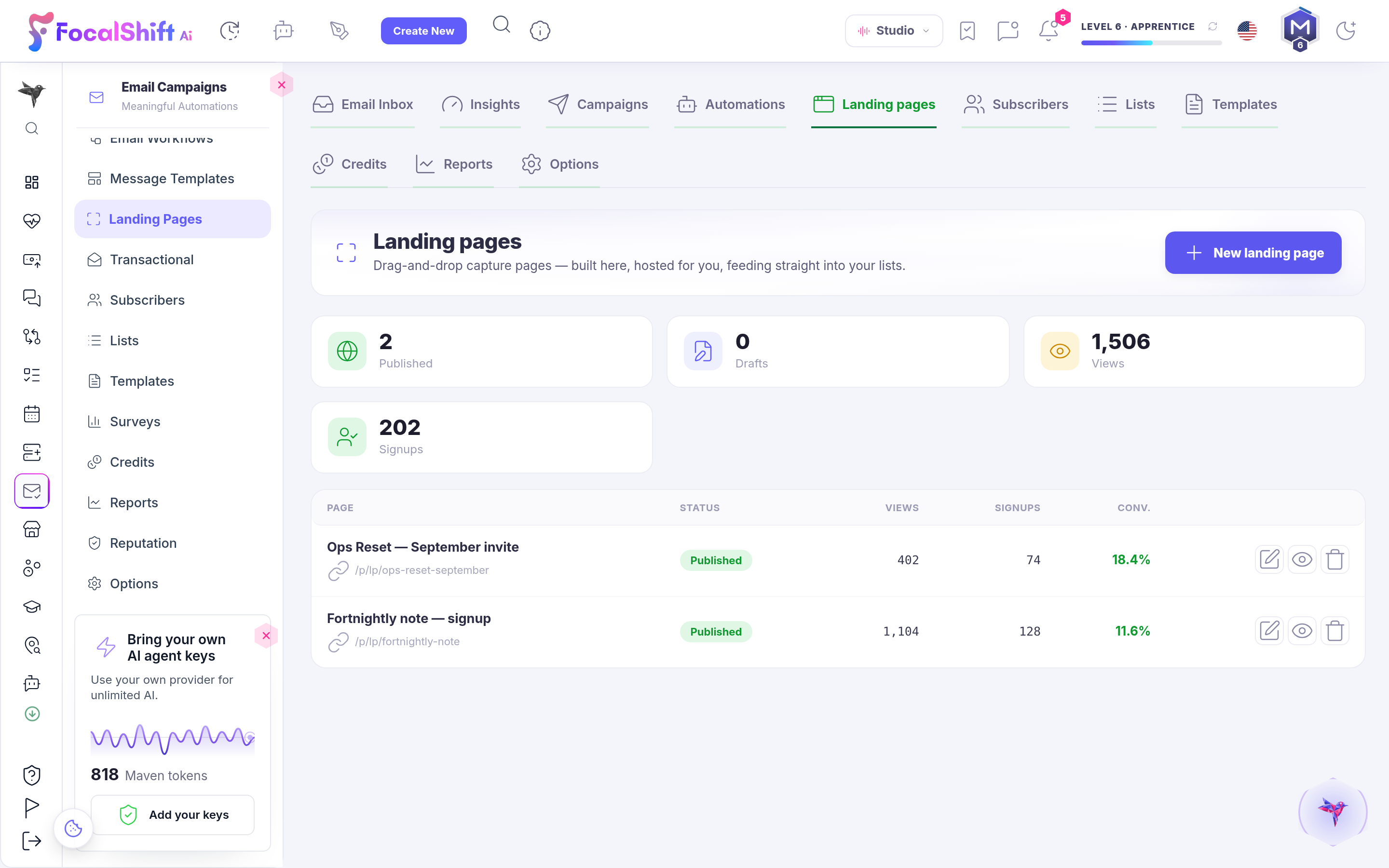
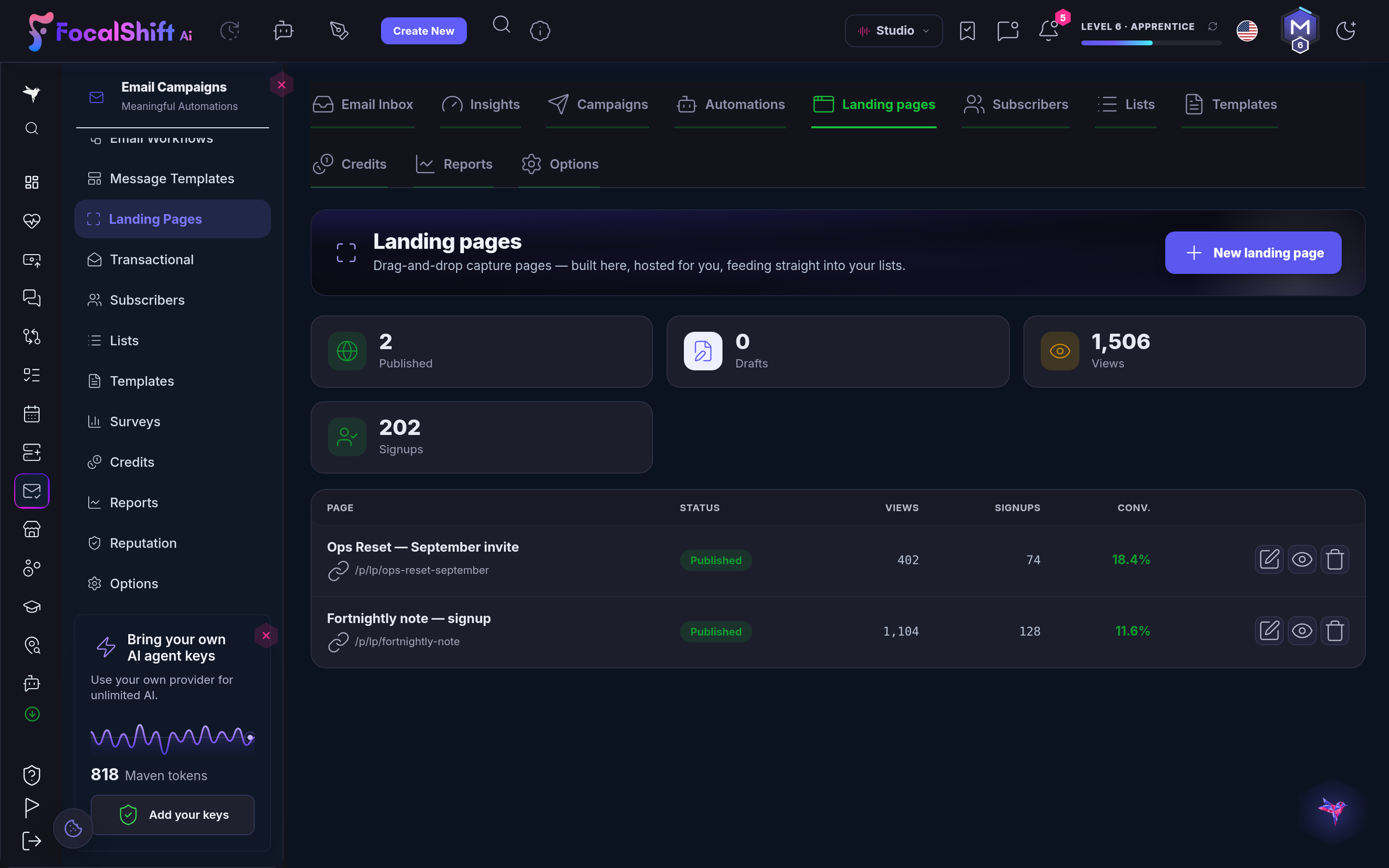
Páginas de destino
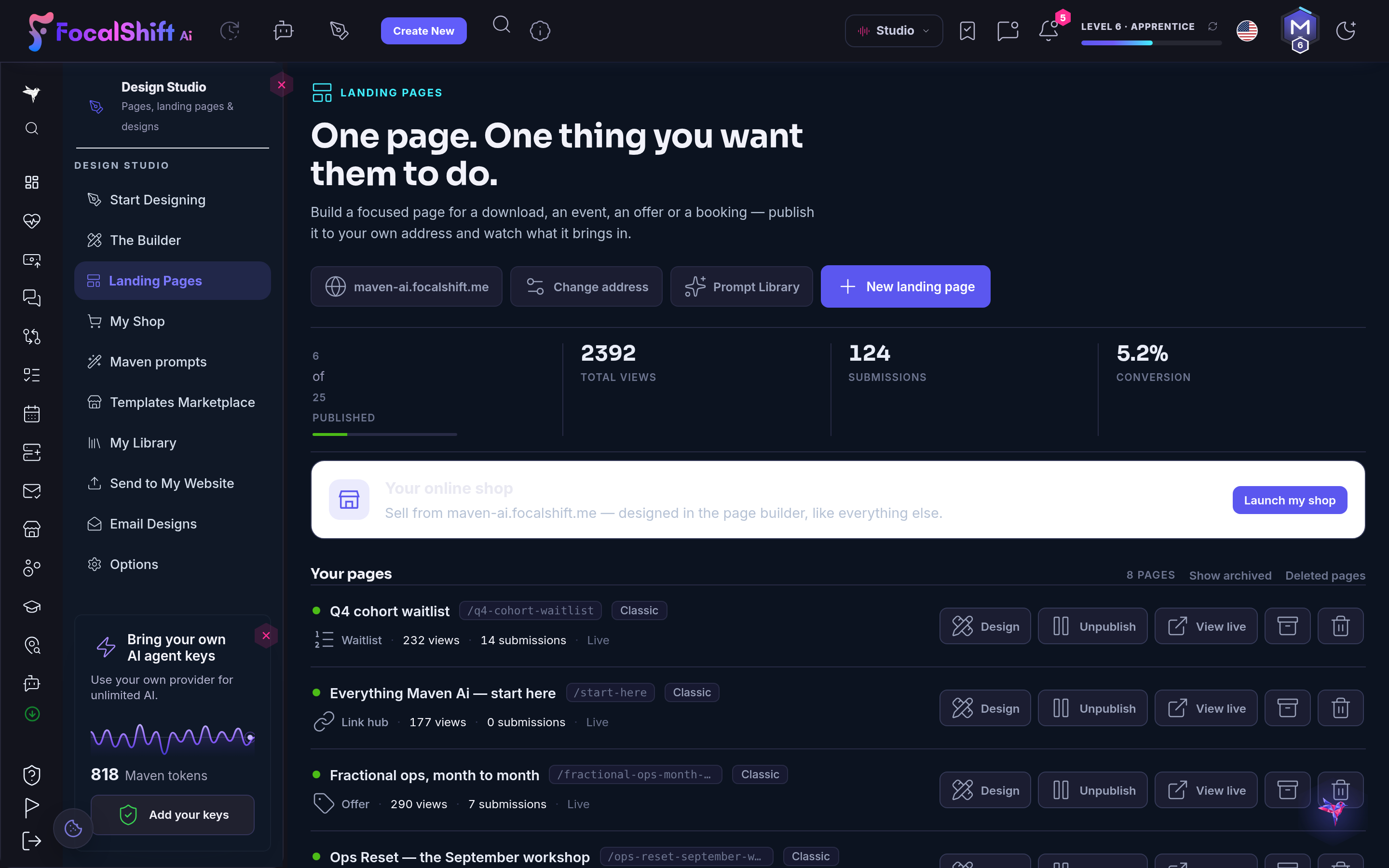
A page with one job — and your letters already know its address.
A focused page for one askA download, an event, an offer, a booking — one page each.
Published to your own addressThe link in your letter is yours, end to end.
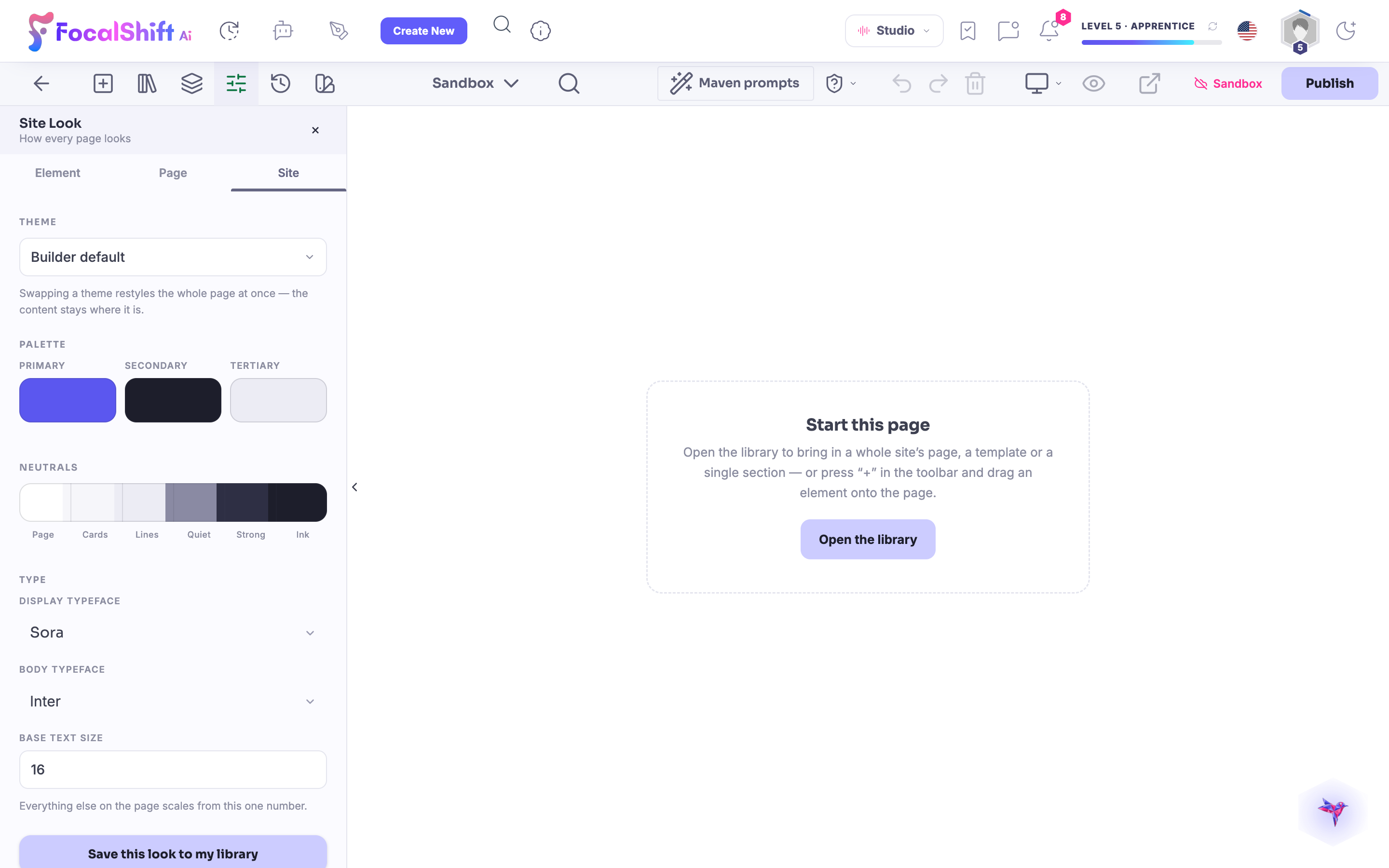
The same canvas as everything elseBuilt where your shop and your designs are built — one skill, reused.
Read more about Landing pages
A page that asks for one thing gets answered. A page that asks for nine does not.
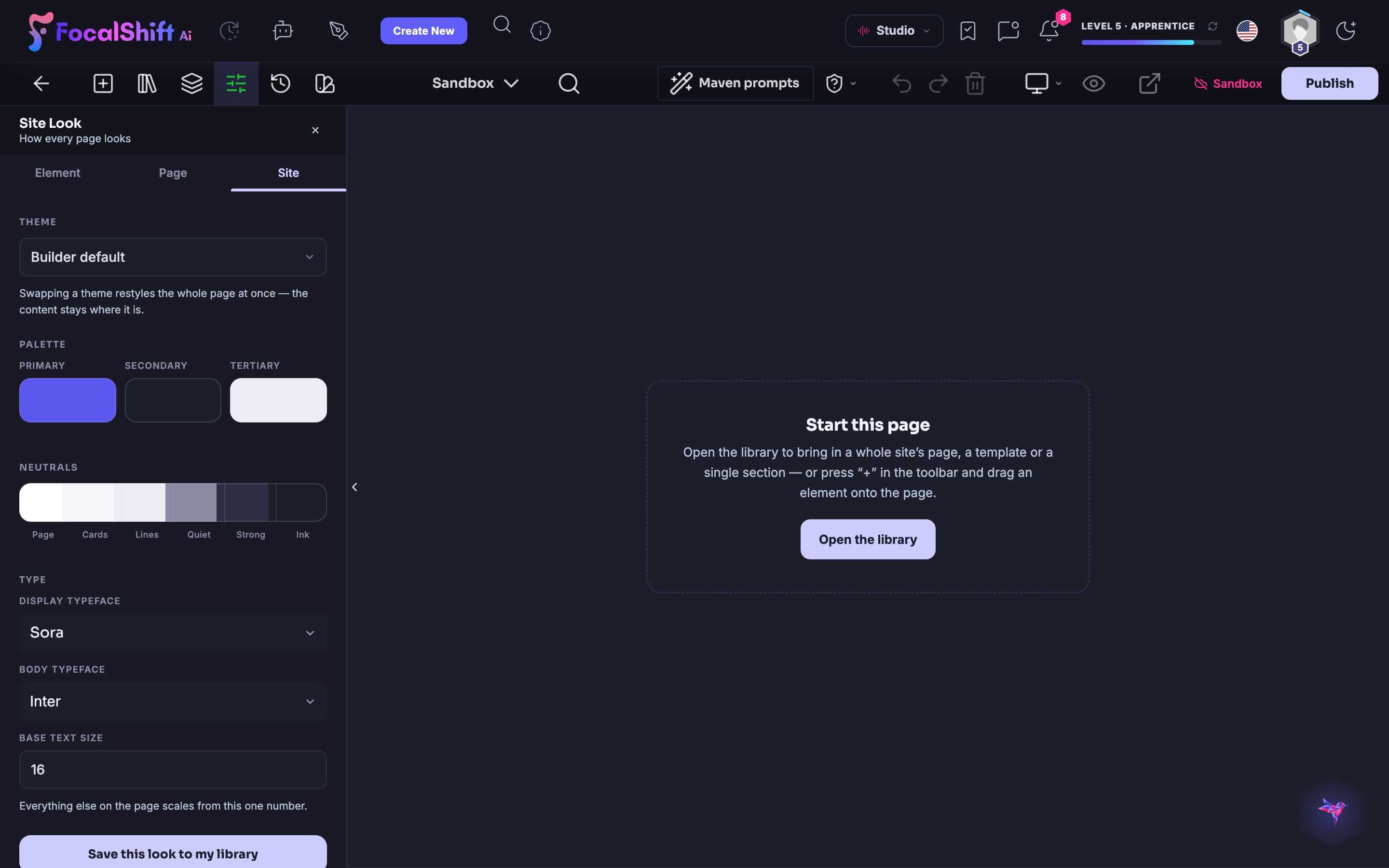
Your brand is held once — your colours, your type, your logo — so anything you publish starts already wearing them, and a page built in an afternoon still looks like the shop it belongs to.
Each page carries exactly one ask, and its form files straight into the book: the person who signs up on the page is already a card in your Lead Hub before you have looked up.
Prompts and templates sit one door away, so the page for next month's offer starts from the page that worked last month rather than from a blank.
What a page brought in is written on the page's own row — you learn which promise pulls without leaving the room.
What it actually does
- Brand held once, applied to everything
- Landing pages that publish to your own domain
- A form on the page that files straight into your book
What that changes for you
- Your work stops looking like five different companies
- A page goes live the same afternoon you thought of it
- You are not the bottleneck on your own marketing
You come away with a page with an address, and somewhere for a visitor to land.
▶A look inside Landing pages
Letters, doors, leads, pages — and none of it stays a one-person job for long. Next — the room you share.
Maven adds this one: you did not say it — but the work above stops being yours alone.
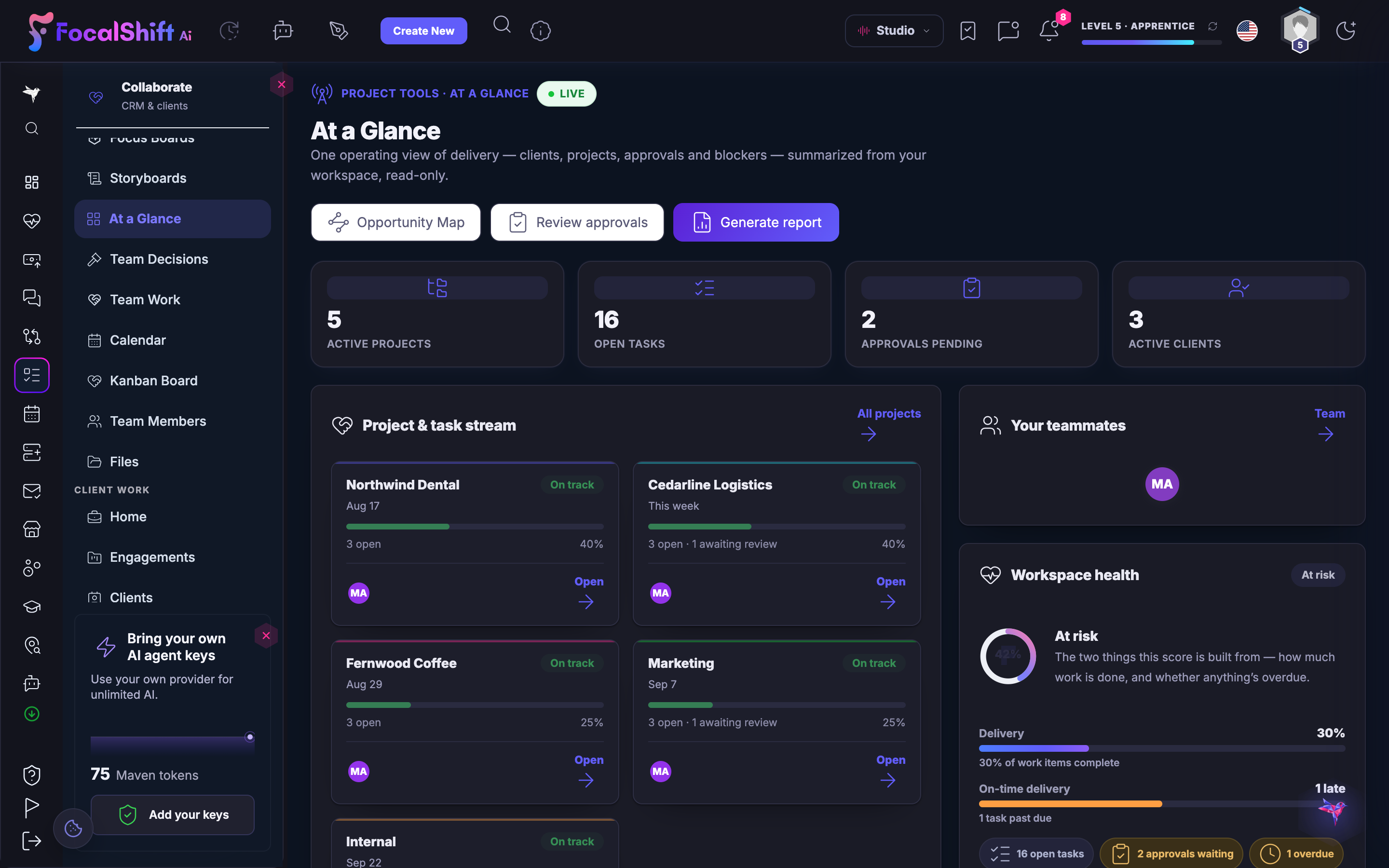
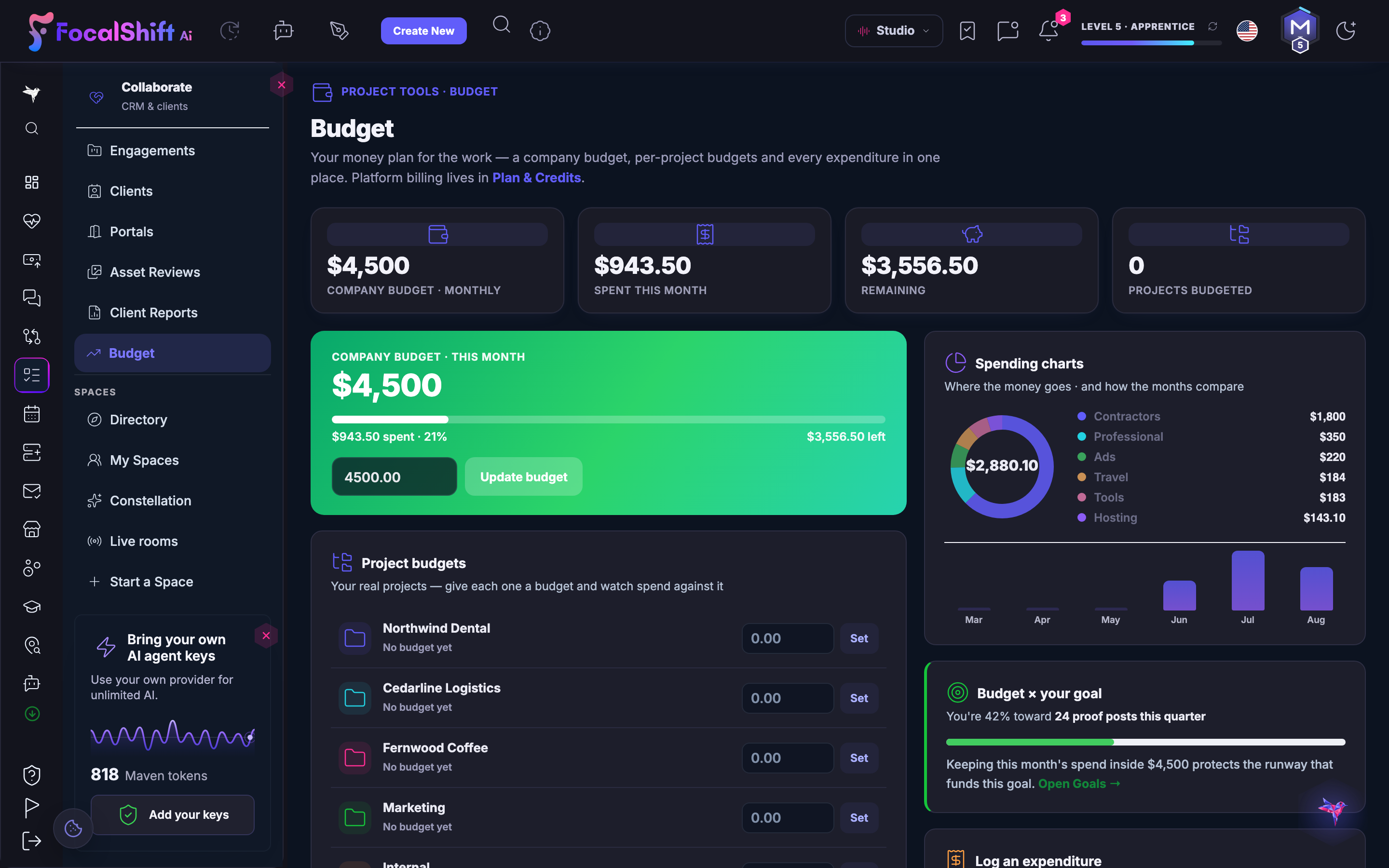
Colaborar
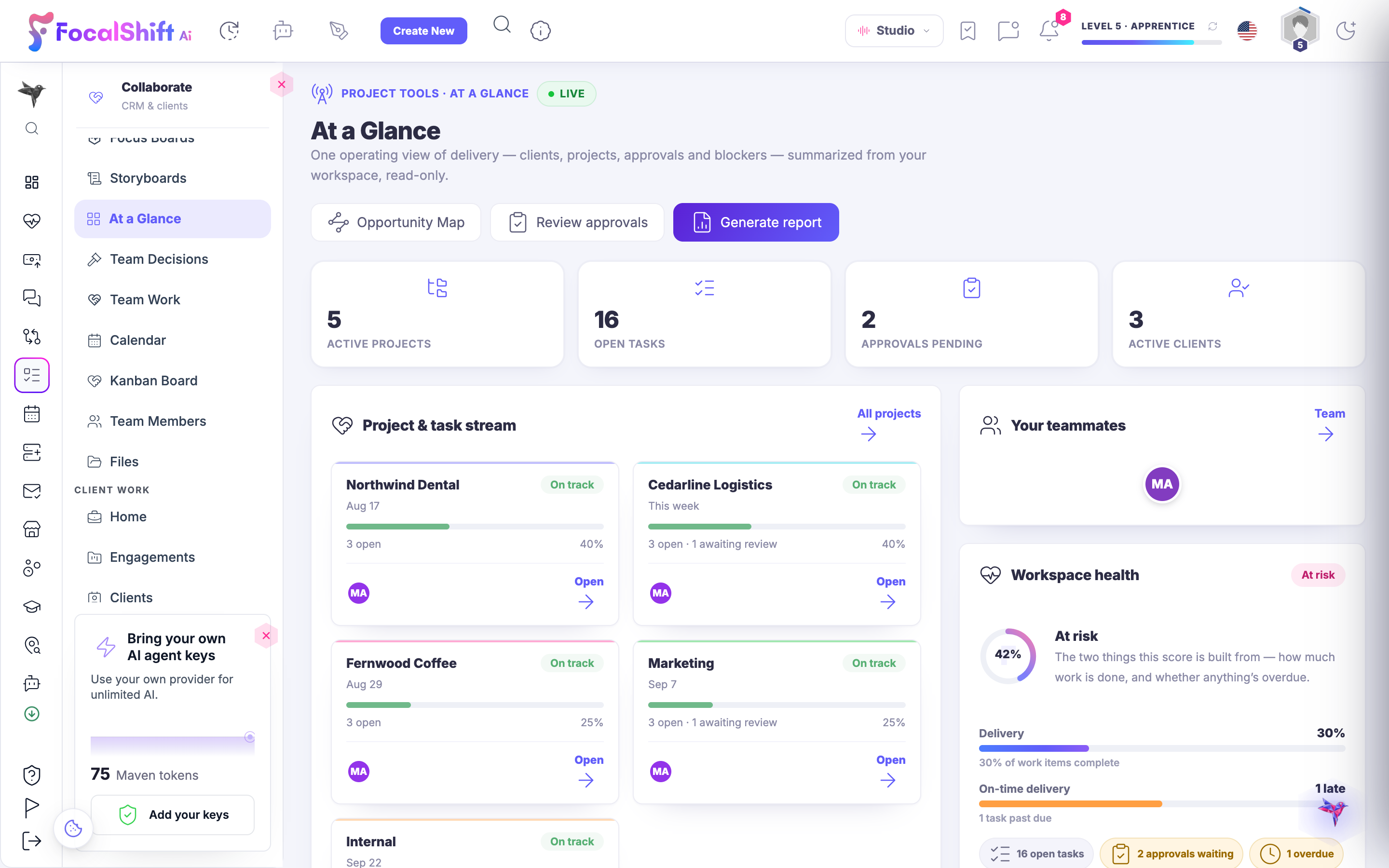
The work, the people and the decisions — on one board, with everyone who touches it.
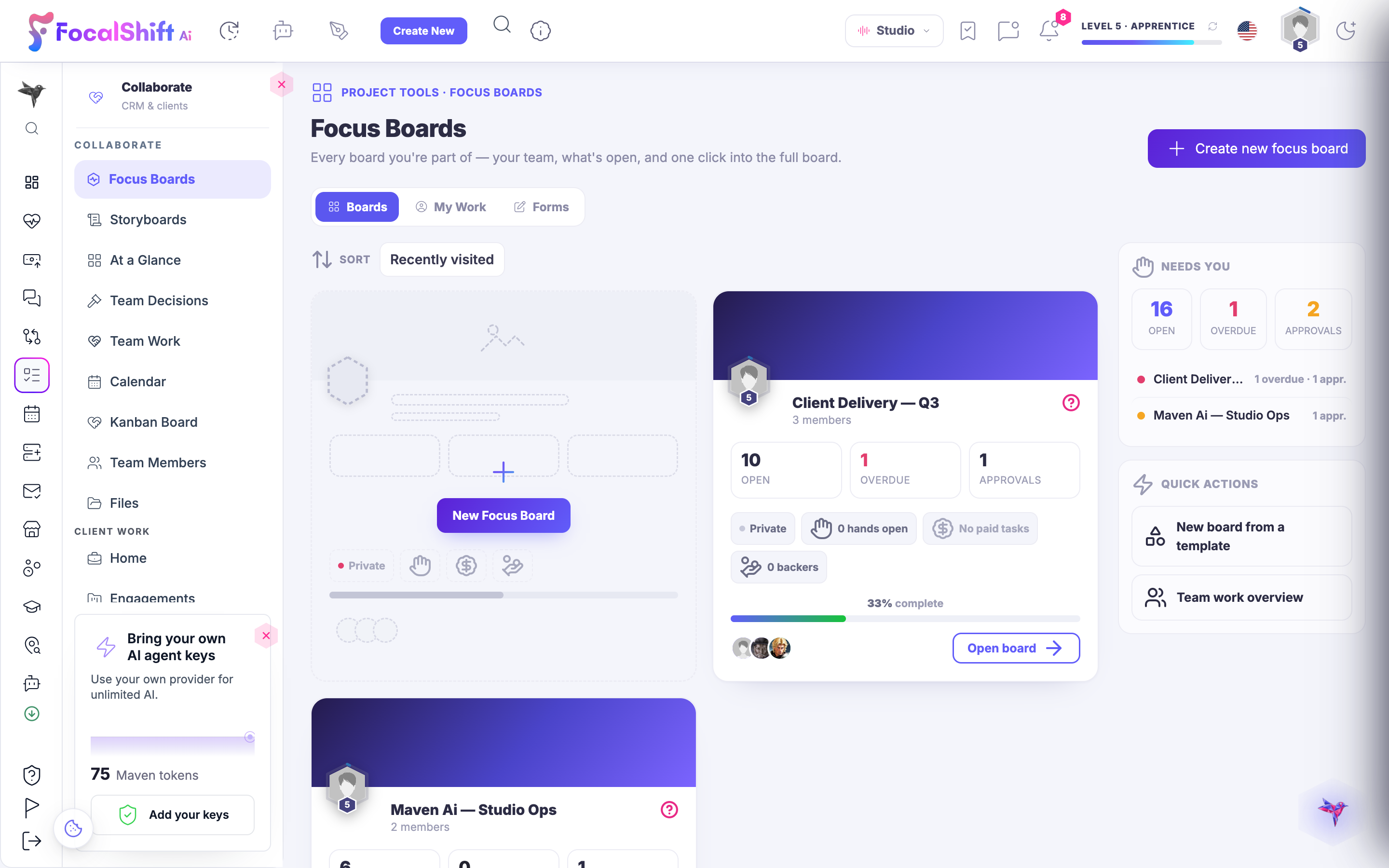
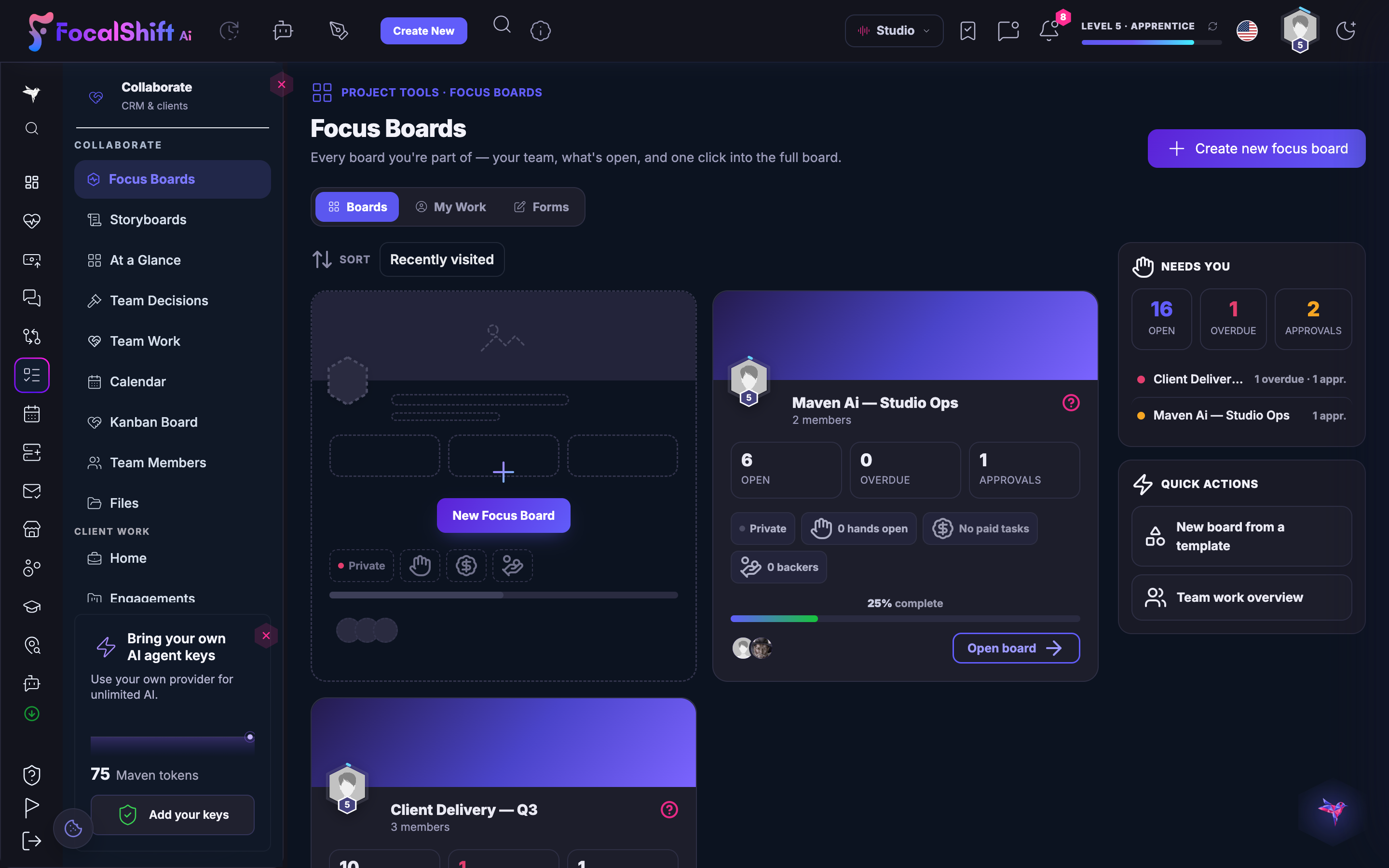
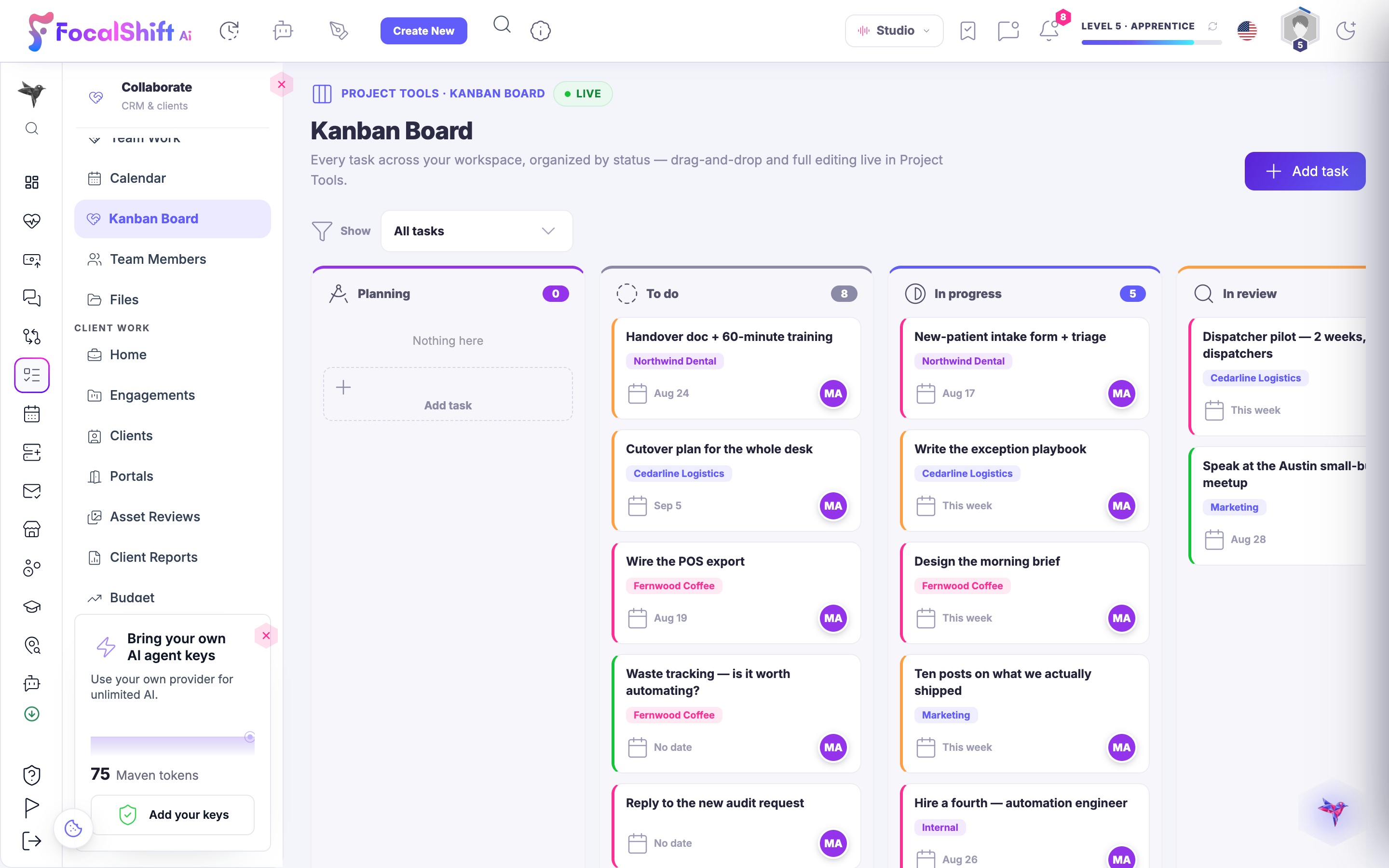
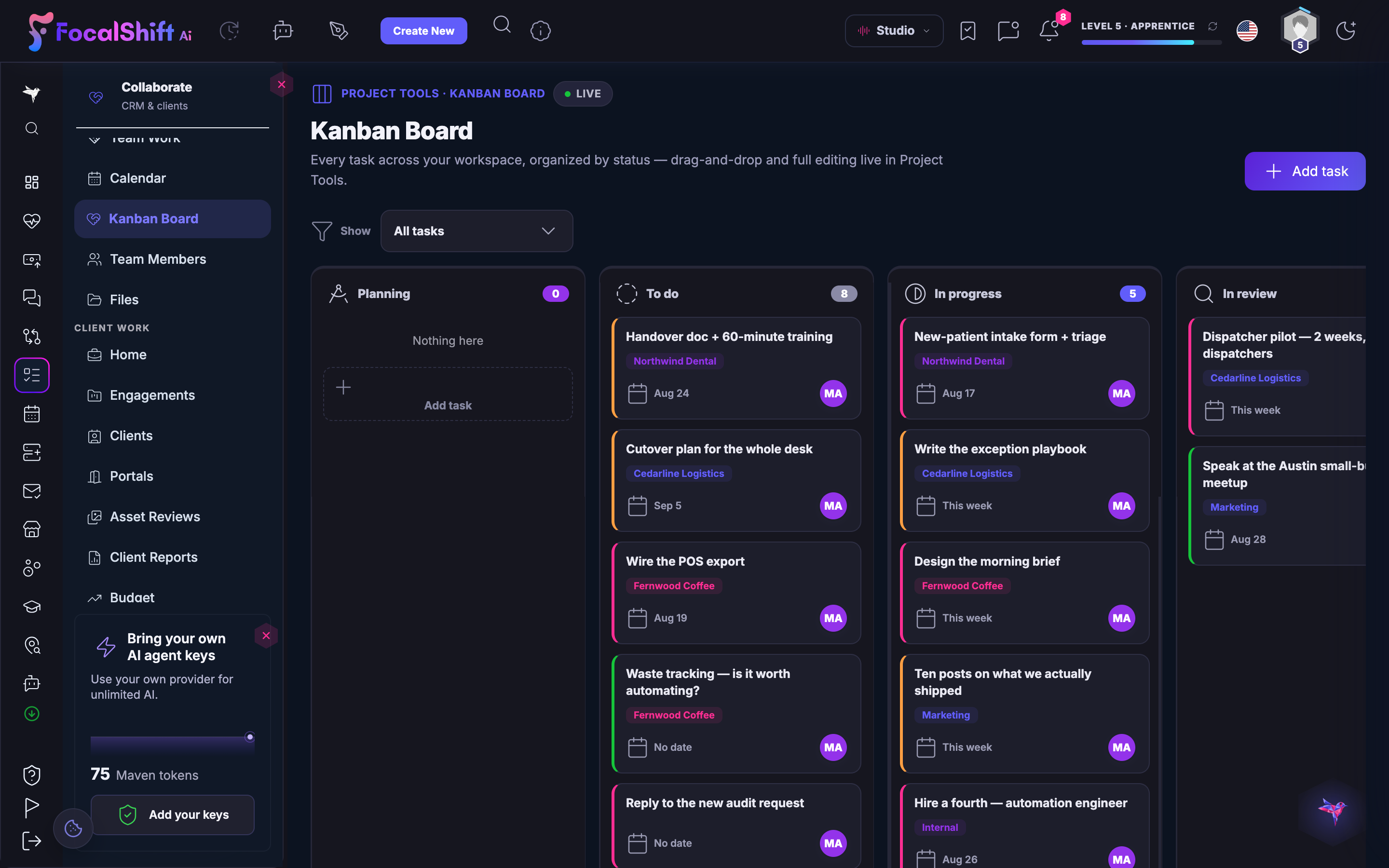
A Focus Board per piece of workTasks, files and the conversation around them in one place, not four.
Your Team, and what each is carryingInvite the people who help, hand work over without a meeting to explain it.
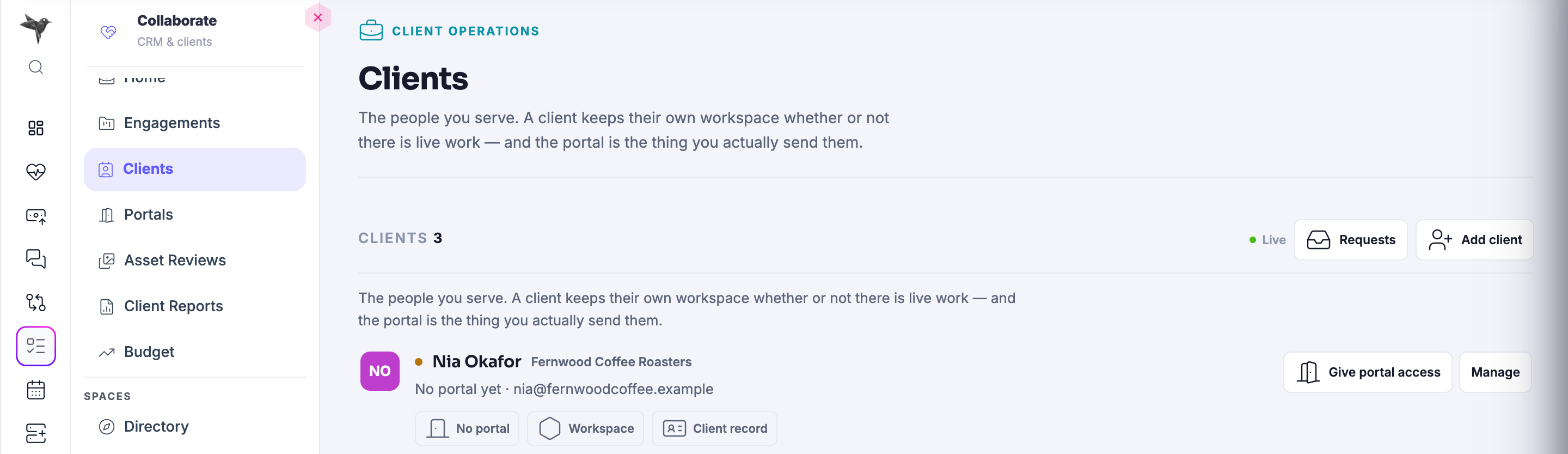
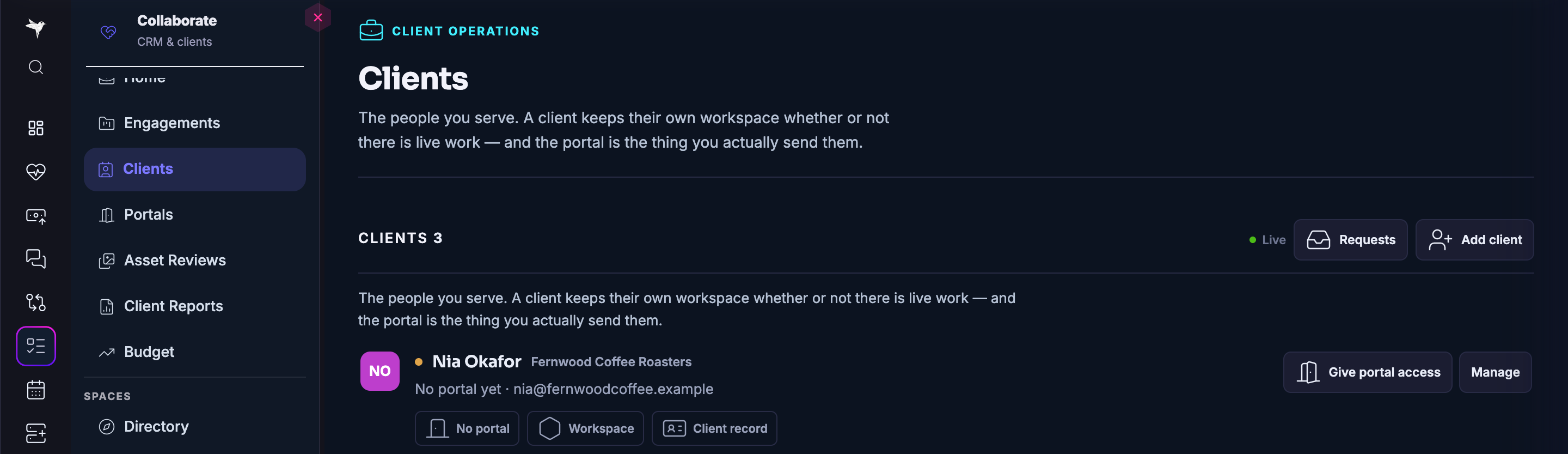
Client work has its own doorWhat you deliver, where they read it, and where they sign off.
Read more about Collaborate
The work, the people doing it and the client waiting on it, together.
Projects hold the brief, the files, the approvals and the conversation, and the client sees only their own. Nobody has to ask where the latest version is.
A Focus Board is where a piece of work actually lives: the tasks, the files, the decisions and the people, on one surface instead of scattered across four. Open a board and you are looking at the whole of it rather than a summary of it.
Your Team joins the same room. Invite the people who help you, see what each of them is carrying, and hand something over without a meeting to explain it first. When a job needs paying for rather than asking for, Paid tasks carry it, and a decision worth the team's read goes on the record before anyone commits.
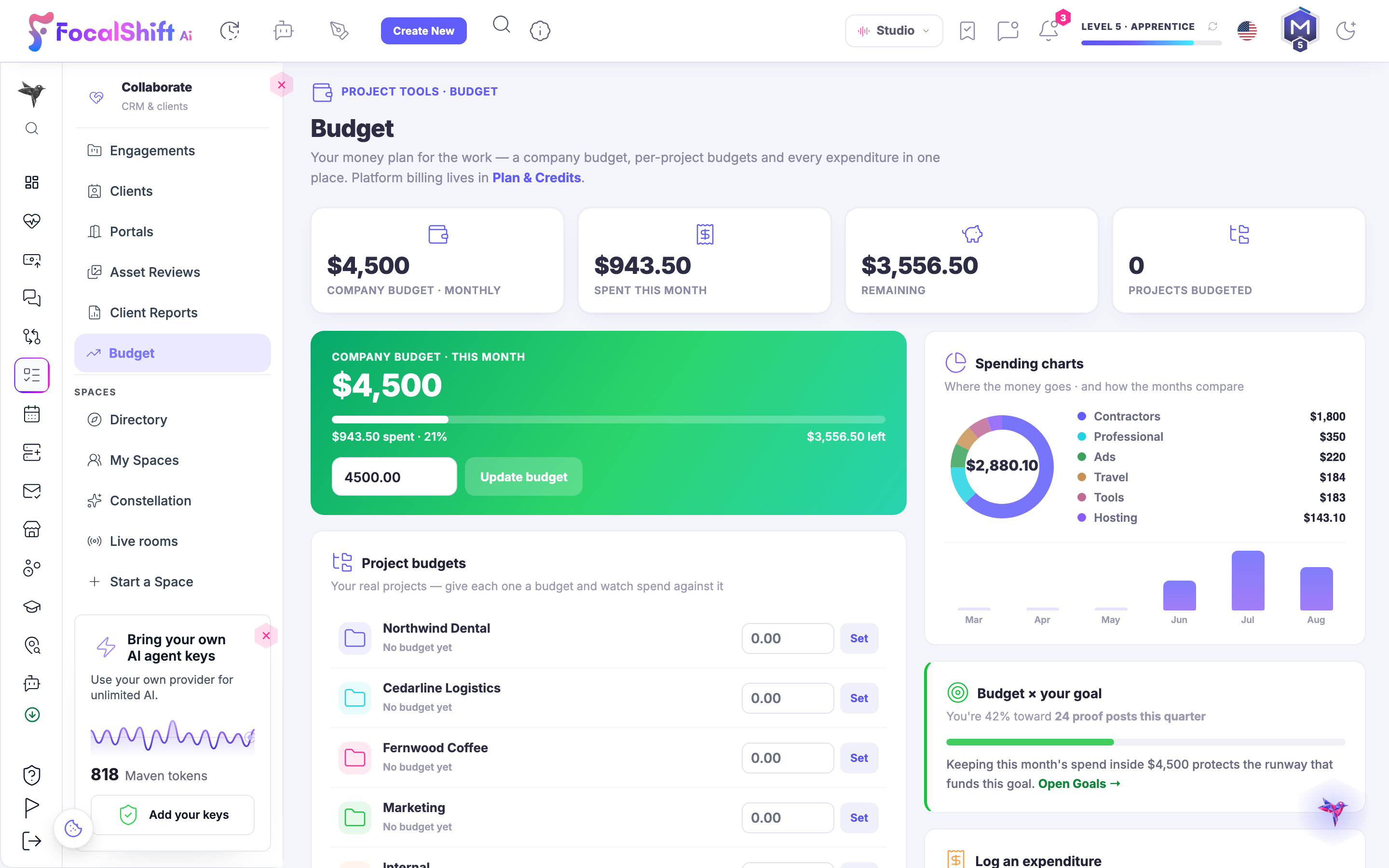
Client work keeps its own door: an engagement for the piece of work, a portal for the client's way in, and reviews for the part where somebody signs off. The Academy sits one door away for the teammate who needs to learn the room before they work in it.
What it actually does
- One project holding brief, files and approvals
- A client view that shows only their work
- Handover that does not depend on one person
What that changes for you
- Approvals stop living in somebody's inbox
- A new person can pick the work up on day one
- Clients stop asking for a status update
You come away with work that somebody else can carry.
▶A look inside Collaborate
That is the deck — six tools, one order, dealt from one sentence. Below: how to open it.