














Maven adds this one: a plan is worth more when the tools that have to carry it out already know it.
Wawancara Maven
A short conversation about how your business actually works, and a plan on the other side of it.


Read more about Maven interview
You tell Maven how the business works. It writes the plan down where the tools can read it.
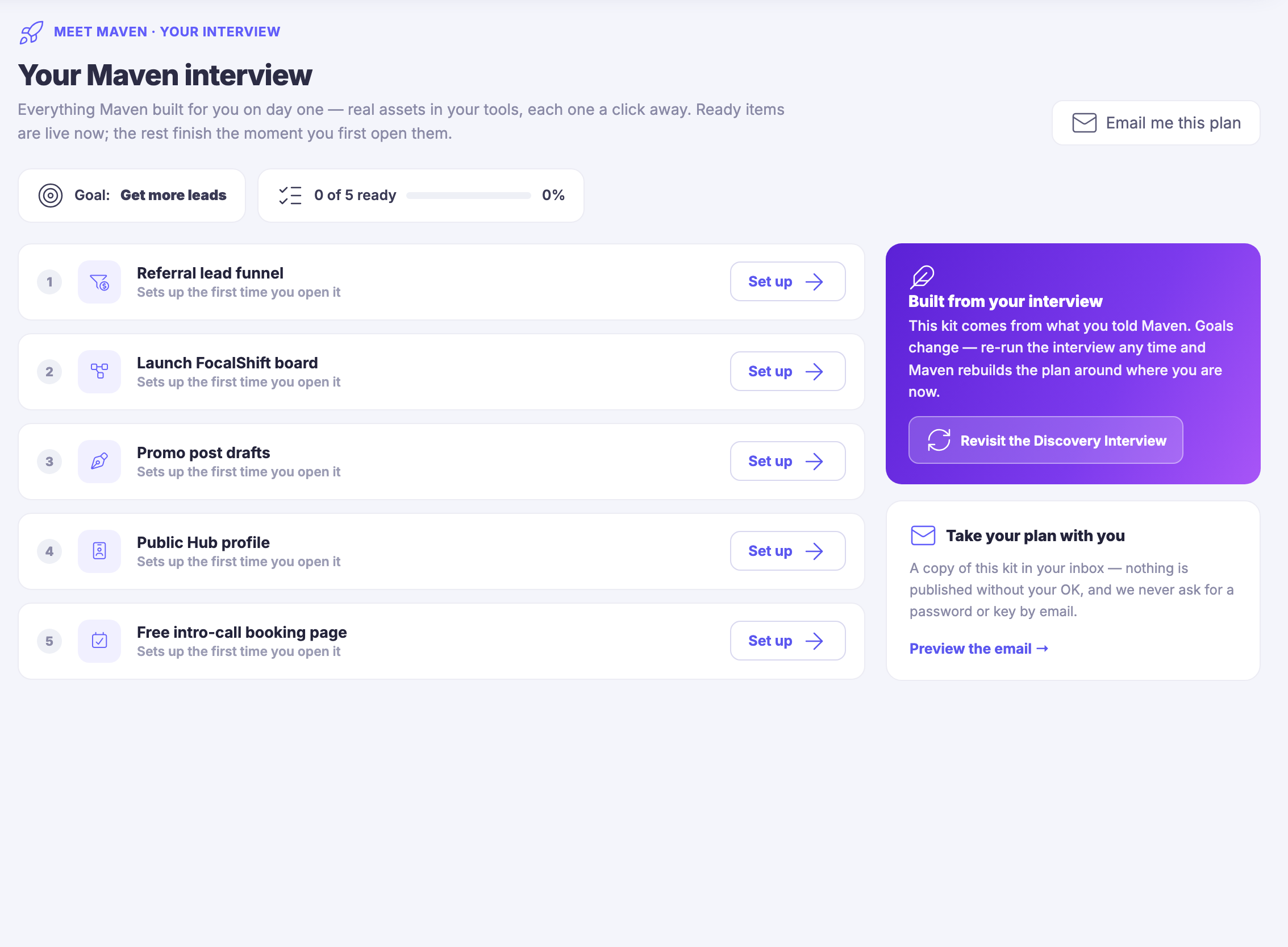
Maven asks a short set of questions — what you sell, who buys it, where the work comes from, what usually goes wrong — and you answer in your own words. It is a conversation rather than a form, which is why it gets a real answer instead of the tidy one.
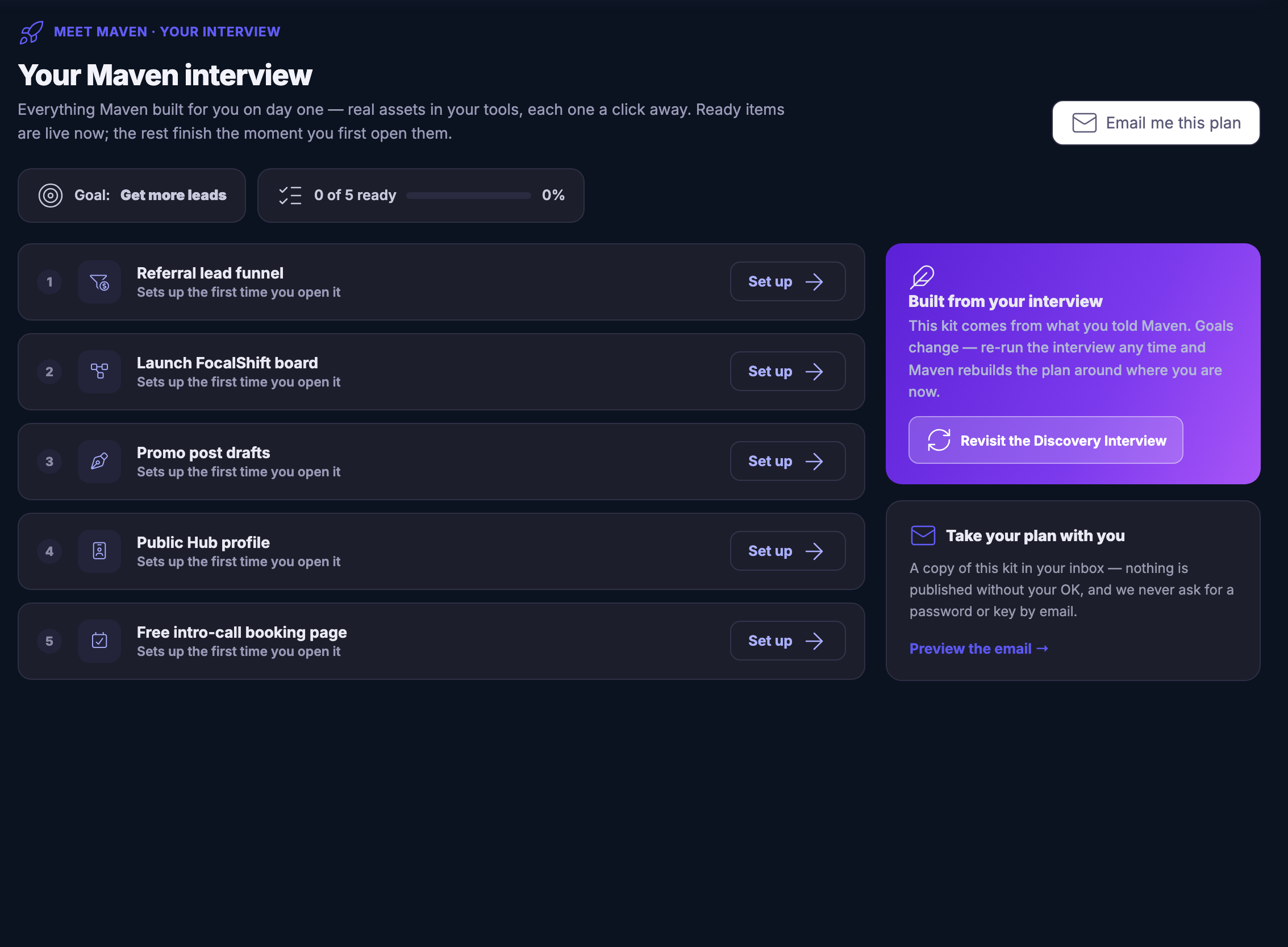
What you said becomes the plan: the offers, the paths people take to reach them, and the order the pieces should be built in. You can read it, disagree with it and change it. Maven knows what you told it and nothing more than that, so a question you left is a gap you can go back and fill rather than something guessed at on your behalf.
It is honest about gaps. The plan shows which parts of the machine exist and which are still a wish, so the next thing to do is a decision rather than a guess.
Goals change, and so does the plan. Sit down with the interview again and Maven rebuilds it around where you are now — not around the business you described the first time.
What it actually does
- A short interview, in your words, not a questionnaire
- A plan you can see, edit and run again whenever things change
- Every block on it opens the tool that makes it real
What that changes for you
- The strategy lives where the work happens, not in a forgotten document
- You can see which parts of the machine exist and which are wishes
- Nobody has to guess what you meant six months later
You come away with a plan of your own business you could hand to somebody else.
Works seamlessly with