














Because you said the follow-up to happen without me
.
E-mailreeksen
The letter you were always going to send, already written, waiting for the thing that starts it.
Read more about Email Sequences
Written once, in your voice, and posted on the day it matters.
Somebody joins, somebody buys, somebody goes quiet — each of those can start a cadence you wrote weeks ago. It carries on arriving on its own schedule, and it does not care what kind of week you are having.
The trigger is a real event in your own business rather than a tag you have to remember to apply. A form answered, a seat claimed, an order placed, a long silence: all of them are things the platform already knows, so the sequence starts itself. Between the steps are real scheduled waits, so the second letter lands days after the first without anybody keeping a diary.
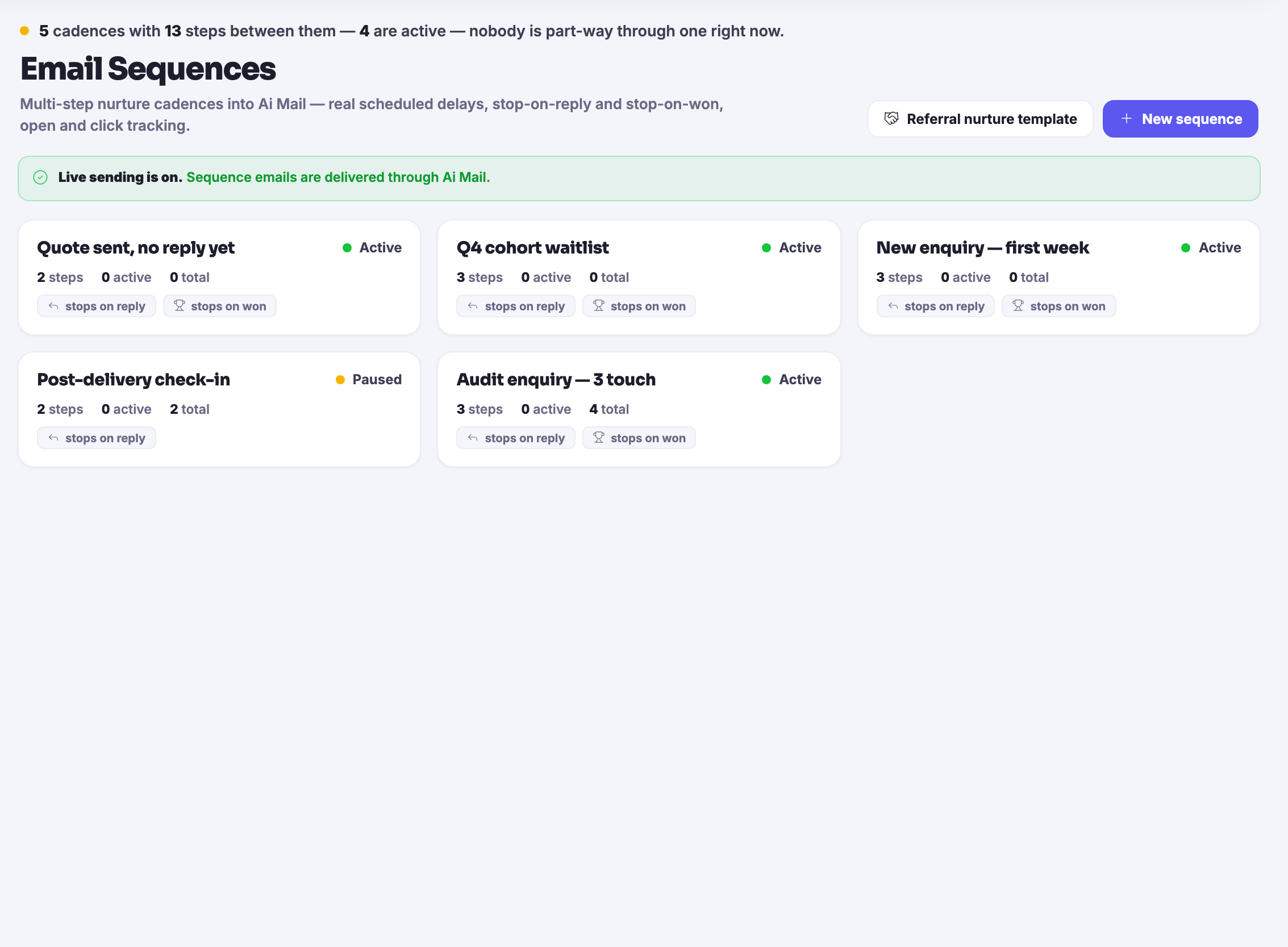
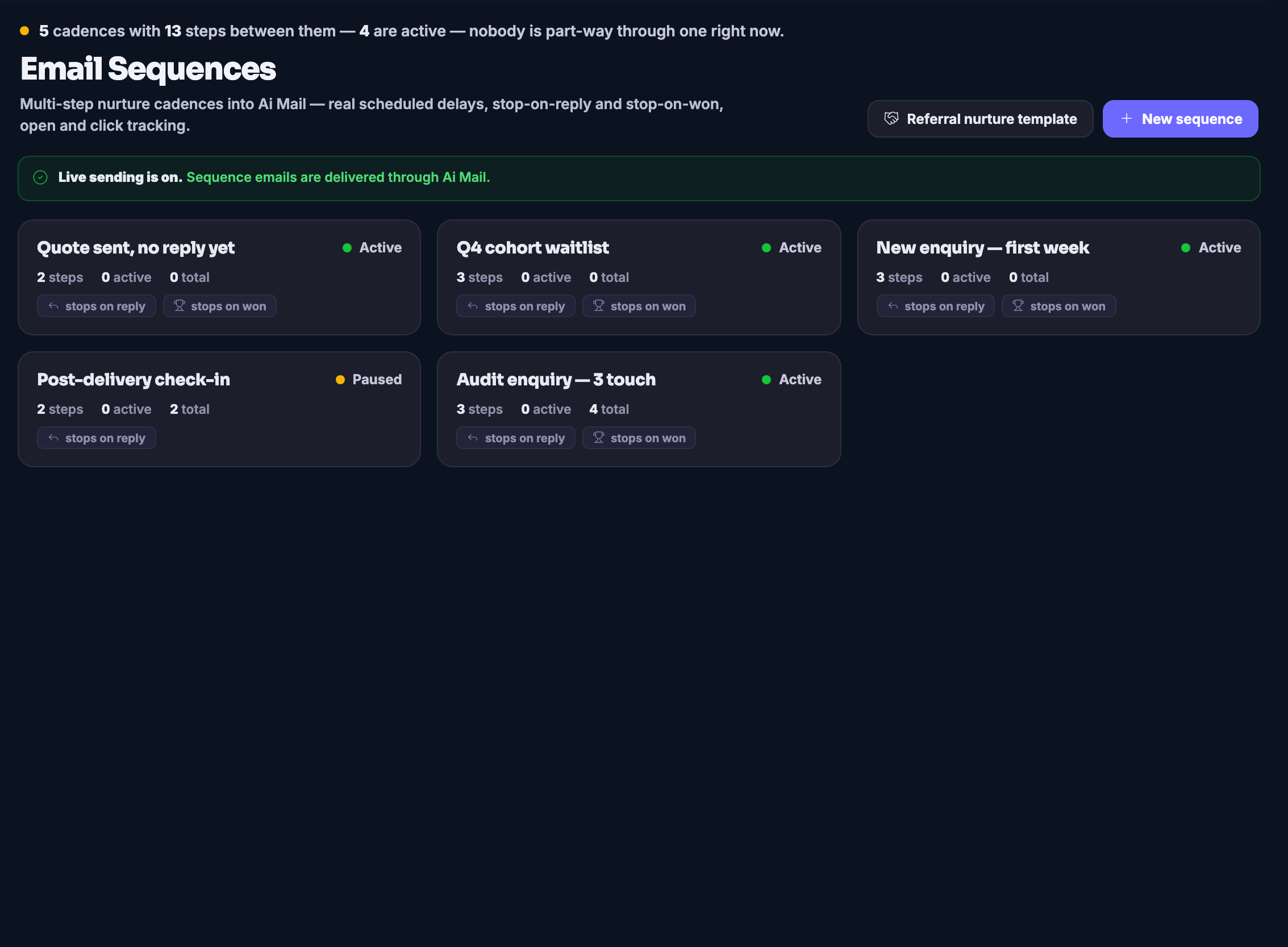
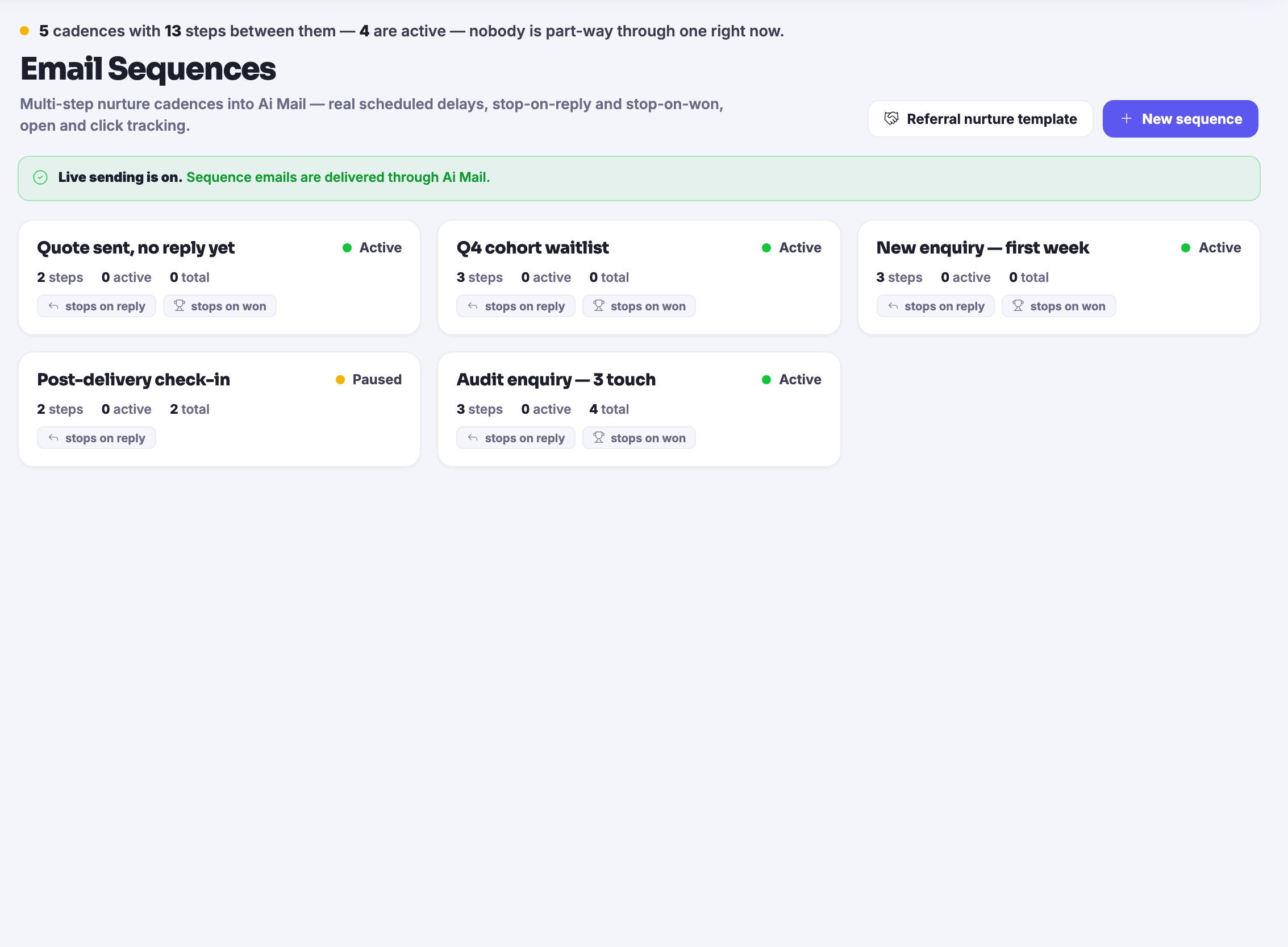
And the moment a real person writes back, the sequence steps back. It can end on a reply, or on the deal being won, and it says on its own card which of those it will do. That single rule is the difference between a follow-up that feels like attention and one that feels like being processed.
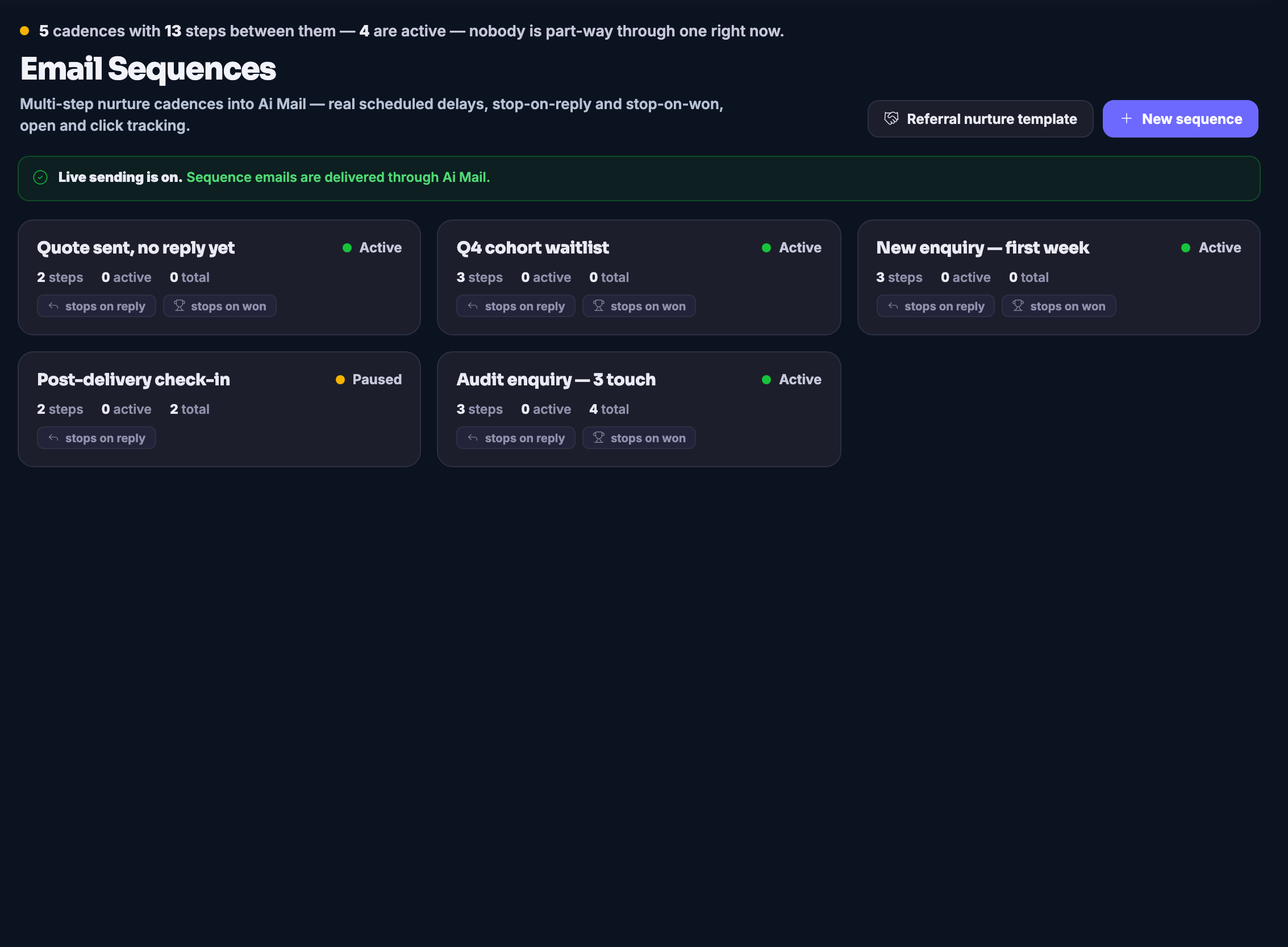
Afterwards it answers for itself. Each cadence shows what it is called, what it carries, whether it is running, whether anybody is part-way through it and what will end it early — in the same plain words the thing was written in, so one that has quietly gone wrong is visible at a glance rather than at the end of a quarter.
What it actually does
- Cadences that start from something that actually happened
- Real scheduled waits between steps, not a diary you keep
- A real reply ends it, every time — and the card says so before it runs
What that changes for you
- The welcome goes out on the day you are least available
- Nobody gets nagged by a machine mid-conversation
- You write the follow-up once instead of every quarter
You come away with a letter that arrived without you, and a reply worth reading.
Works seamlessly with

 EMAIL SEQUENCES · REAL SCREEN