














Because you said a room full of regulars
.
イベント管理
Put the seats out, watch them go, and walk to the door with the list already in your hand.
Read more about Event Management
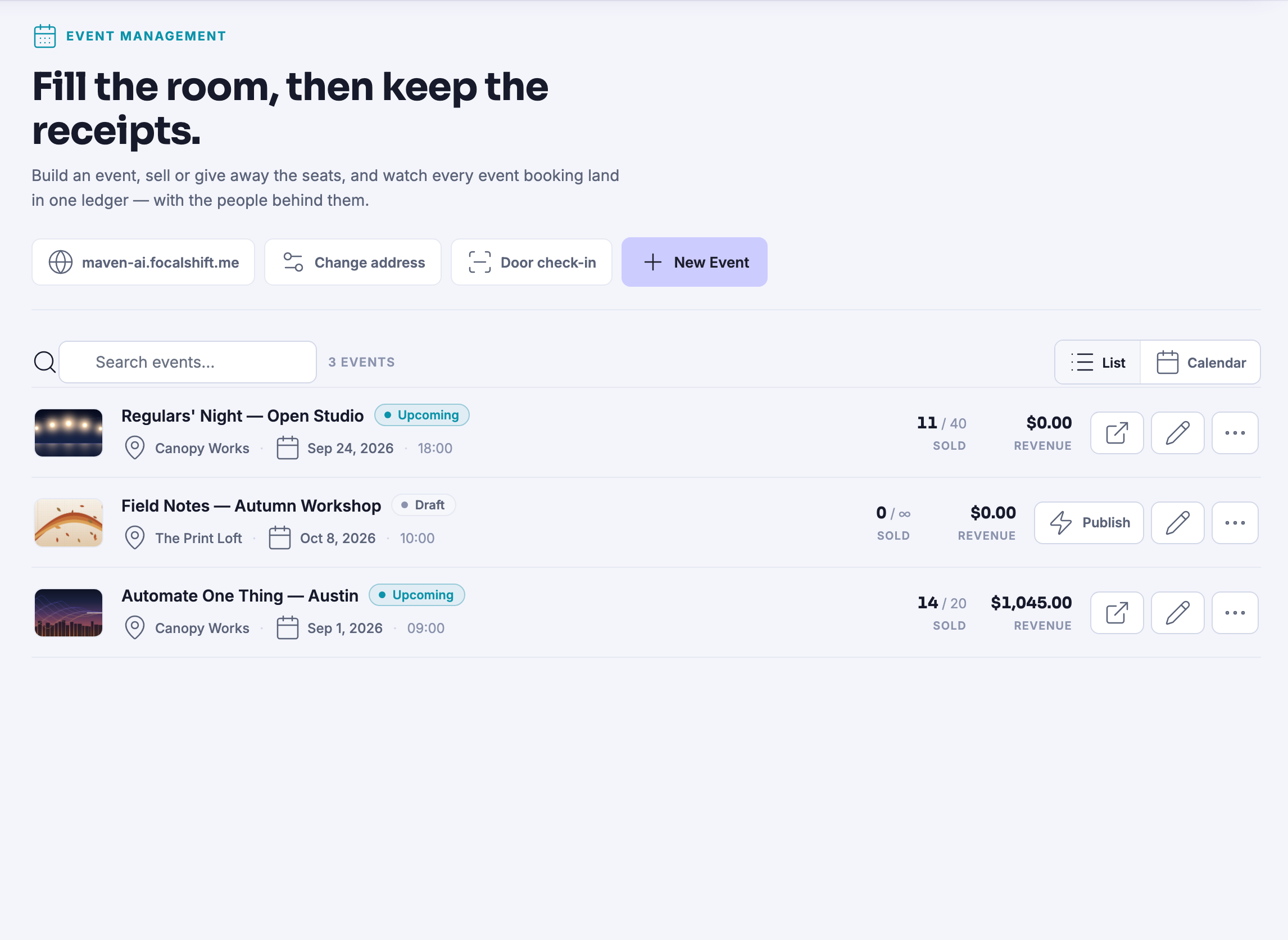
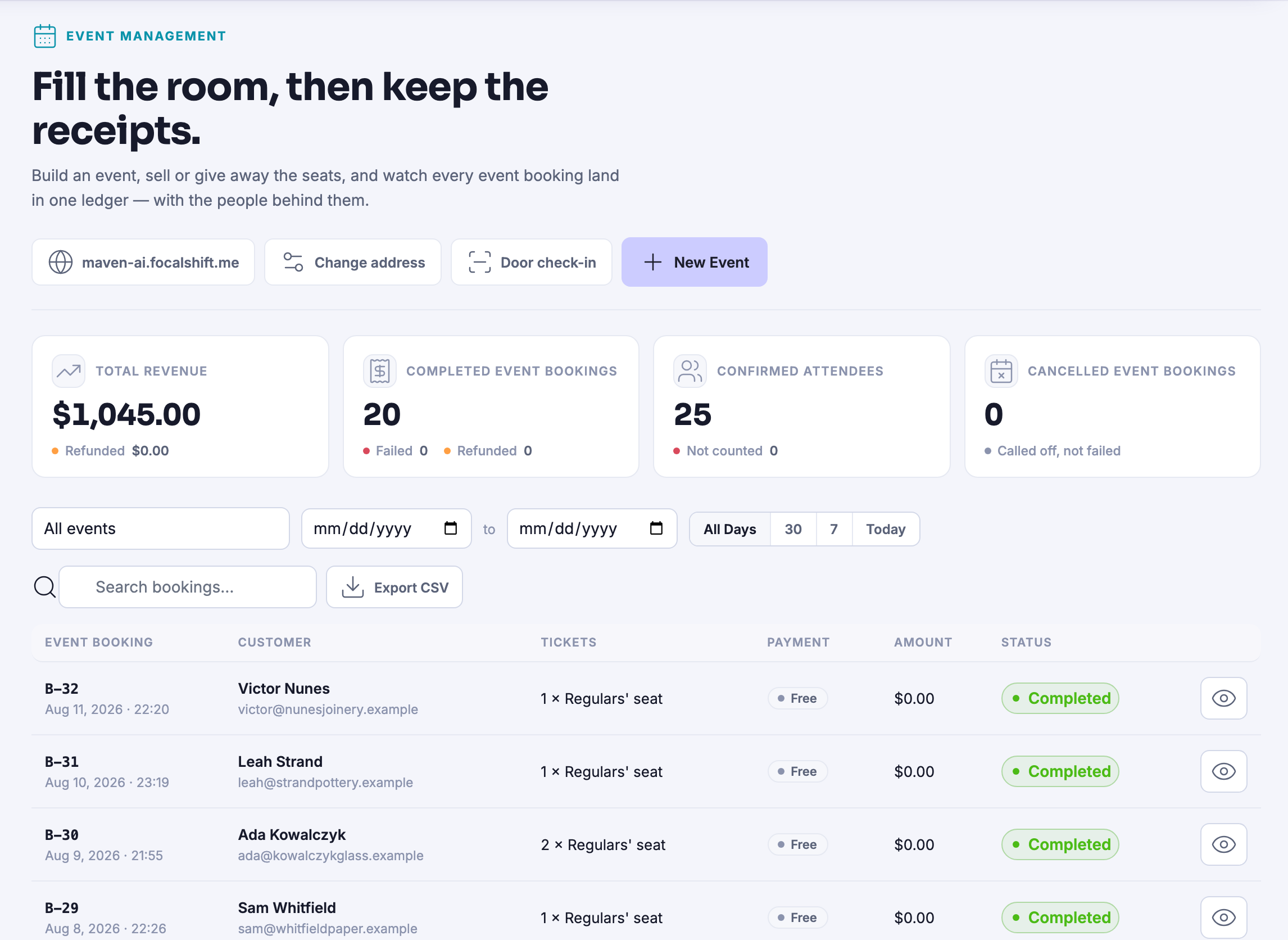
Every seat you put on sale, and every person who took one.
You set the ticket types and how many seats each one holds; the page takes the claims and the ledger keeps them. Free seats and paid seats live on the same event, so a workshop with a full price and a handful of guest places is one event, not two.
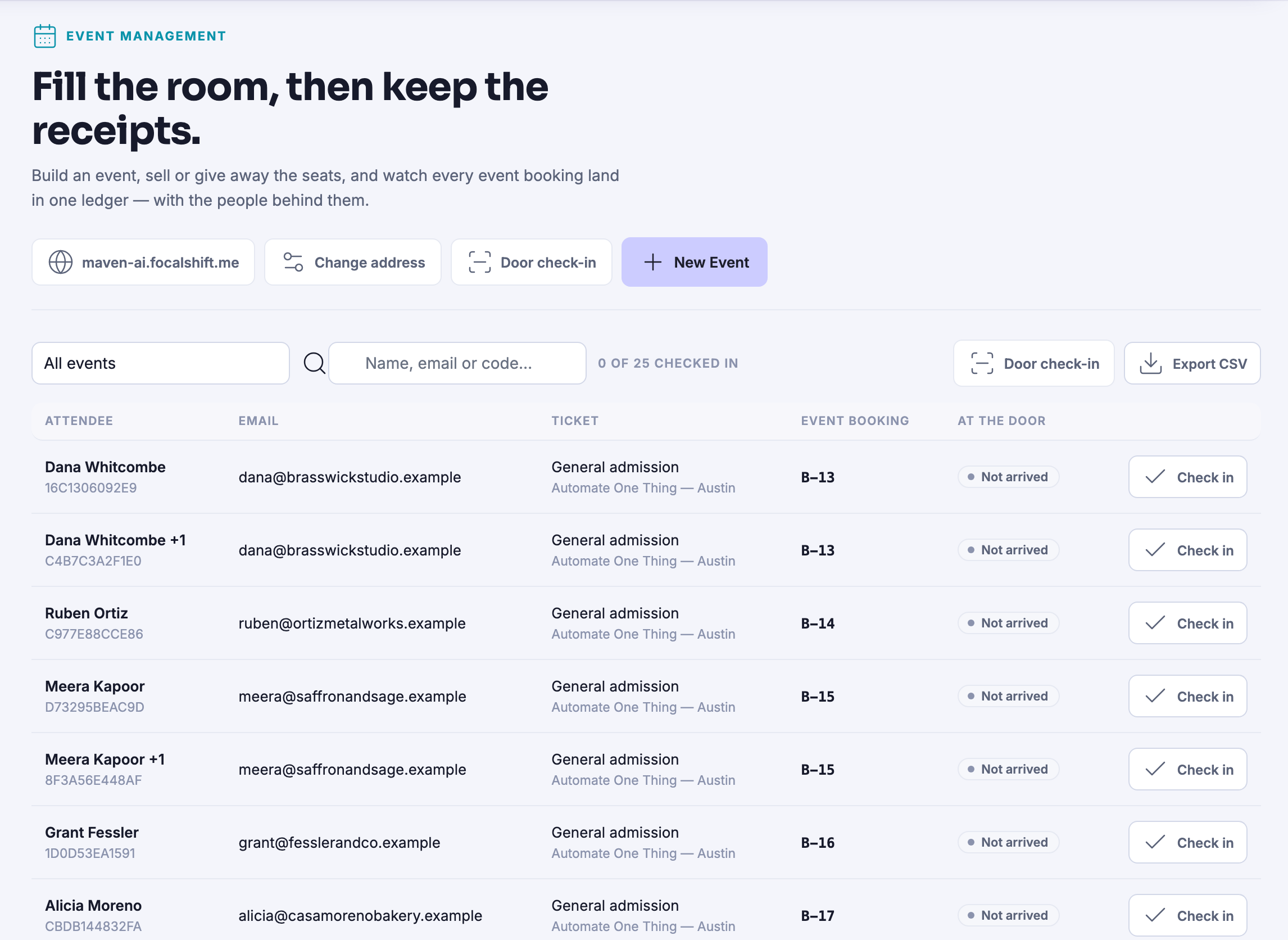
Where there is money to collect, it is collected at the door. Pay in person is set up in one switch, and the ledger records what was taken against the booking it belongs to, so the takings and the guest list are never two different truths.
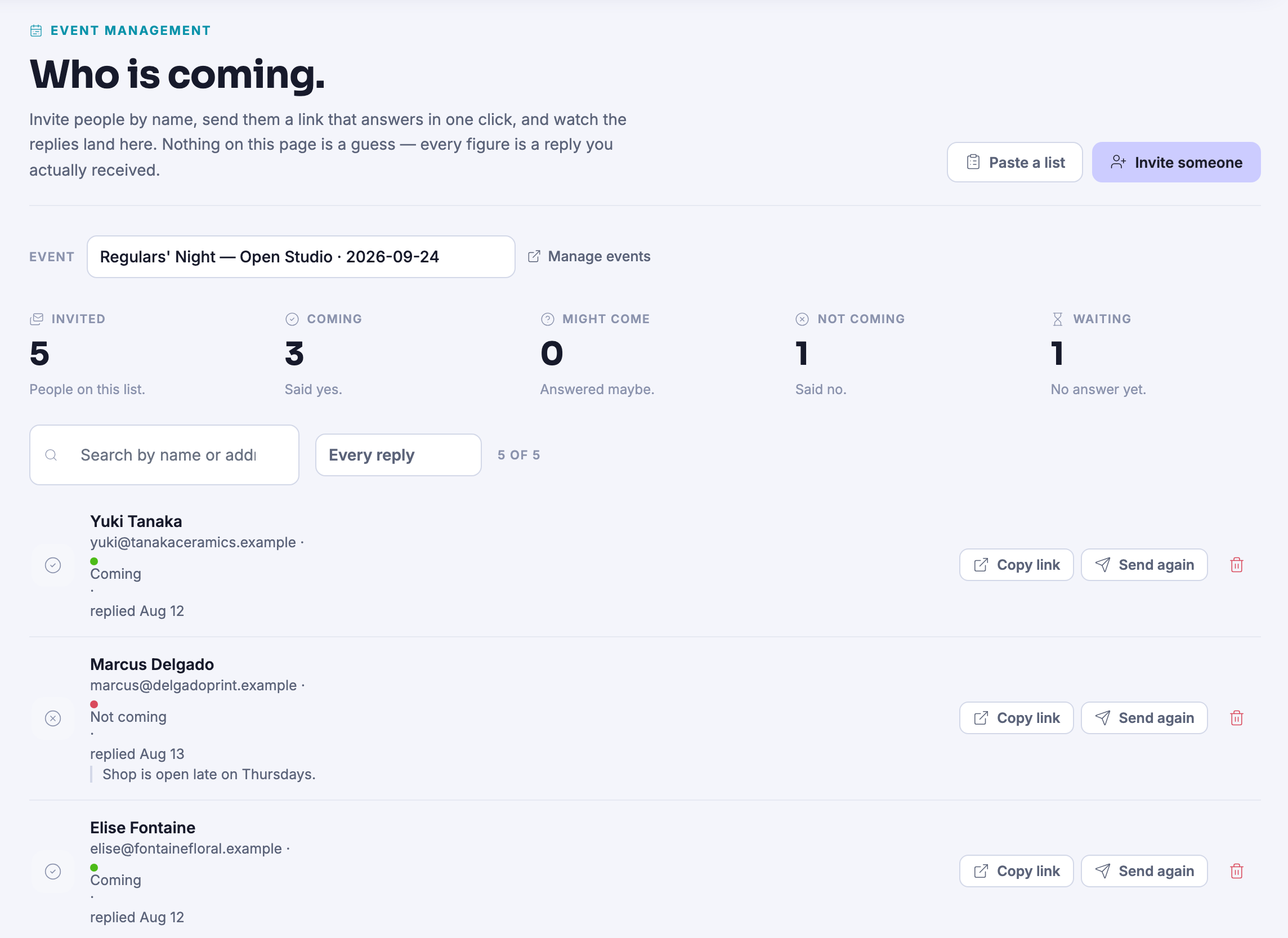
Everyone who claims a seat becomes a person in your book — reachable, attached to the event, and there the next time you run one. An audience built from a room is a better list than an audience built from a form. And the people you asked by name sit on their own list beside them, with what each one said back — coming, might come, not coming, or still to answer — so you know the shape of the room before the day.
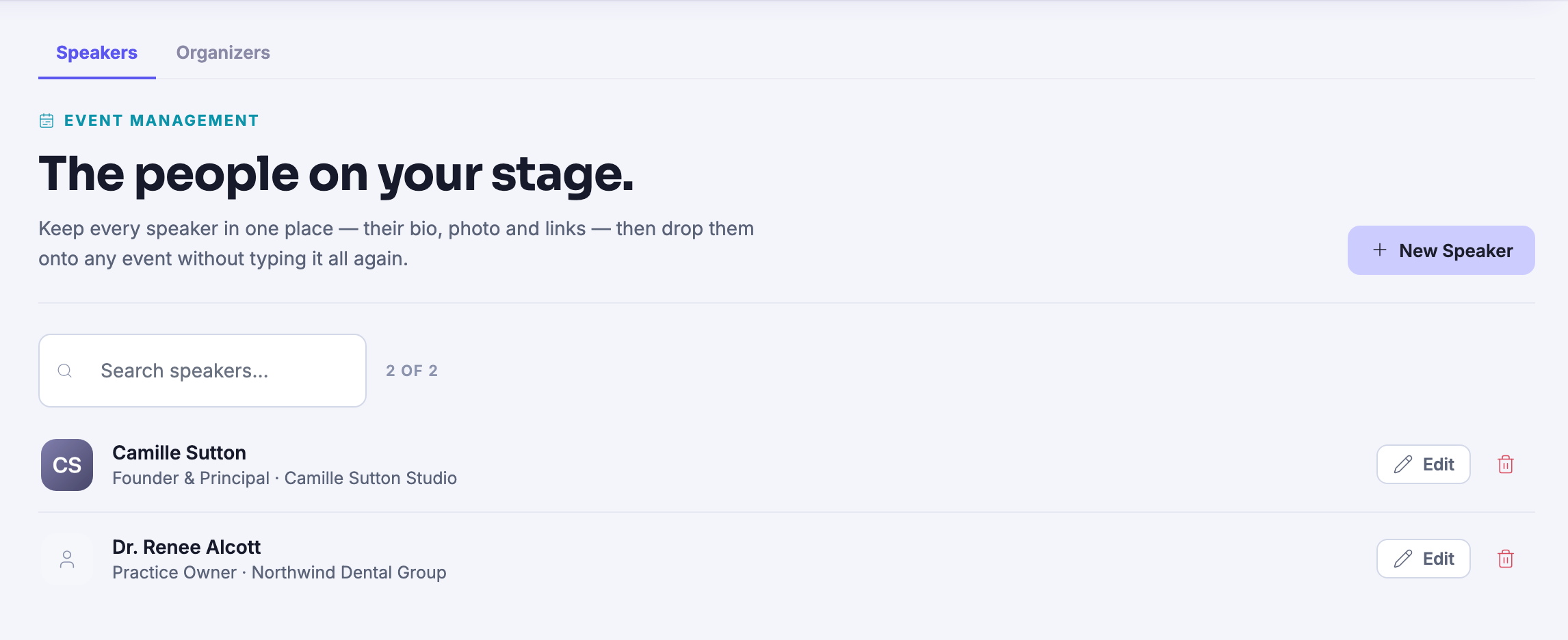
Speakers, a running order and a schedule you can reuse all sit behind the same door. Build the programme once and drop it into the next event instead of rebuilding it every time.
What it actually does
- Ticket types and seat counts you set yourself
- Every claimed seat becomes a person you can reach
- A door list that is the same list you have been filling
What that changes for you
- You know the room is full before you get to it
- Nobody arrives as a stranger to you
- Checking someone in takes a second and no paper
You come away with a full room, and the names of everyone in it.
Works seamlessly with