














Maven adds this one: every other tool here does what you decide — this is the one that argues with you first.
The Boardroom
A question you cannot settle on your own, put to a room of advisors who do not all agree.
Read more about The Boardroom
You cannot argue a decision out with yourself. This is a room that will.
You write the decision the way you would say it out loud — should this change, is this worth doing, which of these two — and pick which of Maven’s specialists sit on it. Maven always chairs.
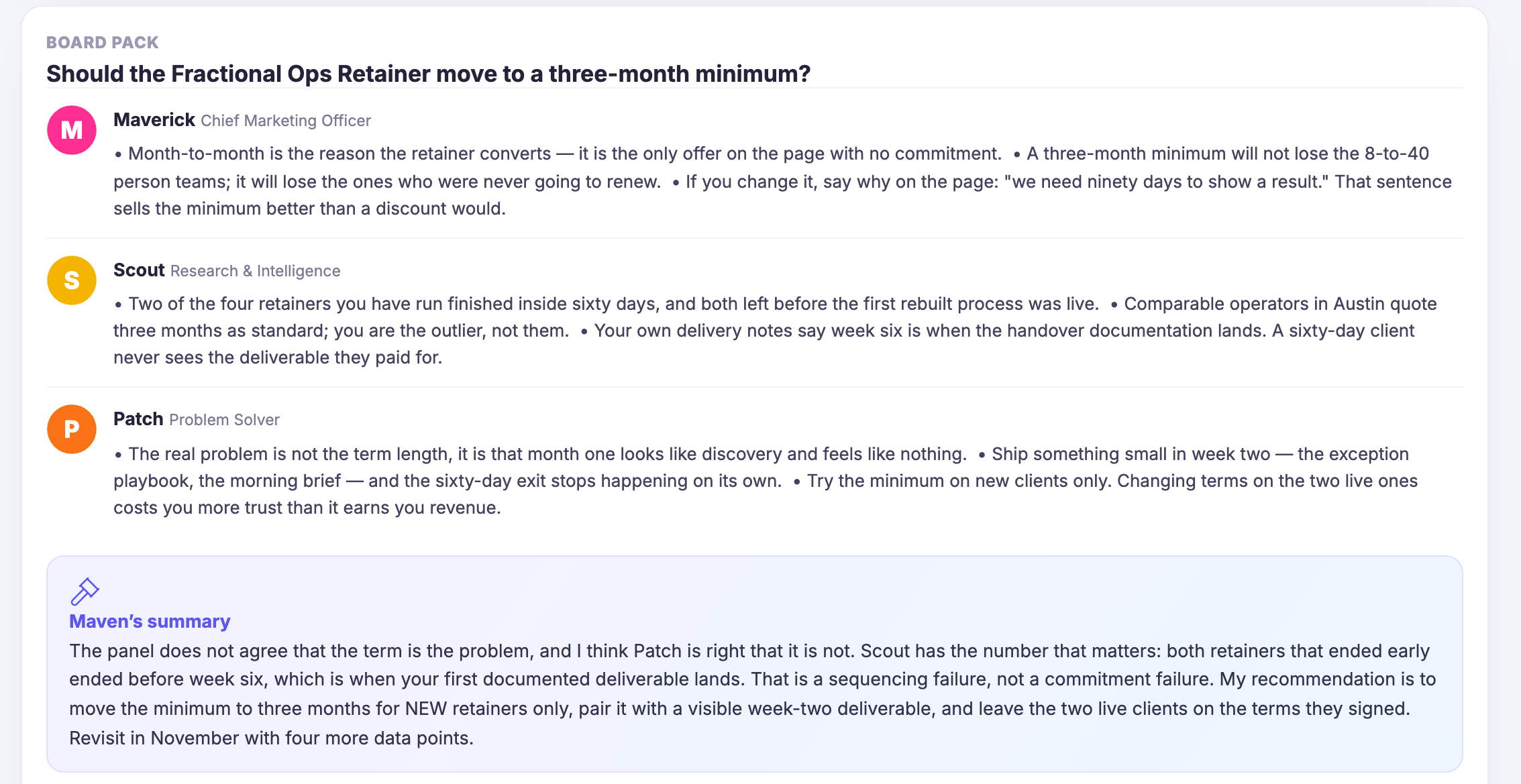
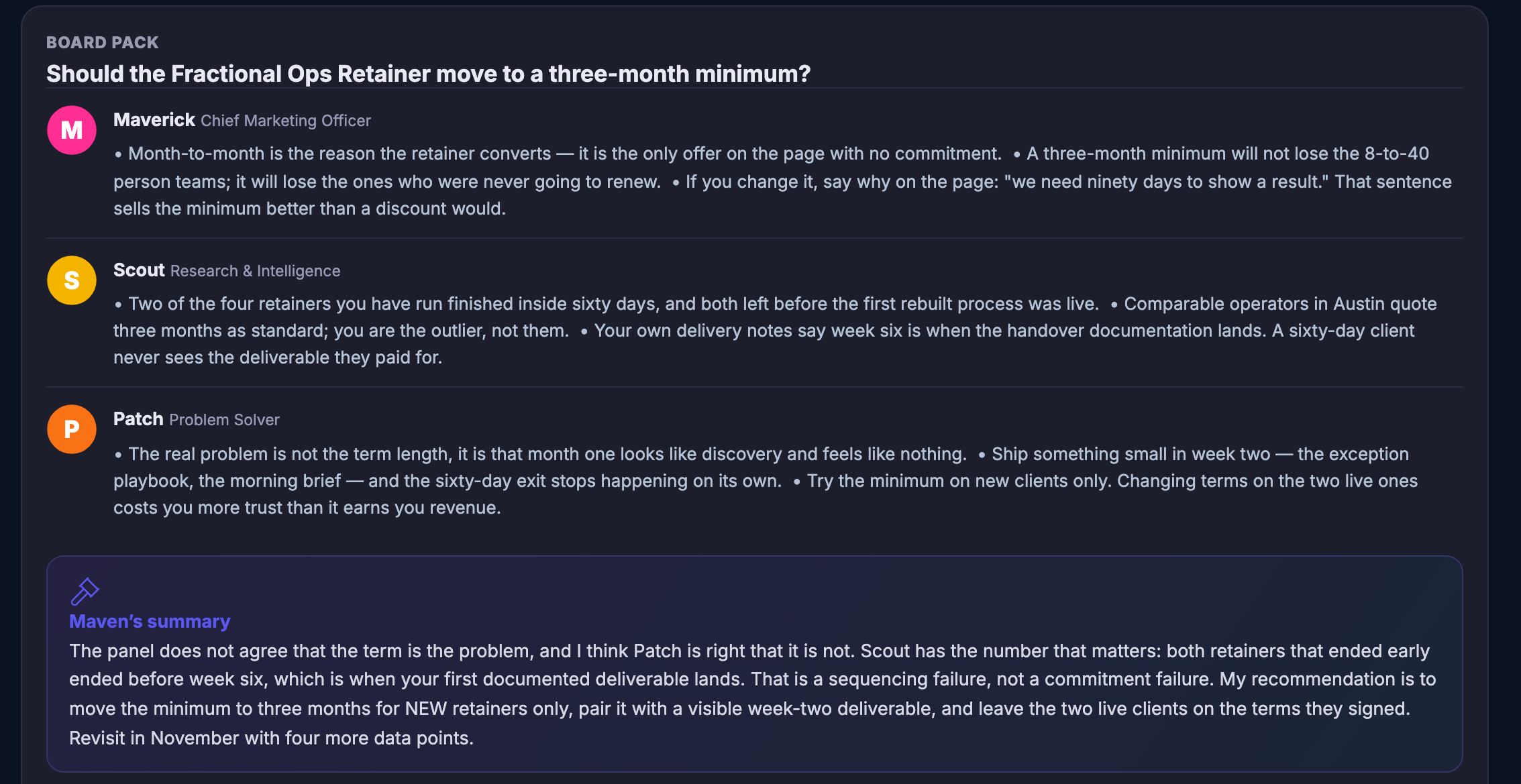
Then they put their cases. The marketer, the researcher and the problem solver each answer in their own voice, out of the business you have already described to Maven, and they disagree with each other in plain words. That disagreement is the thing a single answer cannot give you: one of them will be arguing the position you were quietly avoiding.
Maven sums up as a chair does. It says which argument it thinks holds, names the one that changed its mind, and recommends something narrower than any single advisor asked for — then tells you when it would be worth looking at again.
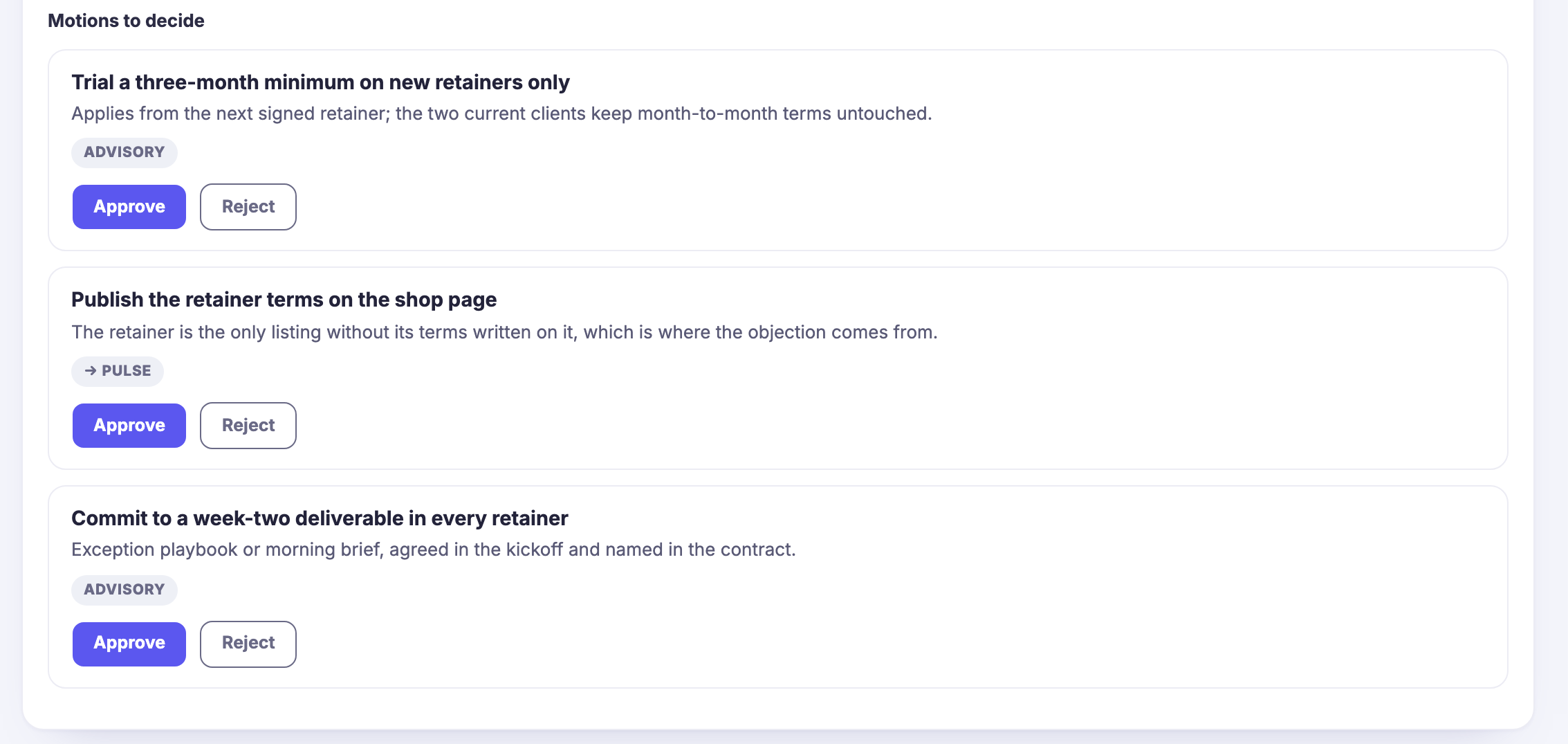
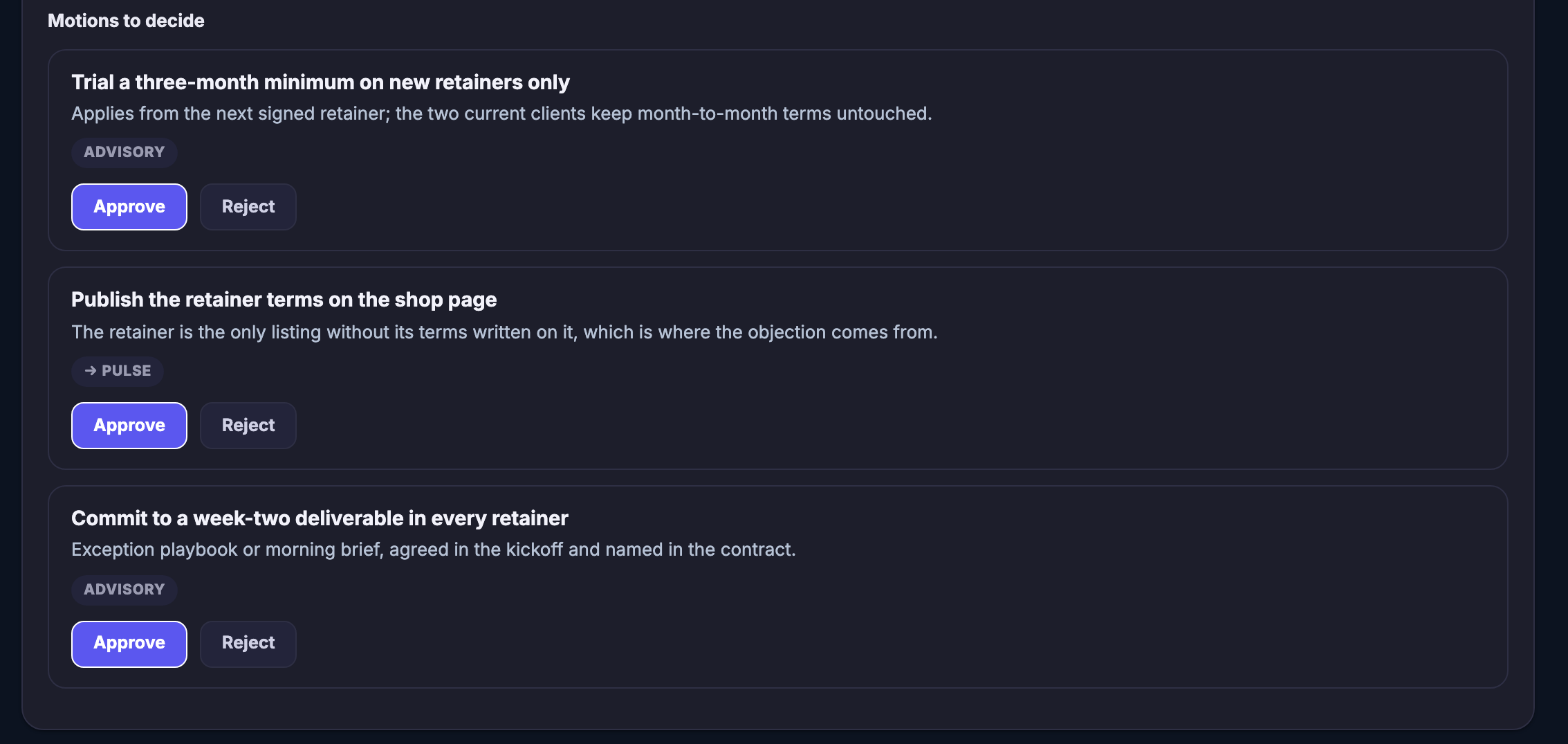
And the room ends in motions rather than in a wall of prose. Each is one thing to do, written plainly, marked either as advice or as work that belongs to a named part of the product, and waiting on your approve or your reject. Nothing moves because a room of advisors thought it should.
The meeting is kept. It reopens with the cases, the summary and what you decided still on it, so a call you made in August is still explicable in November.
What it actually does
- A room of named advisors, convened on one decision of yours
- Cases argued in plain words, against each other, not in a single tidy answer
- A chair’s summary, then motions you approve or reject one at a time
What that changes for you
- The argument against the thing you want to do gets made out loud, by somebody
- A decision ends in a short list of things to do rather than in more reading
- Months later the reasoning is still there, and so is what you chose
You come away with a decision you can defend, and the argument that produced it.
Works seamlessly with